Fell Deshayne B, Azziz-Baumgartner Eduardo, Baker Michael G, Batra Maneesh, Beauté Julien, Beutels Philippe, Bhat Niranjan, Bhutta Zulfiqar A, Cohen Cheryl, De Mucio Bremen, Gessner Bradford D, Gravett Michael G, Katz Mark A, Knight Marian, Lee Vernon J, Loeb Mark, Luteijn Johannes M, Marshall Helen, Nair Harish, Pottie Kevin, Salam Rehana A, Savitz David A, Serruya Suzanne J, Skidmore Becky, Ortiz Justin R
School of Epidemiology, Public Health and Preventive Medicine, University of Ottawa and Children's Hospital of Eastern Ontario (CHEO) Research Institute, Canada.
Influenza Division, Centers for Disease Control and Prevention, USA.
Vaccine. 2017 Oct 13;35(43):5738-5750. doi: 10.1016/j.vaccine.2017.08.037. Epub 2017 Sep 1.
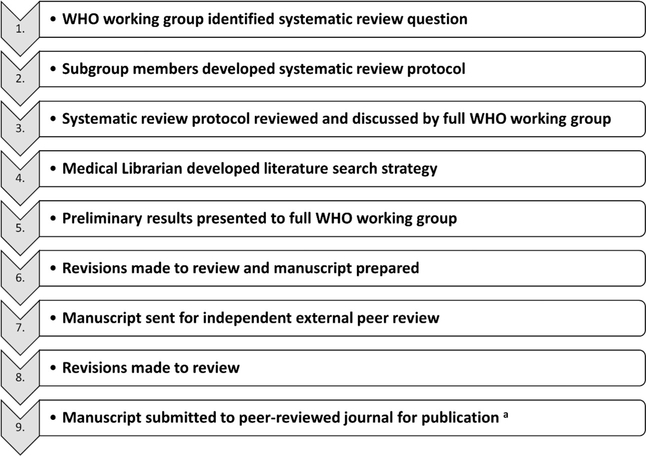
From 2014 to 2017, the World Health Organization convened a working group to evaluate influenza disease burden and vaccine efficacy to inform estimates of maternal influenza immunization program impact. The group evaluated existing systematic reviews and relevant primary studies, and conducted four new systematic reviews. There was strong evidence that maternal influenza immunization prevented influenza illness in pregnant women and their infants, although data on severe illness prevention were lacking. The limited number of studies reporting influenza incidence in pregnant women and infants under six months had highly variable estimates and underrepresented low- and middle-income countries. The evidence that maternal influenza immunization reduces the risk of adverse birth outcomes was conflicting, and many observational studies were subject to substantial bias. The lack of scientific clarity regarding disease burden or magnitude of vaccine efficacy against severe illness poses challenges for robust estimation of the potential impact of maternal influenza immunization programs.
2014年至2017年,世界卫生组织召集了一个工作组,以评估流感疾病负担和疫苗效力,为孕产妇流感免疫计划影响的评估提供依据。该小组评估了现有的系统评价和相关的原始研究,并开展了四项新的系统评价。有强有力的证据表明,孕产妇流感免疫可预防孕妇及其婴儿患流感疾病,尽管缺乏关于预防重症疾病的数据。报告孕妇和6个月以下婴儿流感发病率的研究数量有限,估计值差异很大,且低收入和中等收入国家的代表性不足。孕产妇流感免疫可降低不良分娩结局风险的证据相互矛盾,许多观察性研究存在重大偏差。关于疾病负担或针对重症疾病的疫苗效力大小缺乏科学明确性,这给准确估计孕产妇流感免疫计划的潜在影响带来了挑战。