Paracchini Valentina, Petrillo Mauro, Lievens Antoon, Puertas Gallardo Antonio, Martinsohn Jann Thorsten, Hofherr Johann, Maquet Alain, Silva Ana Paula Barbosa, Kagkli Dafni Maria, Querci Maddalena, Patak Alex, Angers-Loustau Alexandre
European Commission, Joint Research Centre (JRC), via E. Fermi 2749, 21027 Ispra, Italy.
European Commission, Joint Research Centre (JRC), Retieseweg 111, 2440 Geel, Belgium.
Food Control. 2017 Sep;79:297-308. doi: 10.1016/j.foodcont.2017.04.009.
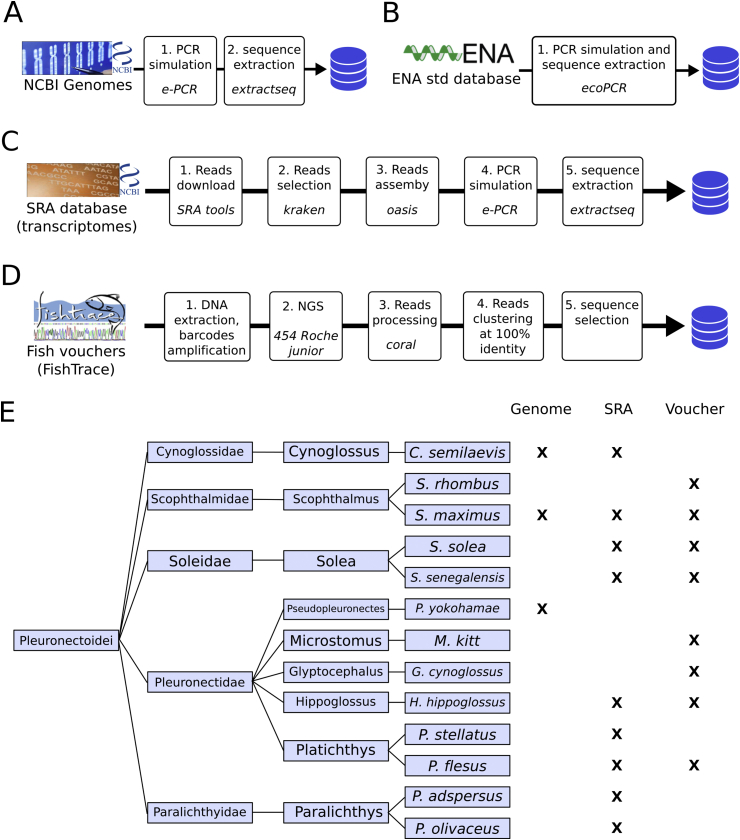
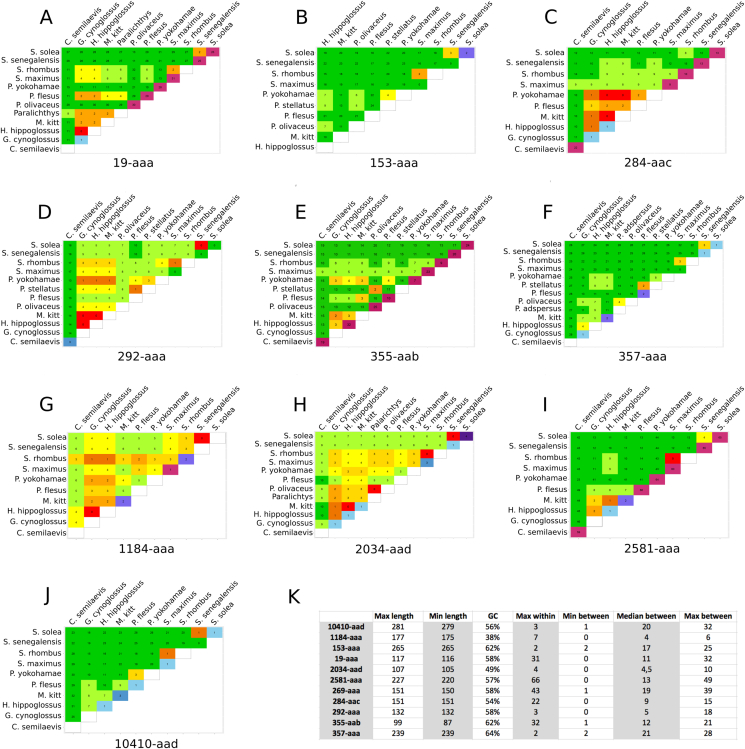
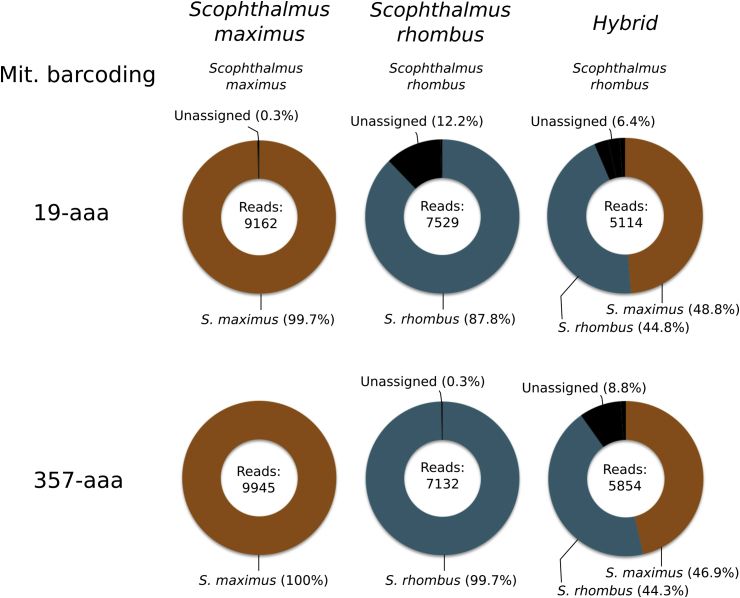
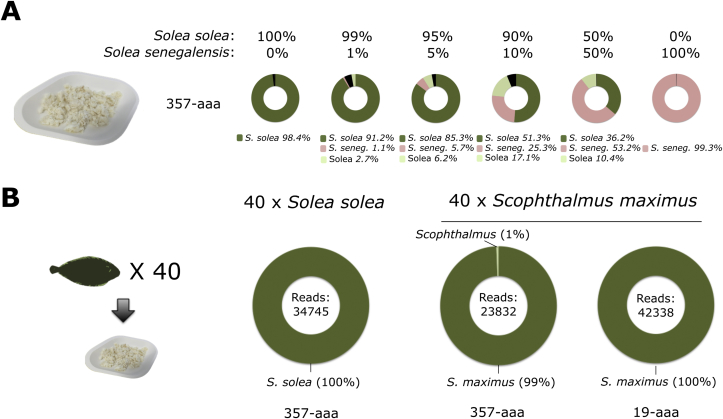
The development of an efficient seafood traceability framework is crucial for the management of sustainable fisheries and the monitoring of potential substitution fraud across the food chain. Recent studies have shown the potential of DNA barcoding methods in this framework, with most of the efforts focusing on using mitochondrial targets such as the and genes. In this article, we show the identification of novel targets in the nuclear genome, and their associated primers, to be used for the efficient identification of flatfishes of the family. In addition, different methods are described to generate a dataset of barcode reference sequences from the ever-growing wealth of publicly available sequence information, replacing, where possible, labour-intensive laboratory work. The short amplicon lengths render the analysis of these new barcode target regions ideally suited to next-generation sequencing techniques, allowing characterisation of multiple fish species in mixed and processed samples. Their location in the nucleus also improves currently used methods by allowing the identification of hybrid individuals.
建立一个高效的海产品可追溯框架对于可持续渔业管理以及监测整个食物链中潜在的替代欺诈行为至关重要。最近的研究表明了DNA条形码方法在该框架中的潜力,大部分工作集中在使用线粒体靶点,如 和 基因。在本文中,我们展示了在核基因组中鉴定新的靶点及其相关引物,用于高效鉴定 科的比目鱼。此外,还描述了不同的 方法,以从日益丰富的公开可用序列信息中生成条形码参考序列数据集,尽可能取代劳动密集型的实验室工作。短扩增子长度使得对这些新条形码目标区域的分析非常适合下一代测序技术,从而能够对混合和加工样本中的多种鱼类进行特征描述。它们在细胞核中的位置还通过允许识别杂交个体改进了目前使用的方法。