Cheng Ping, Wang Tong, Li Wei, Muhammad Ishfaq, Wang He, Sun Xiaoqi, Yang Yuqi, Li Jiarui, Xiao Tianshi, Zhang Xiuying
Department of Basic Veterinary Science, College of Veterinary Medicine, Northeast Agricultural UniversityHarbin, China.
Front Pharmacol. 2017 Aug 18;8:547. doi: 10.3389/fphar.2017.00547. eCollection 2017.
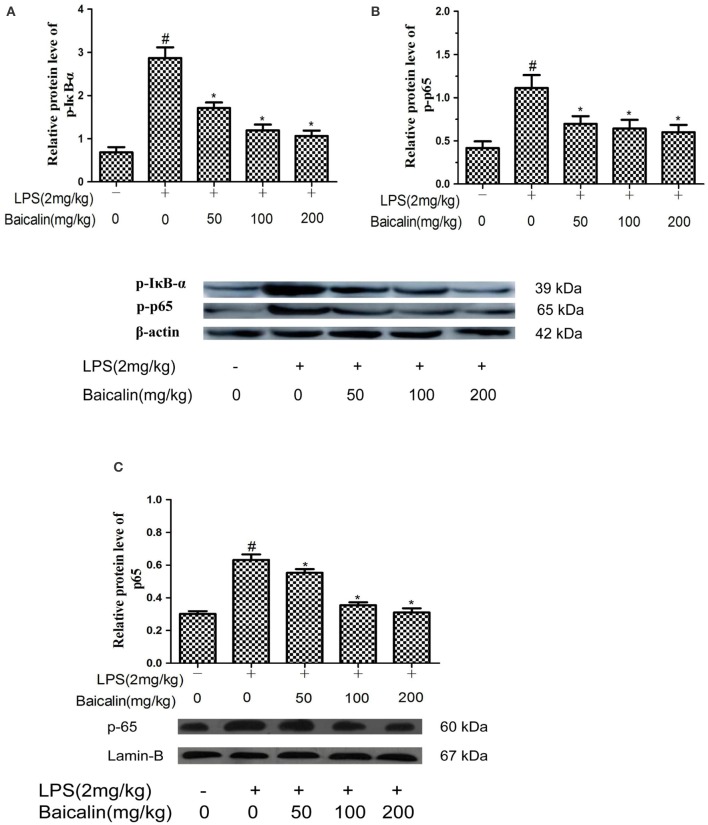
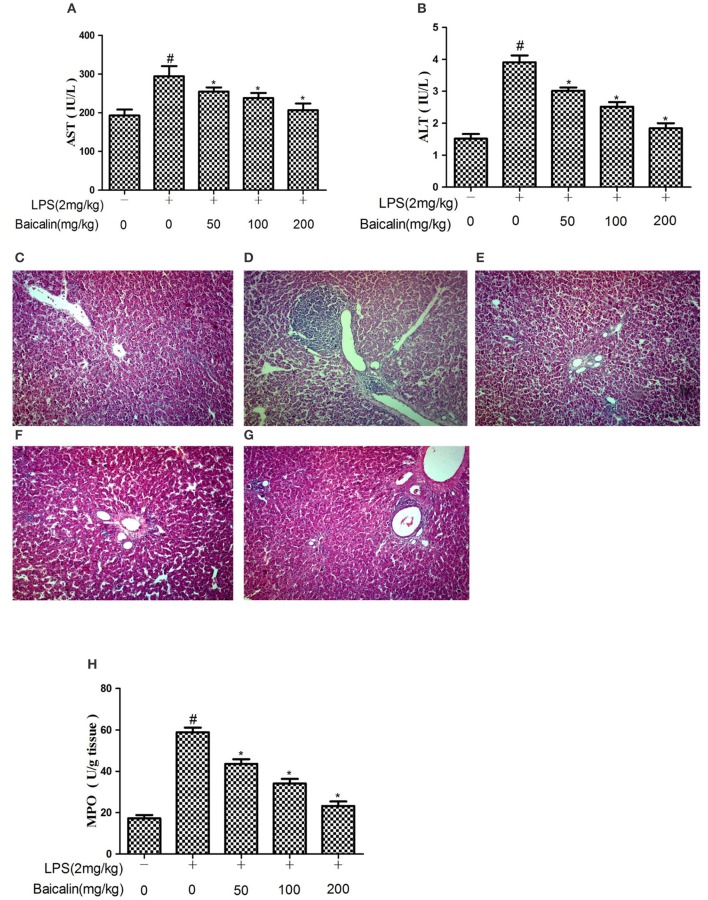
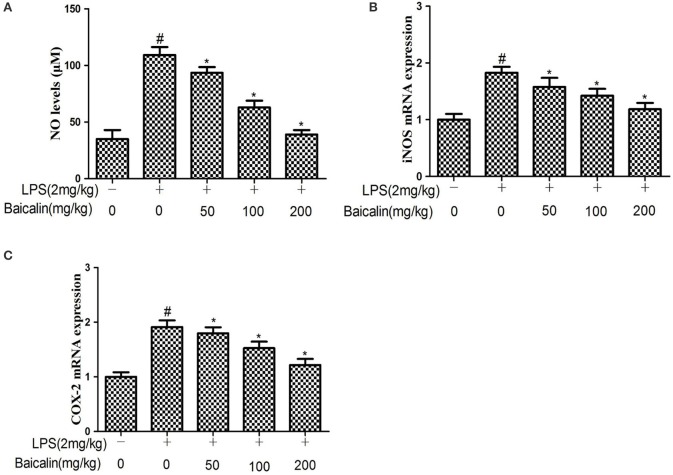
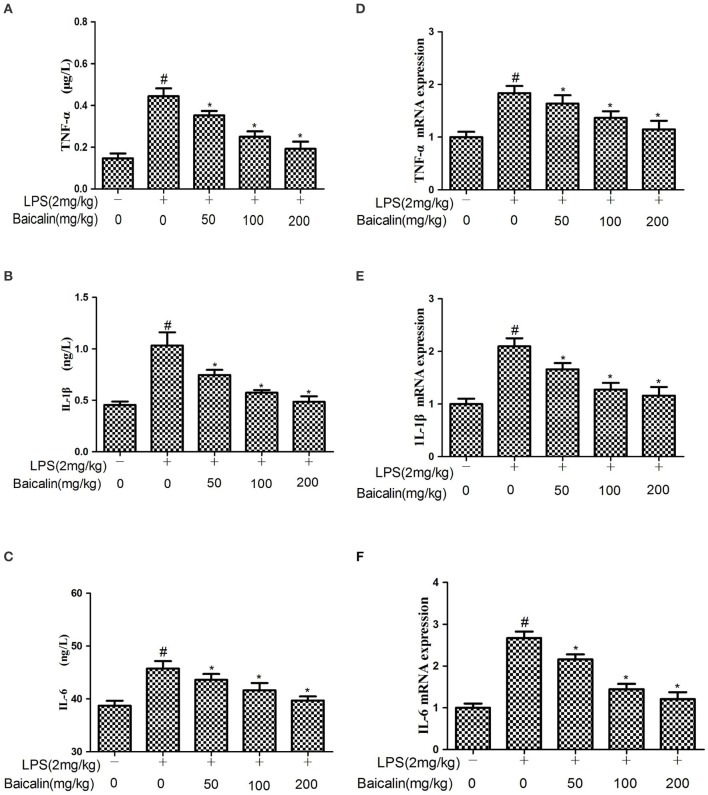
As a kind of potent stimulus, lipopolysaccharide (LPS) has the ability to cause cell damage by activating toll-like receptor(TLR)4, then nuclear factor kappa B (NF-κB) translocates into the nucleus and changes the expression of related inflammatory genes. Baicalin is extracted from , which possesses anti-inflammation, antioxidant and antibacterial properties. However, the effects of it on LPS-induced liver inflammation have not been fully elucidated. This study aims to investigate the anti-inflammatory effects of Baicalin on the LPS-induced liver inflammation and its underlying molecular mechanisms in chicken. The results of histopathological changes, serum biochemical analysis, NO levels and myeloperoxidase activity showed that Baicalin pretreatment ameliorated LPS-induced liver inflammation. ELISA and qPCR assays showed that Baicalin dose-dependently suppressed the production of IL-1β, IL-6, and TNF-α. Furthermore, the mRNA expression of inducible nitric oxide synthase (iNOS) and cyclooxygenase-2 (COX-2) were significantly decreased by Baicalin. TLR4 is an important sensor in LPS infection. Molecular studies showed that the expression of TLR4 was inhibited by Baicalin pretreatment. In addition, Baicalin pretreatment inhibited NF-kB signaling pathway activation. All results demonstrated the protective effects of Baicalin pretreatment against LPS-induced liver inflammation in chicken via negative regulation of inflammatory mediators through the down-regulation of TLR4 expression and the inhibition of NF-kB activation.
作为一种强效刺激物,脂多糖(LPS)能够通过激活Toll样受体(TLR)4导致细胞损伤,随后核因子κB(NF-κB)转位至细胞核并改变相关炎症基因的表达。黄芩苷是从[植物名称未给出]中提取的,具有抗炎、抗氧化和抗菌特性。然而,其对LPS诱导的肝脏炎症的影响尚未完全阐明。本研究旨在探讨黄芩苷对LPS诱导的鸡肝脏炎症的抗炎作用及其潜在分子机制。组织病理学变化、血清生化分析、NO水平和髓过氧化物酶活性的结果表明,黄芩苷预处理减轻了LPS诱导的肝脏炎症。ELISA和qPCR分析表明,黄芩苷剂量依赖性地抑制IL-1β、IL-6和TNF-α的产生。此外,黄芩苷显著降低了诱导型一氧化氮合酶(iNOS)和环氧化酶-2(COX-2)的mRNA表达。TLR4是LPS感染中的重要传感器。分子研究表明黄芩苷预处理可抑制TLR4的表达。此外,黄芩苷预处理抑制了NF-κB信号通路的激活。所有结果表明,黄芩苷预处理通过下调TLR4表达和抑制NF-κB激活对炎症介质进行负调控,从而对LPS诱导的鸡肝脏炎症具有保护作用。