Naughton Lynn M, Romano Stefano, O'Gara Fergal, Dobson Alan D W
School of Microbiology, University College Cork, National University of IrelandCork, Ireland.
Division of Microbial Ecology, Department of Microbiology and Ecosystem Science, University of ViennaVienna, Austria.
Front Microbiol. 2017 Aug 18;8:1494. doi: 10.3389/fmicb.2017.01494. eCollection 2017.
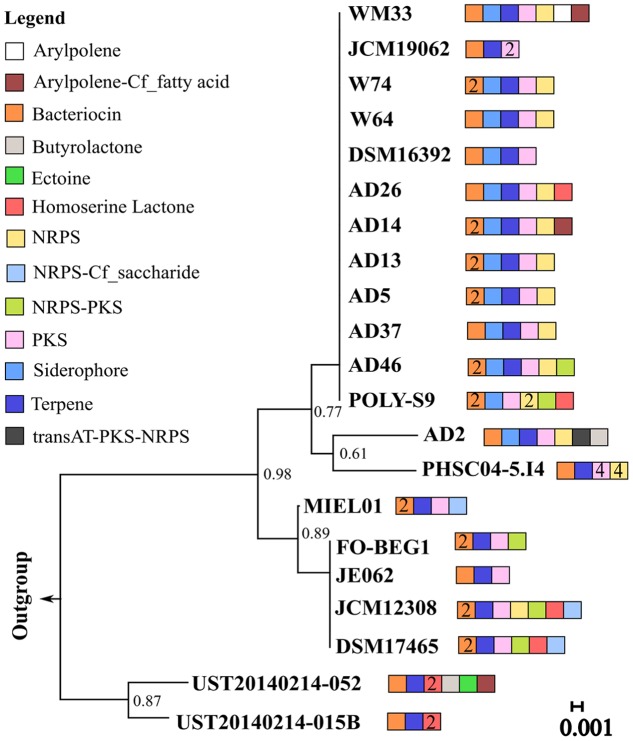
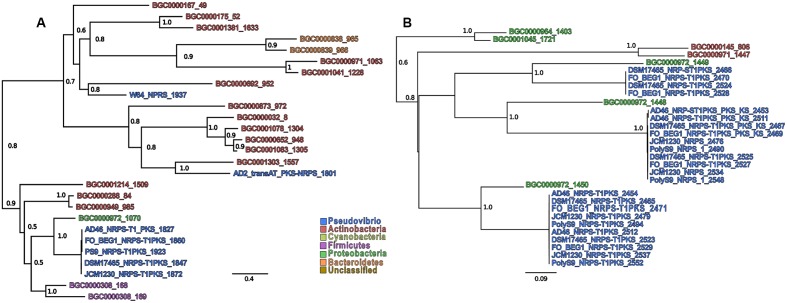
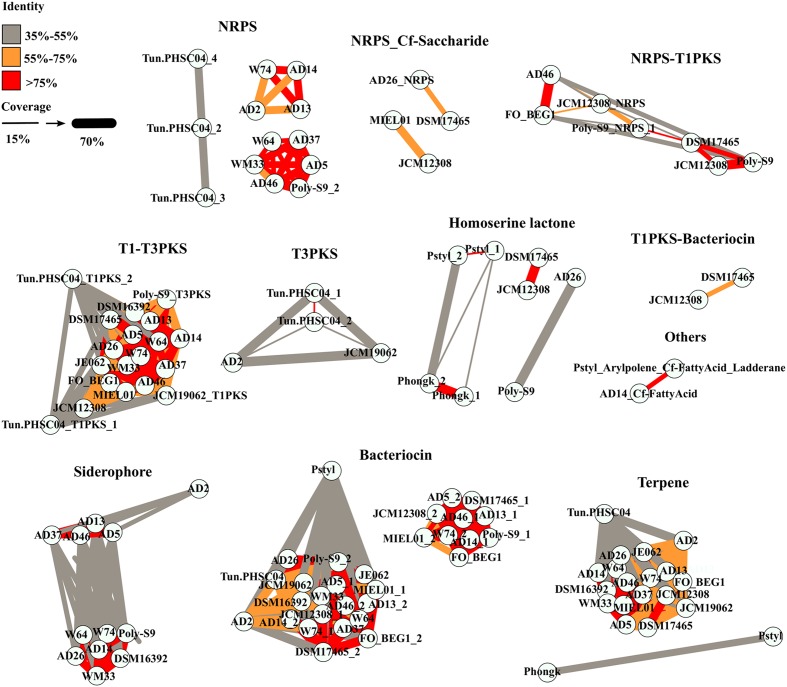
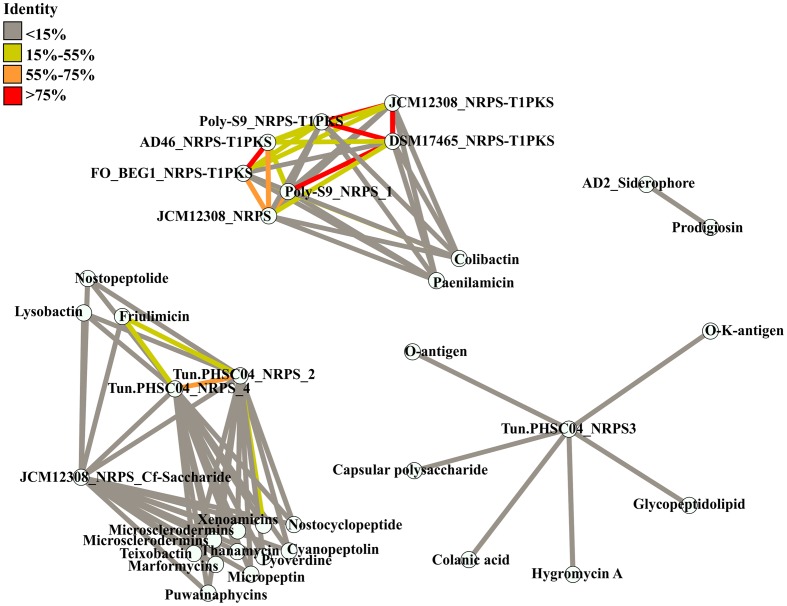
Increased incidences of antimicrobial resistance and the emergence of pan-resistant 'superbugs' have provoked an extreme sense of urgency amongst researchers focusing on the discovery of potentially novel antimicrobial compounds. A strategic shift in focus from the terrestrial to the marine environment has resulted in the discovery of a wide variety of structurally and functionally diverse bioactive compounds from numerous marine sources, including sponges. Bacteria found in close association with sponges and other marine invertebrates have recently gained much attention as potential sources of many of these novel bioactive compounds. Members of the genus are one such group of organisms. In this study, we interrogate the genomes of 21 strains isolated from a variety of marine sources, for the presence, diversity and distribution of biosynthetic gene clusters (BGCs). We expand on results obtained from antiSMASH analysis to demonstrate the similarity between the -related BGCs and those characterized in other bacteria and corroborate our findings with phylogenetic analysis. We assess how domain organization of the most abundant type of BGCs present among the isolates (Non-ribosomal peptide synthetases and Polyketide synthases) may influence the diversity of compounds produced by these organisms and highlight for the first time the potential for novel compound production from this genus of bacteria, using a genome guided approach.
抗菌耐药性的增加以及泛耐药“超级细菌”的出现,在专注于发现潜在新型抗菌化合物的研究人员中引发了一种极端的紧迫感。研究重点从陆地环境向海洋环境的战略转变,已导致从包括海绵在内的众多海洋来源发现了各种各样结构和功能各异的生物活性化合物。与海绵和其他海洋无脊椎动物紧密相关的细菌,最近作为许多这些新型生物活性化合物的潜在来源而备受关注。[具体属名]属的成员就是这样一类生物。在本研究中,我们对从多种海洋来源分离的21株[具体属名]菌株的基因组进行研究,以确定生物合成基因簇(BGCs)的存在、多样性和分布。我们扩展了从antiSMASH分析获得的结果,以证明与[具体属名]相关的BGCs与其他细菌中已表征的BGCs之间的相似性,并用系统发育分析证实我们的发现。我们评估了分离株中最丰富类型的BGCs(非核糖体肽合成酶和聚酮合酶)的结构域组织如何可能影响这些生物体产生的化合物的多样性,并首次强调了使用基因组导向方法从该属细菌生产新型化合物的潜力。