Durak İsmet, Selver Özlem Barut, Erdal Esra, Kunter İmge, Söylemezoğlu Zeynep Özbek, Wolosin Jose Mario
Dokuz Eylül Üniversitesi Tıp Fakültesi, Göz Hastalıkları Anabilim Dalı İzmir, Türkiye.
Buca Seyfi Demirsoy Devlet Hastanesi, Göz Hastalıkları Birimi, İzmir, Türkiye.
Turk Oftalmol Derg. 2012 May;42(3):172-176. doi: 10.4274/tjo.42.66375.
To evaluate the 1-year follow-up results of cultivated limbal epithelial cell (CLEC) transplantation in unilateral limbal stem cell deficiency (LSCD).
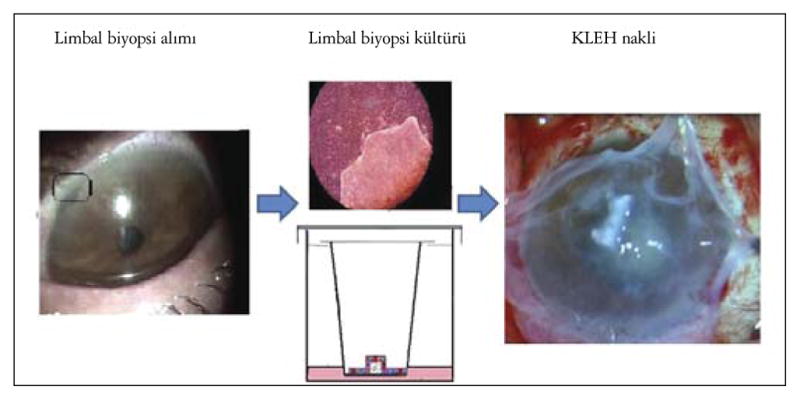
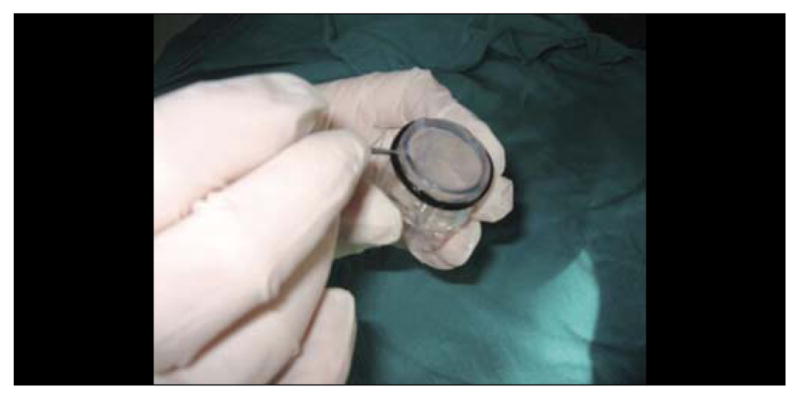
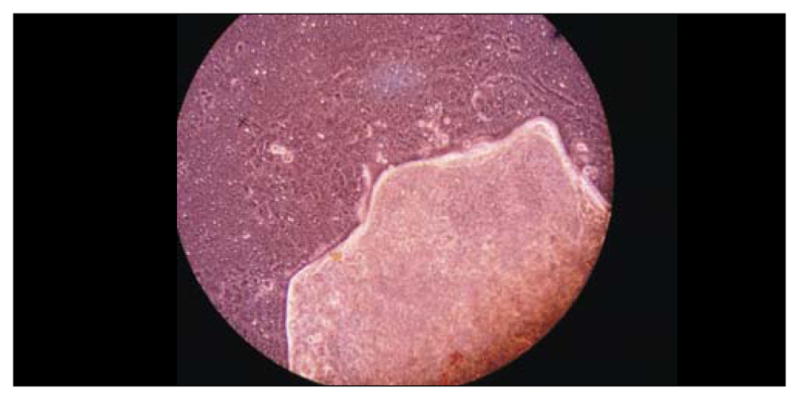
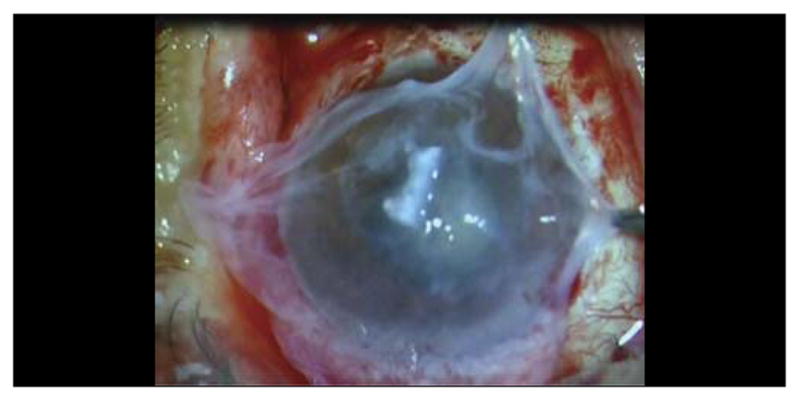
One-year follow-up results of five unilateral LSCD patients who had undergone CLEC transplantation were evaluated. Parameters for this evaluation were: fluorescein staining of ocular surface, corneal vascularization and status of epithelium with slit lamp, and visual acuity. 1.5-mm limbal biopsy was performed from the superior limbus of the healthy eyes, broke into two equal pieces, expanded on human amniotic membrane (hAM) and inserts for 14 days until getting 20 mm in size. CLECs on hAMs were used directly, and cells on inserts were used after detachment procedure. The symblepharon and pannus tissues were removed, superficial keratectomy was performed. CLEC on hAMs were transplanted with the epithelial side up onto the bare corneal stroma, sutured to the conjunctiva with 10-0 nylon sutures. Free CLEC layer from insert was placed on hAM as a second layer, additional hAM was used as a protective layer all over other tissues.
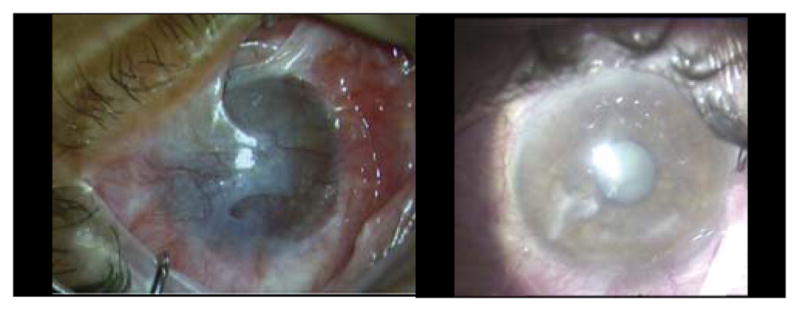
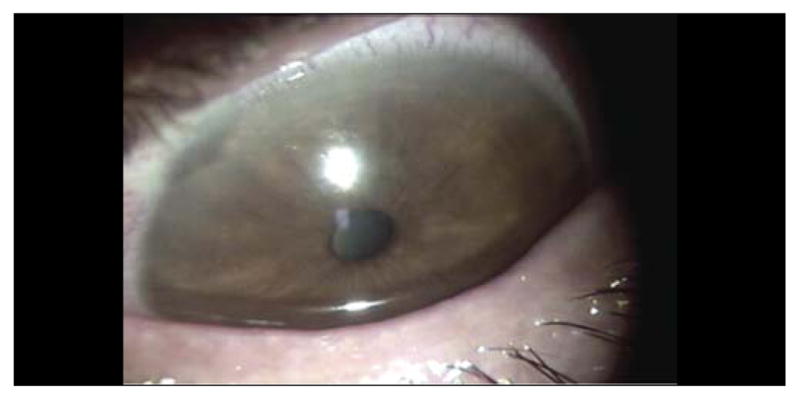
Median age was 44.4 years (14-71). The etiology was chemical burn in all patients. Median duration of symptoms was 10 years (2-18), median follow-up period was 12.6 (12-12.5) months. Preoperative best corrected visual acuities (BCVA) were light perception in three patients, counting fingers at 50 cm in one patient and 3/10 in one patient. Visions were improved in all patients. Postoperative BCVA 12 months after the surgery were between counting fingers at 3 meters to 6/10. There was a temporary hemorrhage between the two layers of hAMs in one patient at the early postoperative period. Peripheral corneal vascularization has occurred in three patients, in patient corneal vascularization has reached to the paracentral area.
CLEC transplantation is an efficient treatment option for unilateral LSCD in mid-long term.
评估培养的角膜缘上皮细胞(CLEC)移植治疗单侧角膜缘干细胞缺乏症(LSCD)的1年随访结果。
对5例接受CLEC移植的单侧LSCD患者进行1年随访评估。评估参数包括:眼表荧光素染色、角膜血管化情况、裂隙灯检查下的上皮状态以及视力。从健康眼的上方角膜缘取1.5mm的角膜缘活检组织,分成两块相等的组织块,在人羊膜(hAM)上进行扩增并培养14天,直至其大小达到20mm。直接使用hAM上的CLEC,将培养皿上的细胞在分离后使用。切除睑球粘连和血管翳组织,进行浅层角膜切除术。将hAM上的CLEC上皮面朝上移植到裸露的角膜基质上,用10-0尼龙缝线缝合到结膜上。将培养皿上的游离CLEC层作为第二层放置在hAM上,额外的hAM用作覆盖其他组织的保护层。
中位年龄为44.4岁(14-71岁)。所有患者的病因均为化学伤。症状的中位持续时间为10年(2-18年),中位随访期为12.6(12-12.5)个月。术前最佳矫正视力(BCVA):3例患者为光感,1例患者为50cm处数指,1例患者为3/10。所有患者的视力均有改善。术后12个月的BCVA在3米处数指至6/10之间。1例患者在术后早期两层hAM之间出现暂时性出血。3例患者发生周边角膜血管化,其中1例患者的角膜血管化已延伸至旁中央区。
CLEC移植是治疗单侧LSCD的中长期有效治疗选择。