Rupp M, Hagenbuchner J, Rass B, Fiegl H, Kiechl-Kohlendorfer U, Obexer P, Ausserlechner M J
Department of Pediatrics II, Medical University Innsbruck, Innsbruck, Austria.
Department of Pediatrics I, Medical University Innsbruck, Innsbruck, Austria.
Oncogene. 2017 Nov 2;36(44):6190-6203. doi: 10.1038/onc.2017.288. Epub 2017 Sep 4.
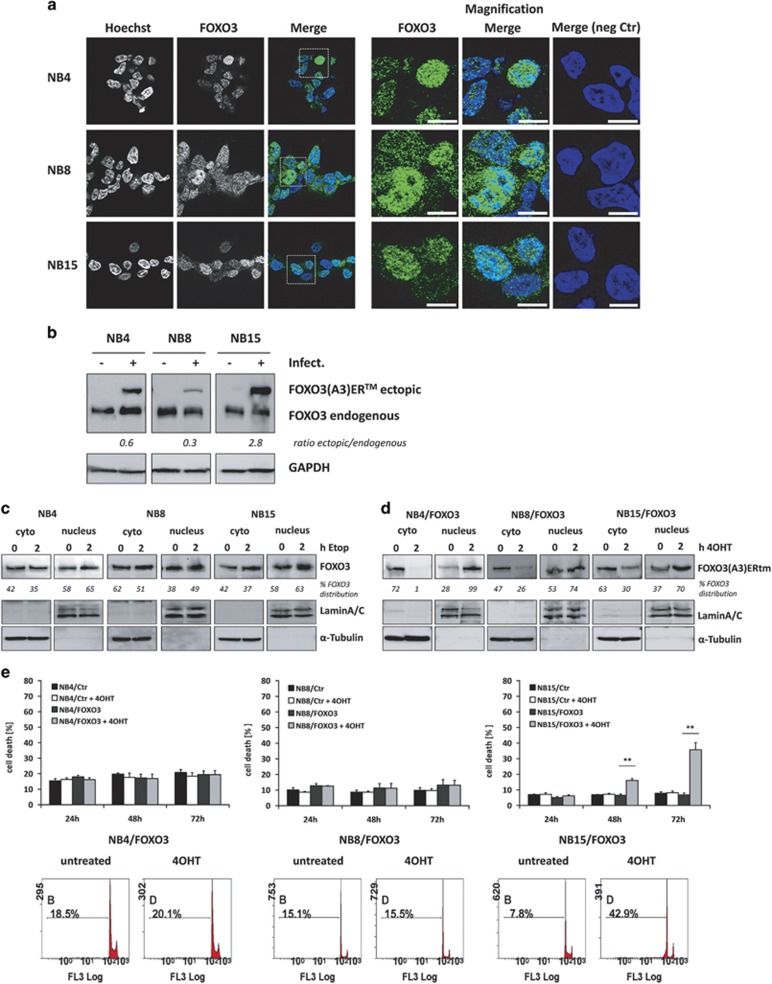
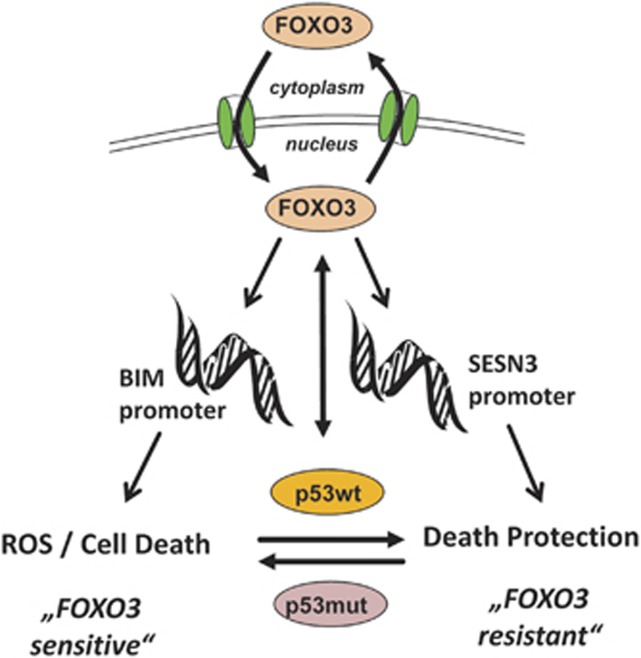
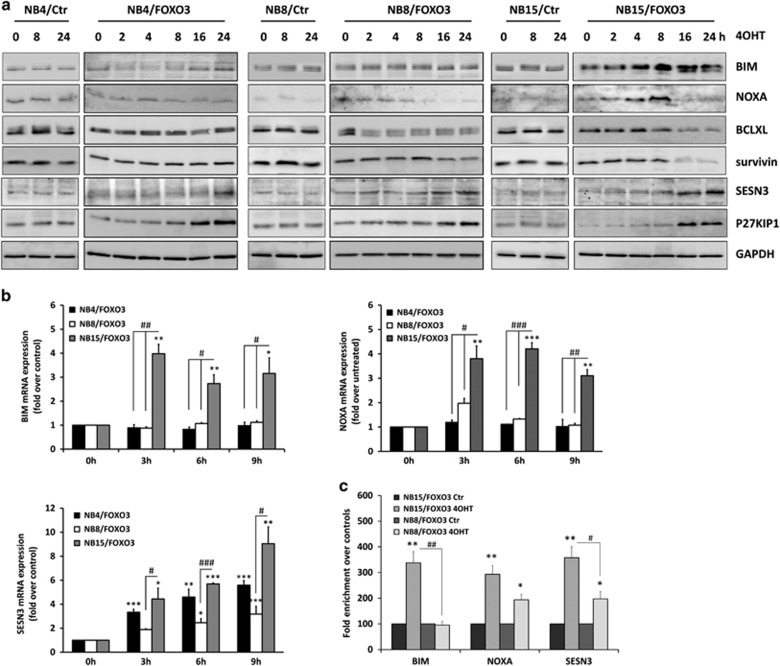
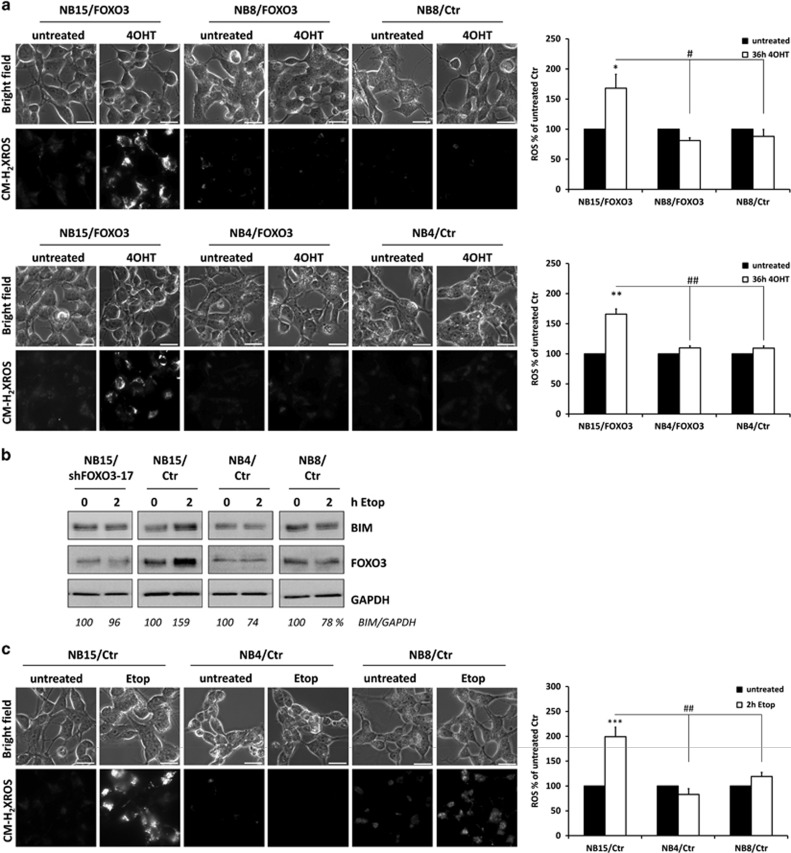
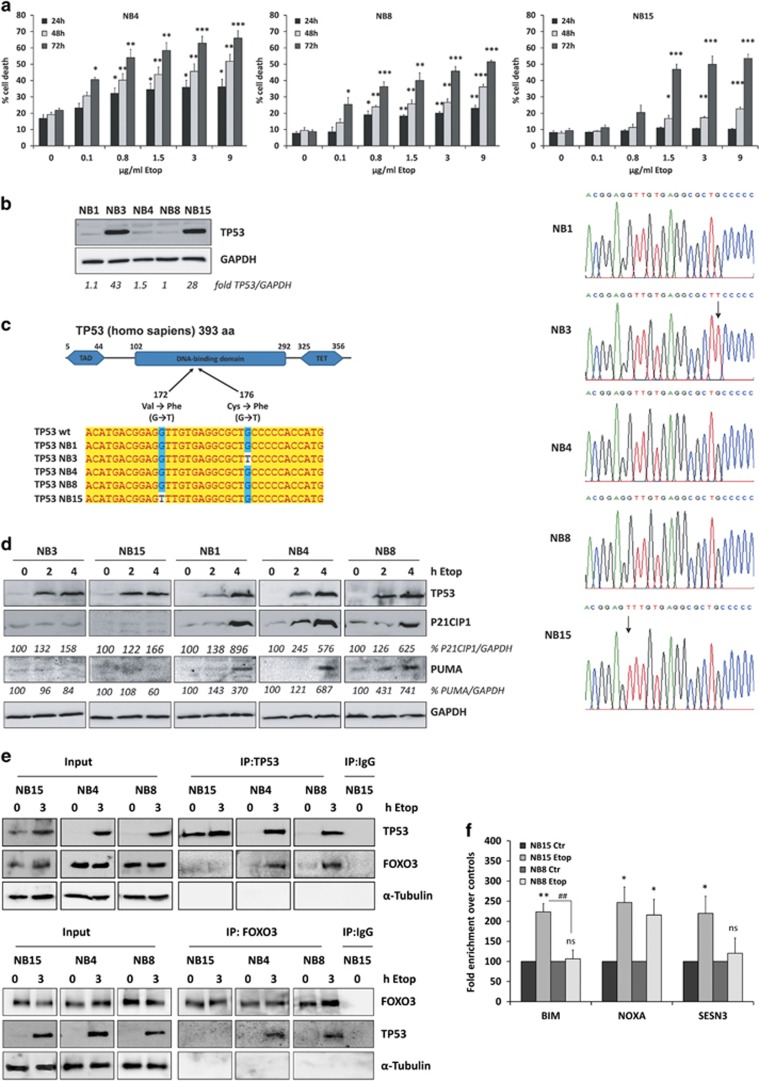
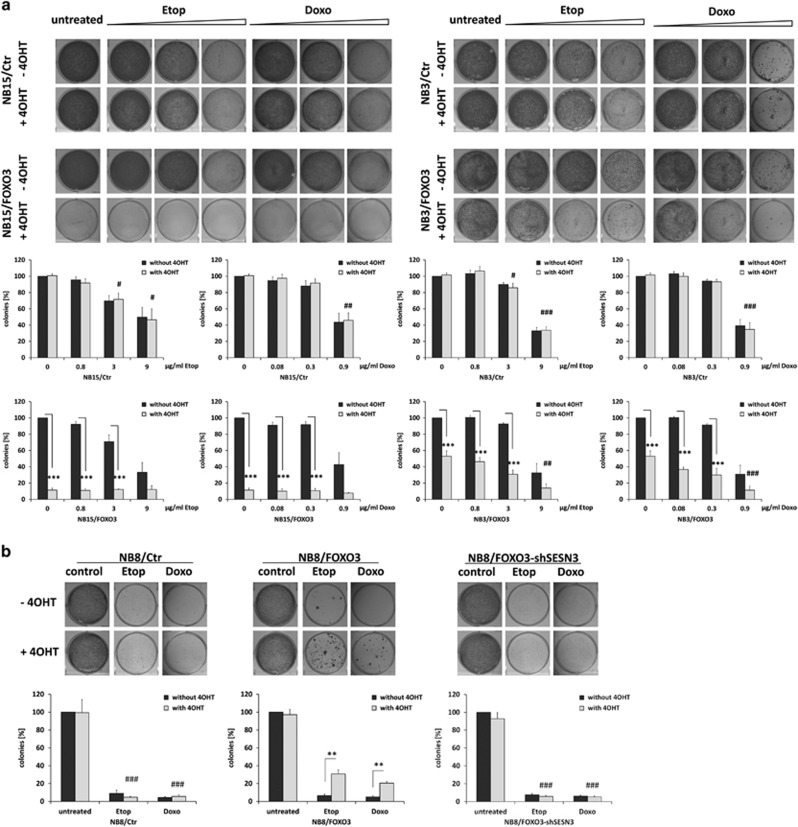
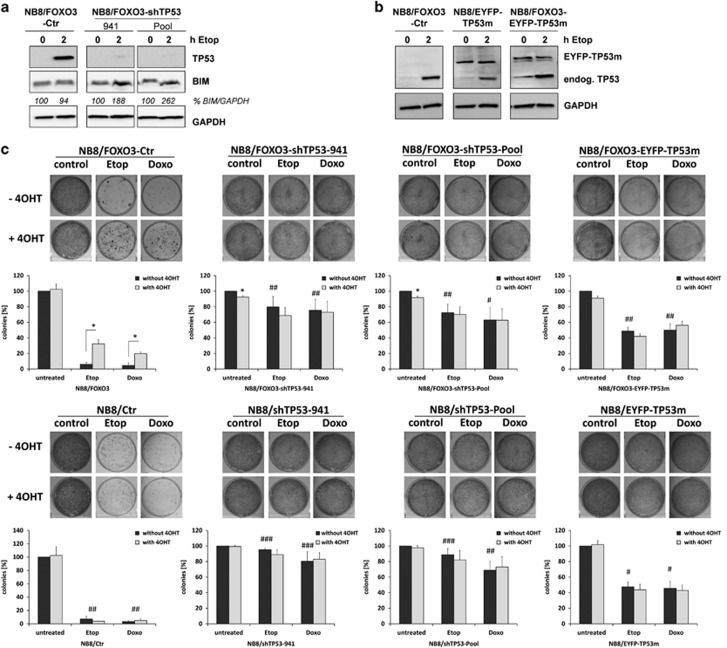
Forkhead box O class transcription factors are homeostasis regulators that control cell death, longevity and therapy-resistance. In neuroblastoma (NB), nuclear FOXO3 correlates with stage M disease and poor prognosis. To analyze whether FOXO3 contributes to drug-resistance in this childhood cancer, we investigated how different high-stage-derived NB cells respond to the activation of an ectopic FOXO3 allele. We found endogenous FOXO3 mostly localized to the nucleus-upon activation of an ectopic, 4OHT-activated FOXO3(A3)ER fusion protein two of the cell lines underwent apoptosis, whereas in the others FOXO3-activation even increased survival during drug-treatment. In the latter cell type, FOXO3 did not induce the BH3-only protein BCL2L11/BIM due to impaired binding of FOXO3 to the BIM-promoter, but still activated other FOXO3 targets. It was shown before that FOXO3 and TP53 physically interact with each other at two different regions-the TP53-N-terminus binds to the FOXO3-DNA binding domain (DBD) and the FOXO3-C-terminus interacts with the TP53-DBD. Interestingly, cell lines that undergo FOXO3-induced cell death carry homozygous point mutations in the TP53-DBD near the structural hotspot-mutation-site R175H, which abrogated FOXO3-TP53 interaction. In contrast, in FOXO3-death-resistant cells no point mutations in the TP53-DBD were found-in these cells FOXO3-TP53 complexes are formed and FOXO3-binding to the BIM-promoter, but not the induction of the detoxifying protein SESN3, were prevented, which in turn increased chemo-protection in this type of high-stage-derived NB cells. Our combined data suggest that FOXO3 steps in as a death inducer in case of TP53-mutation, whereas functional TP53 alters FOXO3-target-promoter-recognition, which prevents death induction by FOXO3 and instead increases chemo-protection and survival of NB cells. This novel mechanism may explain the low incidence of TP53 mutation in high-stage NB at diagnosis and suggests FOXO3 as a therapeutic target for this childhood malignancy.
叉头框O类转录因子是内稳态调节因子,可控制细胞死亡、寿命和治疗抗性。在神经母细胞瘤(NB)中,细胞核内的FOXO3与M期疾病及不良预后相关。为分析FOXO3是否导致这种儿童癌症的耐药性,我们研究了不同高分期来源的NB细胞对异位FOXO3等位基因激活的反应。我们发现,在异位的4OHT激活的FOXO3(A3)ER融合蛋白激活后,内源性FOXO3大多定位于细胞核,其中两个细胞系发生凋亡,而在其他细胞系中,FOXO3激活甚至增加了药物治疗期间的存活率。在后者这种细胞类型中,由于FOXO3与BIM启动子的结合受损,FOXO3未诱导仅含BH3结构域的蛋白BCL2L11/BIM,但仍激活了其他FOXO3靶标。之前的研究表明,FOXO3和TP53在两个不同区域发生物理相互作用——TP53的N末端与FOXO3的DNA结合结构域(DBD)结合,FOXO3的C末端与TP53的DBD相互作用。有趣的是,经历FOXO3诱导细胞死亡的细胞系在TP53-DBD中靠近结构热点突变位点R175H处携带纯合点突变,这消除了FOXO3与TP53的相互作用。相反,在对FOXO3诱导死亡具有抗性的细胞中,未发现TP53-DBD中的点突变——在这些细胞中形成了FOXO3-TP53复合物,且阻止了FOXO3与BIM启动子的结合,但未诱导解毒蛋白SESN3,这反过来增加了这种高分期来源的NB细胞的化学保护作用。我们的综合数据表明,在TP53发生突变的情况下,FOXO3作为死亡诱导因子发挥作用,而功能性TP53改变了FOXO3靶标启动子的识别,这阻止了FOXO3诱导的细胞死亡,反而增加了NB细胞的化学保护作用和存活率。这种新机制可能解释了高分期NB在诊断时TP53突变发生率较低的原因,并提示FOXO3可作为这种儿童恶性肿瘤的治疗靶点。