Department of Orthopedic, First Affiliated Hospital of Jinzhou Medical University, Jinzhou City, PR China.
Department of Endocrinology, First Affiliated Hospital of Jinzhou Medical University, Jinzhou City, PR China.
Sci Rep. 2017 Sep 4;7(1):10332. doi: 10.1038/s41598-017-10611-8.
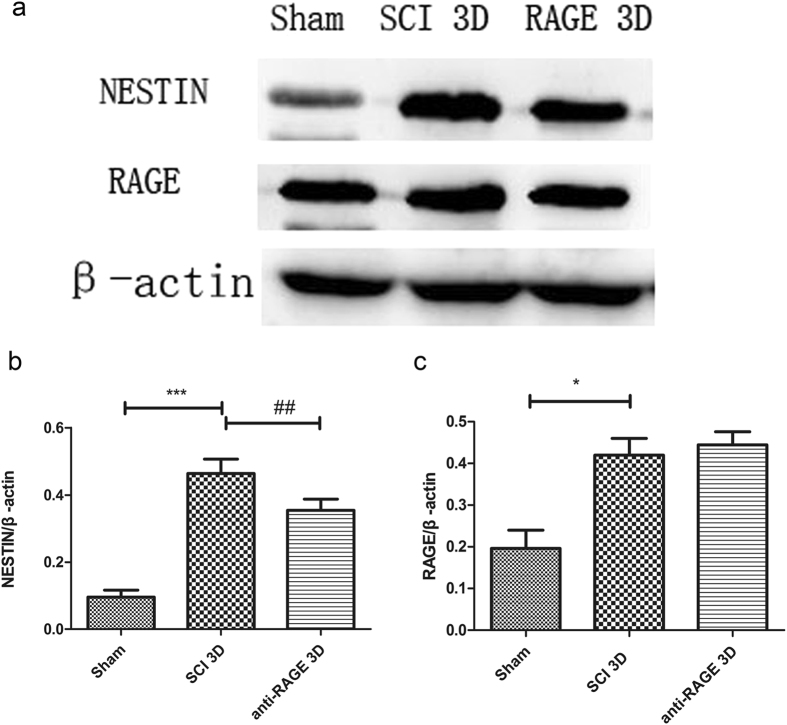
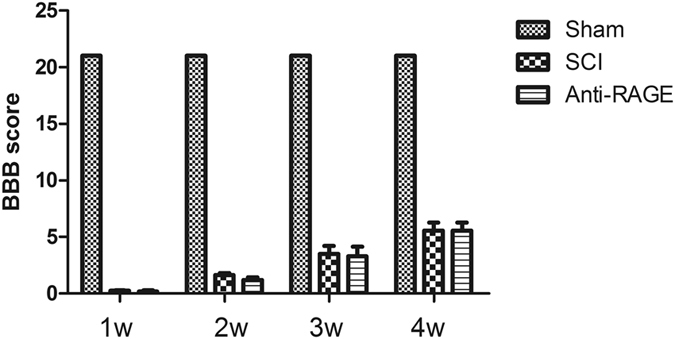
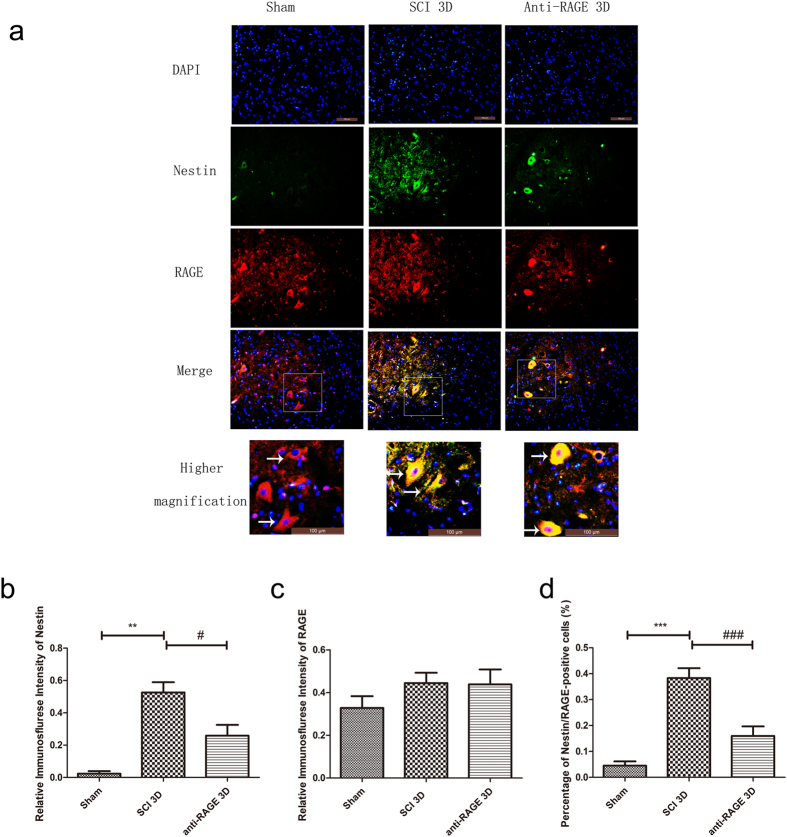
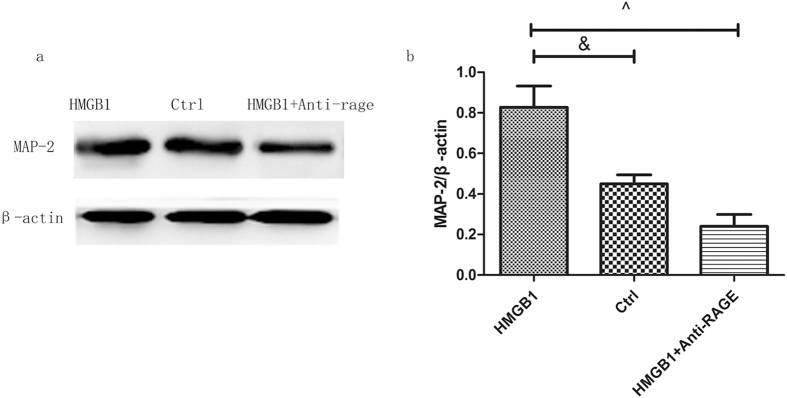
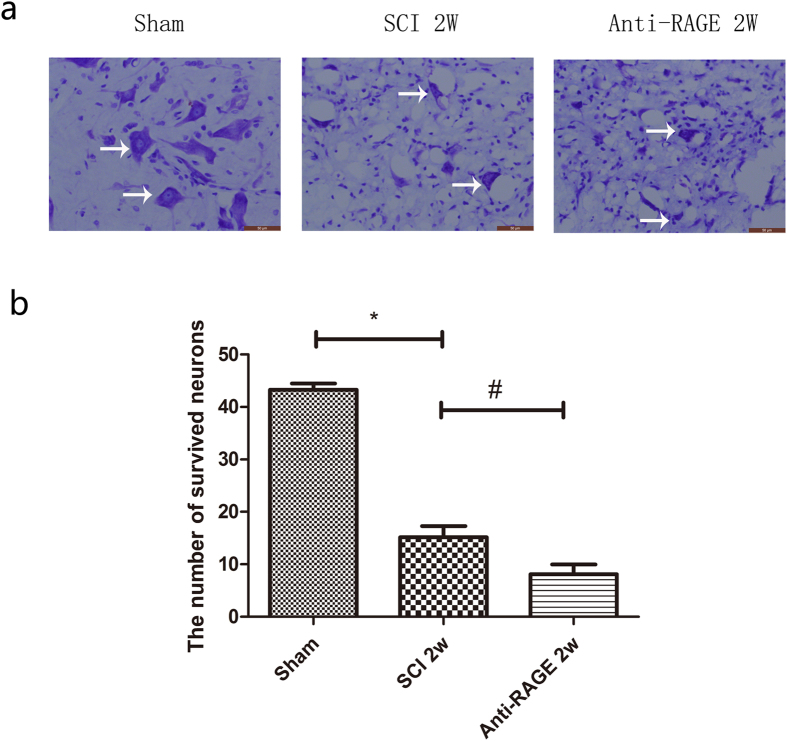
Receptor for advanced glycation end products (RAGE) signaling is involved in a series of cell functions after spinal cord injury (SCI). Our study aimed to elucidate the effects of RAGE signaling on the neuronal recovery after SCI. In vivo, rats were subjected to SCI with or without anti-RAGE antibodies micro-injected into the lesion epicenter. We detected Nestin/RAGE, SOX-2/RAGE and Nestin/MAP-2 after SCI by Western blot or immunofluorescence (IF). We found that neural stem cells (NSCs) co-expressed with RAGE were significantly activated after SCI, while stem cell markers Nestin and SOX-2 were reduced by RAGE blockade. We found that RAGE inhibition reduced nestin-positive NSCs expressing MAP-2, a mature neuron marker. RAGE blockade does not improve neurobehavior Basso, Beattie and Bresnahan (BBB) scores; however, it damaged survival of ventral neurons via Nissl staining. Through in vitro study, we found that recombinant HMGB1 administration does not lead to increased cytokines of TNF-α and IL-1β, while anti-RAGE treatment reduced cytokines of TNF-α and IL-1β induced by LPS via ELISA. Meanwhile, HMGB1 increased MAP-2 expression, which was blocked after anti-RAGE treatment. Hence, HMGB1/RAGE does not exacerbate neuronal inflammation but plays a role in promoting NSCs differentiating into mature neurons in the pathological process of SCI.
晚期糖基化终产物(RAGE)受体信号参与脊髓损伤(SCI)后的一系列细胞功能。我们的研究旨在阐明 RAGE 信号对 SCI 后神经元恢复的影响。在体内,大鼠 SCI 后,在损伤中心注射抗 RAGE 抗体或不注射。通过 Western blot 或免疫荧光(IF)检测 SCI 后巢蛋白/RAGE、SOX-2/RAGE 和巢蛋白/MAP-2。我们发现,SCI 后 RAGE 共表达的神经干细胞(NSCs)明显被激活,而 RAGE 阻断则降低了干细胞标志物巢蛋白和 SOX-2。我们发现 RAGE 抑制减少了表达成熟神经元标志物 MAP-2 的巢蛋白阳性 NSCs。RAGE 阻断不能改善神经行为学的 Basso,Beattie 和 Bresnahan(BBB)评分;然而,通过尼氏染色发现它损害了腹侧神经元的存活。通过体外研究,我们发现重组 HMGB1 给药不会导致 TNF-α 和 IL-1β 等细胞因子增加,而抗 RAGE 治疗通过 ELISA 减少了 LPS 诱导的 TNF-α 和 IL-1β 细胞因子。同时,HMGB1 增加了 MAP-2 的表达,而抗 RAGE 治疗后这种表达被阻断。因此,HMGB1/RAGE 不会加重神经元炎症,而是在 SCI 的病理过程中促进 NSCs 分化为成熟神经元。