Department of Biological Sciences and Border Biomedical Research Center, The University of Texas at El Paso, 500 West University Avenue, El Paso, TX, 79968, USA.
BMC Cancer. 2017 Sep 5;17(1):621. doi: 10.1186/s12885-017-3635-4.
Prostate cancer is a major contributor to mortality worldwide, and significant efforts are being undertaken to decipher specific cellular and molecular pathways underlying the disease. Chronic stress is known to suppress reproductive function and promote tumor progression in several cancer models, but our understanding of the mechanisms through which stress contributes to cancer development and progression is incomplete. We therefore examined the relationship between stress, modulation of the gonadotropin-releasing hormone (GnRH) system, and changes in the expression of cancer-related genes in the rat prostate.
Adult male rats were acutely or repeatedly exposed to restraint stress, and compared to unstressed controls and groups that were allowed 14 days of recovery from the stress. Prostate tissue was collected and frozen for gene expression analyses by PCR array before the rats were transcardially perfused; and brain tissues harvested and immunohistochemically stained for Fos to determine neuronal activation.
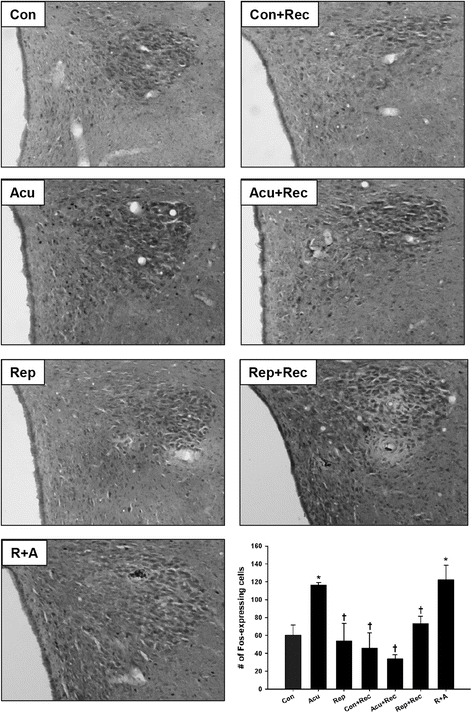
Acute stress elevated Fos expression in the paraventricular nucleus of the hypothalamus (PVH), an effect that habituated with repeated stress exposure. Data from the PCR arrays showed that repeated stress significantly increases the transcript levels of several genes associated with cellular proliferation, including proto-oncogenes. Data from another array platform showed that both acute and repeated stress can induce significant changes in metastatic gene expression. The functional diversity of genes with altered expression, which includes transcription factors, growth factor receptors, apoptotic genes, and extracellular matrix components, suggests that stress is able to induce aberrant changes in pathways that are deregulated in prostate cancer.
Our findings further support the notion that stress can affect cancer outcomes, perhaps by interfering with neuroendocrine mechanisms involved in the control of reproduction.
前列腺癌是全球范围内导致死亡的主要原因之一,目前正在进行大量努力来解析疾病背后特定的细胞和分子途径。已知慢性应激会抑制几种癌症模型中的生殖功能并促进肿瘤进展,但我们对压力促进癌症发展和进展的机制的理解并不完整。因此,我们研究了应激、促性腺激素释放激素 (GnRH) 系统的调节以及大鼠前列腺中与癌症相关基因表达变化之间的关系。
成年雄性大鼠急性或反复暴露于束缚应激中,并与未应激对照以及允许应激后 14 天恢复的组进行比较。收集前列腺组织并进行 PCR 阵列基因表达分析,然后在大鼠心脏灌注前进行冷冻;并收集脑组织并进行 Fos 免疫组织化学染色以确定神经元激活。
急性应激会增加下丘脑室旁核 (PVH) 中的 Fos 表达,这种效应随着反复应激暴露而习惯化。PCR 阵列数据显示,反复应激会显著增加与细胞增殖相关的几个基因的转录水平,包括原癌基因。另一个阵列平台的数据表明,急性和反复应激均可诱导转移基因表达的显著变化。表达改变的基因具有功能多样性,包括转录因子、生长因子受体、凋亡基因和细胞外基质成分,这表明应激能够诱导前列腺癌中失调途径的异常变化。
我们的发现进一步支持了应激会影响癌症结果的观点,可能是通过干扰参与生殖控制的神经内分泌机制。