Lineberger Comprehensive Cancer Center, The University of North Carolina at Chapel Hill, Chapel Hill, North Carolina, USA.
Department of Microbiology, University of Iowa, Iowa City, Iowa, USA.
mBio. 2017 Sep 5;8(5):e00969-17. doi: 10.1128/mBio.00969-17.
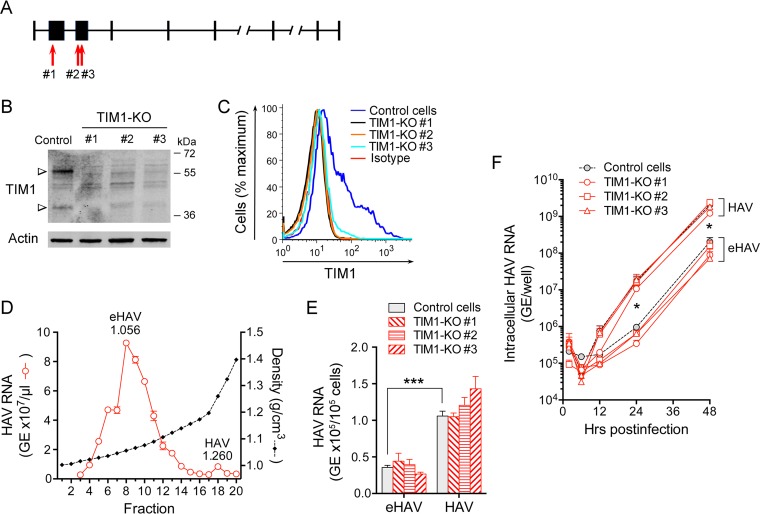
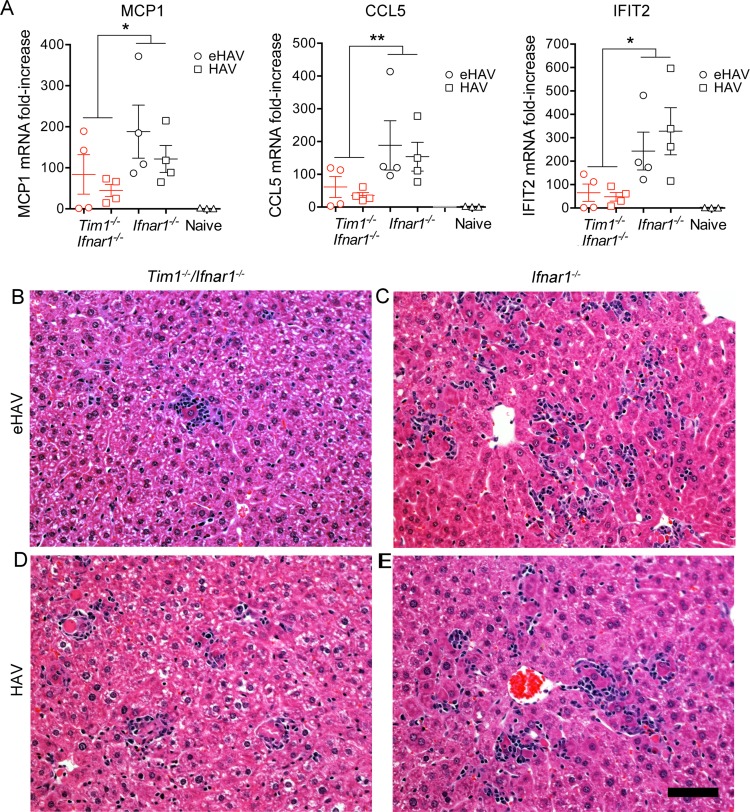
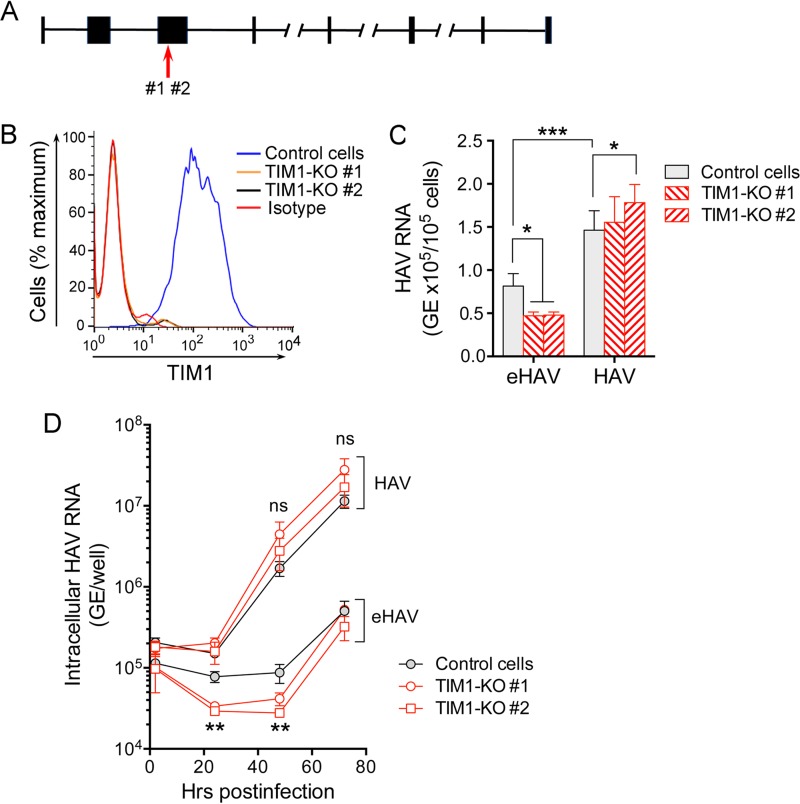
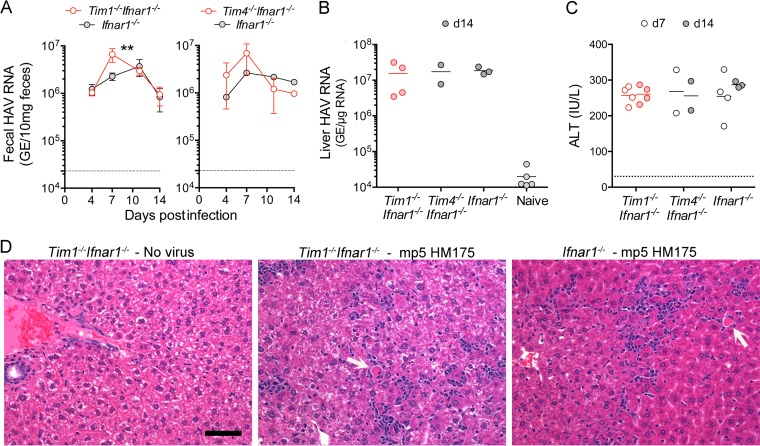
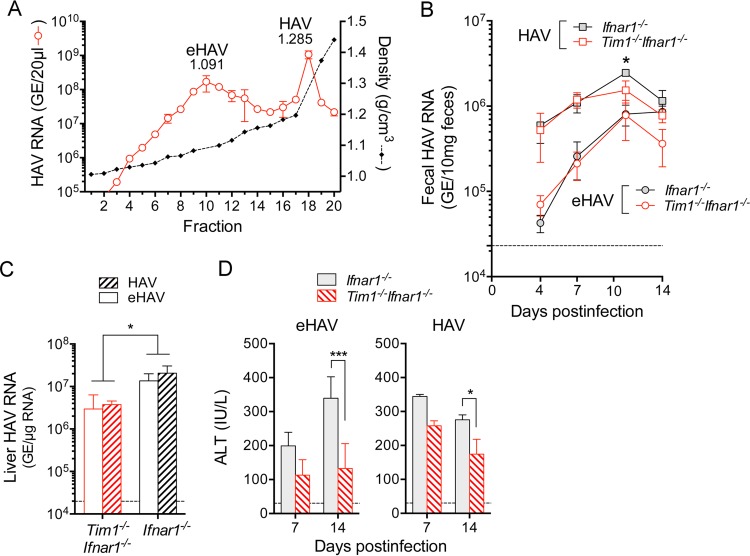
Receptor molecules play key roles in the cellular entry of picornaviruses, and TIM1 (HAVCR1) is widely accepted to be the receptor for hepatitis A virus (HAV), an unusual, hepatotropic human picornavirus. However, its identification as the hepatovirus receptor predated the discovery that hepatoviruses undergo nonlytic release from infected cells as membrane-cloaked, quasi-enveloped HAV (eHAV) virions that enter cells via a pathway distinct from naked, nonenveloped virions. We thus revisited the role of TIM1 in hepatovirus entry, examining both adherence and infection/replication in cells with clustered regularly interspaced short palindromic repeat (CRISPR)/Cas9-engineered TIM1 knockout. Cell culture-derived, gradient-purified eHAV bound Huh-7.5 human hepatoma cells less efficiently than naked HAV at 4°C, but eliminating TIM1 expression caused no difference in adherence of either form of HAV, nor any impact on infection and replication in these cells. In contrast, TIM1-deficient Vero cells showed a modest reduction in quasi-enveloped eHAV (but not naked HAV) attachment and replication. Thus, TIM1 facilitates quasi-enveloped eHAV entry in Vero cells, most likely by binding phosphatidylserine (PtdSer) residues on the eHAV membrane. Both and double-knockout mice were susceptible to infection upon intravenous challenge with infected liver homogenate, with fecal HAV shedding and serum alanine aminotransferase (ALT) elevations similar to those in mice. However, intrahepatic HAV RNA and ALT elevations were modestly reduced in mice compared to mice challenged with a lower titer of gradient-purified HAV or eHAV. We conclude that TIM1 is not an essential hepatovirus entry factor, although its PtdSer-binding activity may contribute to the spread of quasi-enveloped virus and liver injury in mice. T cell immunoglobulin and mucin-containing domain protein 1 (TIM1) was reported more than 2 decades ago to be an essential cellular receptor for hepatitis A virus (HAV), a picornavirus in the genus, resulting in its designation as "hepatitis A virus cellular receptor 1" (HAVCR1) by the Human Genome Organization Gene Nomenclature Committee. However, recent studies have shown that HAV exists in nature as both naked, nonenveloped (HAV) virions and membrane-cloaked, quasi-enveloped infectious virus (eHAV), prompting us to revisit the role of TIM1 in viral entry. We show here that TIM1 (HAVCR1) is not an essential cellular receptor for HAV entry into cultured cells or required for viral replication and pathogenesis in permissive strains of mice, although it may facilitate early stages of infection by binding phosphatidylserine on the eHAV surface. This work thus corrects the published record and sets the stage for future efforts to identify specific hepatovirus entry factors.
受体分子在小核糖核酸病毒的细胞进入中起着关键作用,TIM1(HAVCR1)被广泛认为是甲型肝炎病毒(HAV)的受体,HAV 是一种不常见的嗜肝人类小核糖核酸病毒。然而,它作为肝病毒受体的鉴定先于发现肝病毒作为膜包裹的准包膜 HAV(eHAV)病毒粒子从感染细胞中以不同于非包膜裸病毒粒子的途径非裂解释放。因此,我们重新研究了 TIM1 在肝病毒进入中的作用,检查了在具有聚类规则间隔短回文重复(CRISPR)/Cas9 工程 TIM1 敲除的细胞中粘附和感染/复制的作用。细胞培养衍生的梯度纯化的 eHAV 在 4°C 下比裸 HAV 更有效地结合 Huh-7.5 人肝癌细胞,但消除 TIM1 表达对任何形式的 HAV 的粘附均无差异,也对这些细胞中的感染和复制没有任何影响。相比之下,TIM1 缺陷的 Vero 细胞显示出准包膜 eHAV(而非裸 HAV)附着和复制的适度减少。因此,TIM1 促进了 Vero 细胞中准包膜 eHAV 的进入,可能是通过结合 eHAV 膜上的磷脂酰丝氨酸(PtdSer)残基。和 双重敲除小鼠在静脉内用感染的肝匀浆攻毒后均易感,粪便 HAV 脱落和血清丙氨酸氨基转移酶(ALT)升高与 小鼠相似。然而,与用梯度纯化的 HAV 或 eHAV 的低滴度攻毒的 小鼠相比,在 小鼠中肝内 HAV RNA 和 ALT 升高略有降低。我们得出的结论是,TIM1 不是必需的肝病毒进入因子,尽管其 PtdSer 结合活性可能有助于准包膜病毒的传播和小鼠肝脏损伤。T 细胞免疫球蛋白和粘蛋白结构域蛋白 1(TIM1)在 20 多年前被报道是甲型肝炎病毒(HAV)的必需细胞受体,HAV 是属中的一种小核糖核酸病毒,导致其被人类基因组组织基因命名委员会指定为“甲型肝炎病毒细胞受体 1”(HAVCR1)。然而,最近的研究表明,HAV 天然存在于裸露的非包膜(HAV)病毒粒子和膜包裹的准包膜感染性病毒(eHAV)中,这促使我们重新研究 TIM1 在病毒进入中的作用。我们在这里表明,TIM1(HAVCR1)不是 HAV 进入培养细胞或在允许的小鼠株中复制和发病所必需的细胞受体,尽管它可能通过结合 eHAV 表面的磷脂酰丝氨酸促进感染的早期阶段。这项工作纠正了已发表的记录,并为未来识别特定的肝病毒进入因子奠定了基础。