Department of Anatomy, Faculty of Medicine, Chiang Mai University, Chiang Mai, 50200, Thailand.
Faculty of Medicine, Mahasarakham University, MahaSarakham, Thailand.
Sci Rep. 2017 Sep 5;7(1):10556. doi: 10.1038/s41598-017-11181-5.
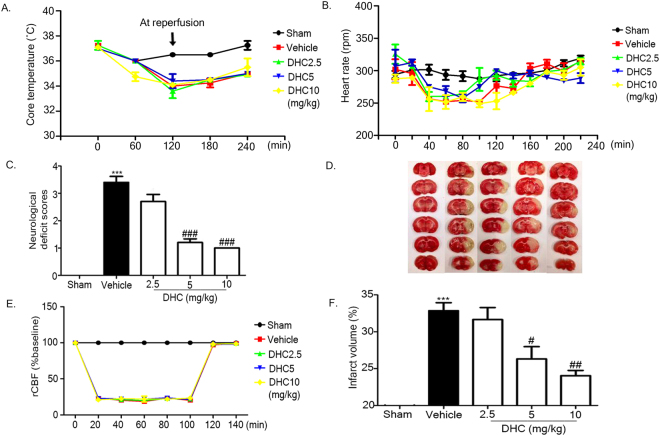
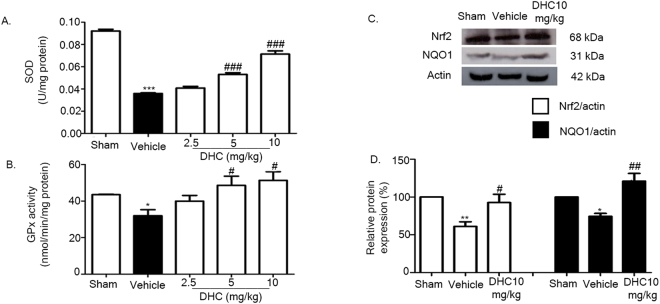
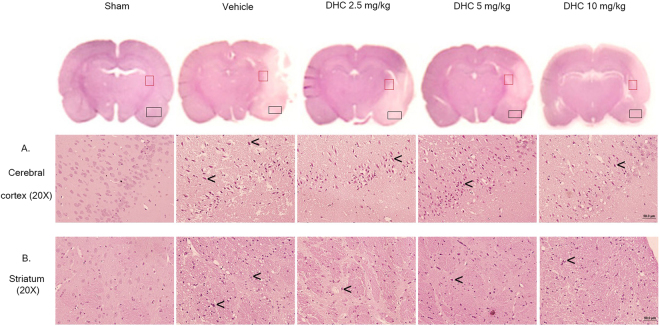
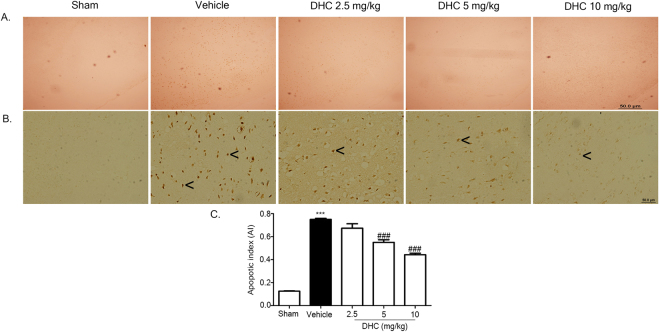
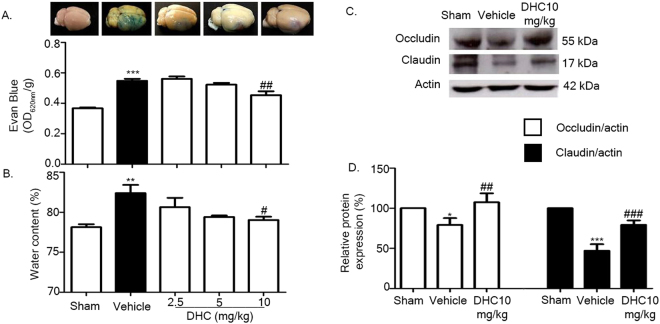
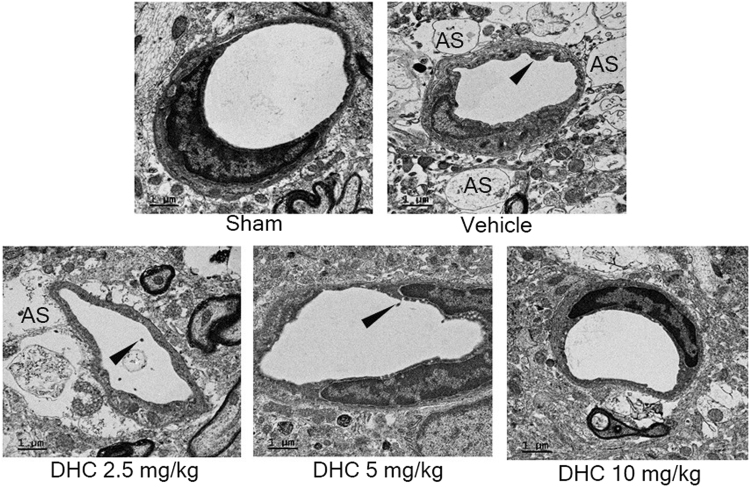
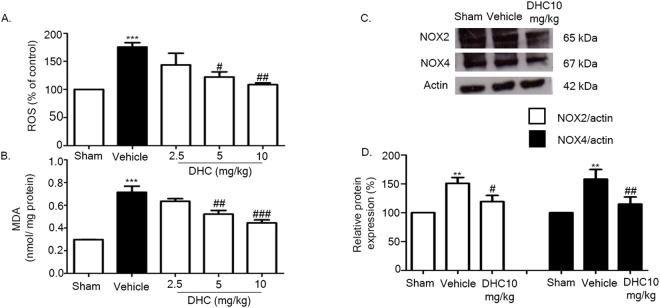
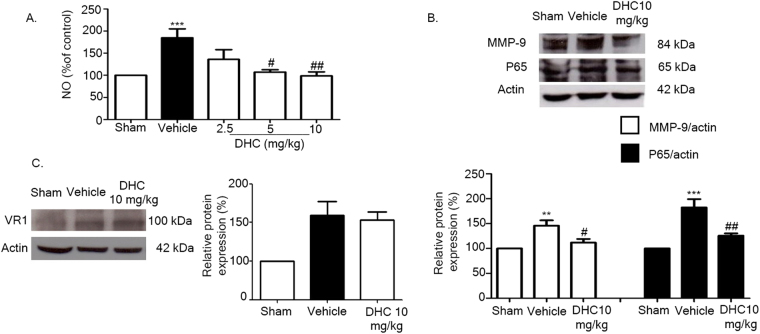
This study investigated the effect of dihydrocapsaicin (DHC) on cerebral and blood brain barrier (BBB) damage in cerebral ischemia and reperfusion (I/R) models. The models were induced by middle cerebral artery occlusion (MCAO) for 2 h followed by reperfusion. The rats were divided into five groups: sham, or control group; vehicle group; and 2.5 mg/kg, 5 mg/kg, and 10 mg/kg BW DHC-treated I/R groups. After 24 h of reperfusion, we found that DHC significantly reduced the area of infarction, morphology changes in the neuronal cells including apoptotic cell death, and also decreased the BBB damage via reducing Evan Blue leakage, water content, and ultrastructure changes, in addition to increasing the tight junction (TJ) protein expression. DHC also activated nuclear-related factor-2 (Nrf2) which involves antioxidant enzymes like superoxide dismutase (SOD) and glutathione peroxidase (GPx), and significantly decreased oxidative stress and inflammation via down-regulated reactive oxygen species (ROS), NADPH oxidase (NOX2, NOX4), nuclear factor kappa-beta (NF-ĸB), and nitric oxide (NO), including matrix metalloproteinases-9 (MMP-9) levels. DHC protected the cerebral and the BBB from I/R injury via attenuation of oxidative stress and inflammation. Therefore, this study offers to aid future development for protection against cerebral I/R injury in humans.
本研究旨在探讨二氢辣椒素(DHC)对脑缺血再灌注(I/R)模型中脑和血脑屏障(BBB)损伤的影响。该模型通过大脑中动脉阻塞(MCAO)诱导 2 小时,随后再灌注。大鼠分为 5 组:假手术或对照组;载体组;以及 2.5mg/kg、5mg/kg 和 10mg/kg BW DHC 处理的 I/R 组。再灌注 24 小时后,我们发现 DHC 可显著减少梗死面积、神经元细胞形态变化(包括凋亡细胞死亡),并通过减少伊文思蓝漏出、水含量和超微结构变化来减轻 BBB 损伤,此外还能增加紧密连接(TJ)蛋白表达。DHC 还激活了核相关因子-2(Nrf2),涉及超氧化物歧化酶(SOD)和谷胱甘肽过氧化物酶(GPx)等抗氧化酶,并通过下调活性氧(ROS)、烟酰胺腺嘌呤二核苷酸磷酸氧化酶(NOX2、NOX4)、核因子 kappa-beta(NF-ĸB)和一氧化氮(NO),包括基质金属蛋白酶-9(MMP-9)水平,显著减轻氧化应激和炎症。DHC 通过减轻氧化应激和炎症来保护大脑和 BBB 免受 I/R 损伤。因此,本研究为人类脑 I/R 损伤的防护提供了新的思路。