Jia Jiaoyuan, Qiao Yu, Pilo Maria G, Cigliano Antonio, Liu Xianqiong, Shao Zixuan, Calvisi Diego F, Chen Xin
Department of Oncology and Hematology, The Second Hospital, Jilin University, Changchun, China.
Department of Bioengineering and Therapeutic Sciences and Liver Center, University of California, San Francisco, California, United States of America.
PLoS One. 2017 Sep 6;12(9):e0184068. doi: 10.1371/journal.pone.0184068. eCollection 2017.
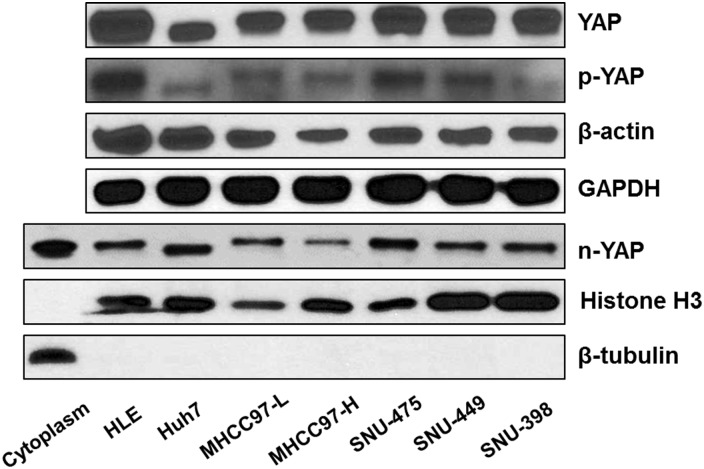
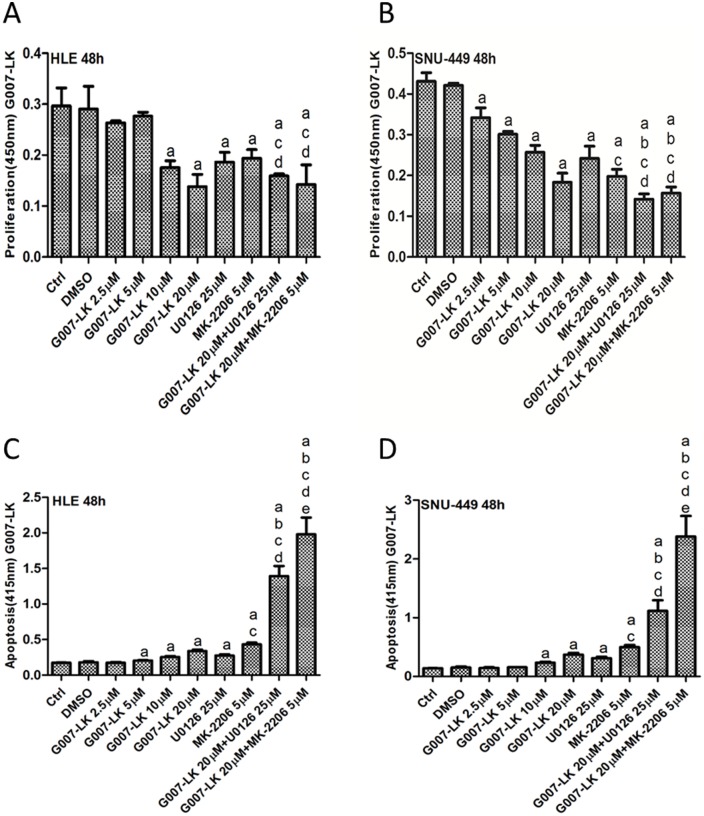
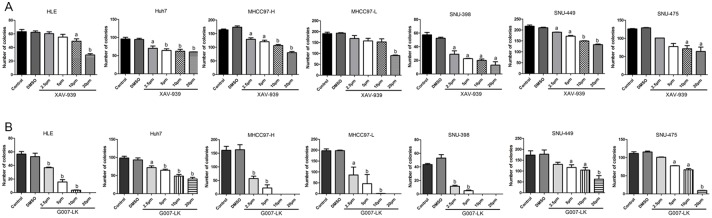
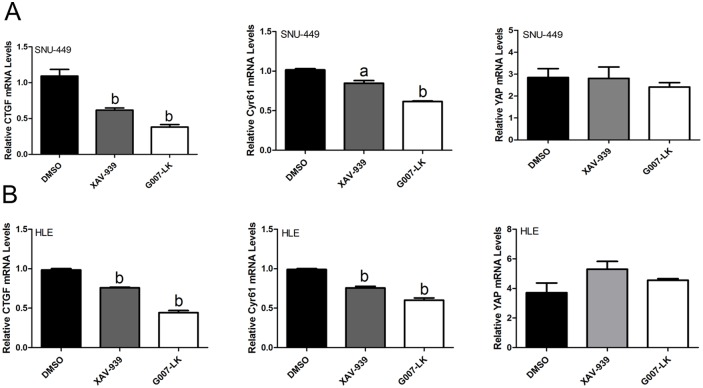
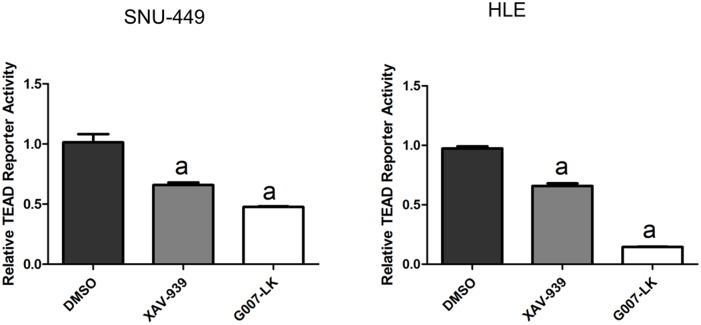
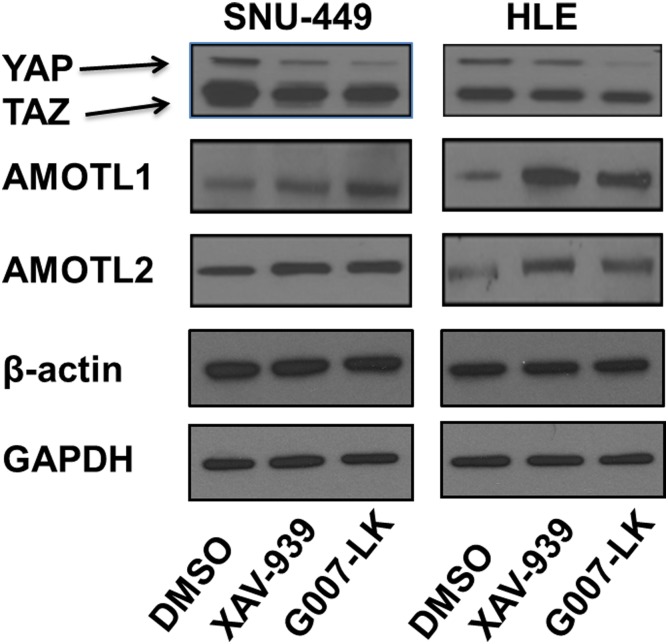
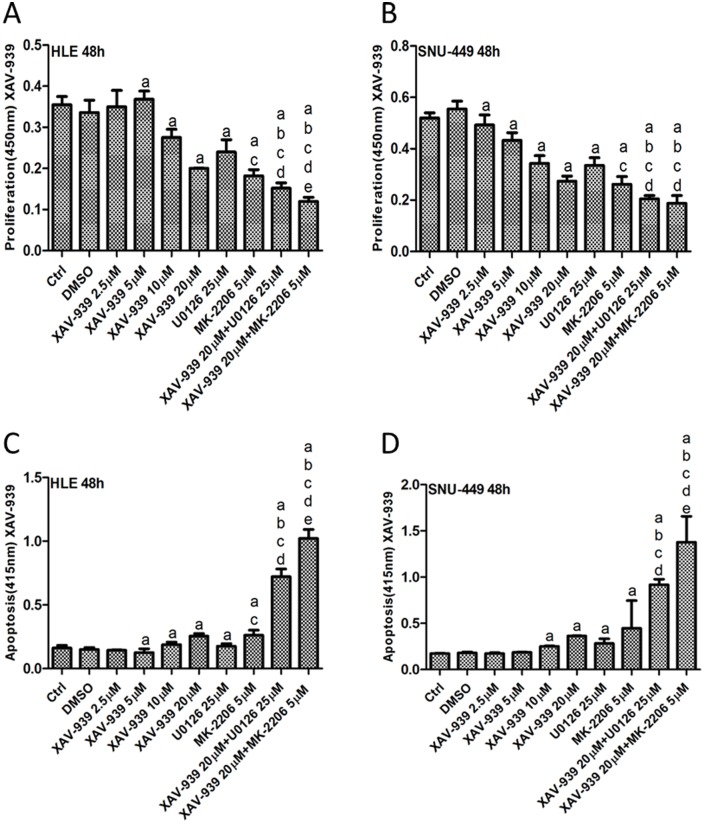
Previous data indicate that Tankyrase inhibitors exert anti-growth functions in many cancer cell lines due to their ability to inactivate the YAP protooncogene. In the present manuscript, we investigated the effect of Tankyrase inhibitors on the growth of hepatocellular carcinoma (HCC) cell lines and the molecular mechanisms involved. For this purpose, we performed cell proliferation assay by colony-forming ability in seven human HCC cells subjected to XAV-939 and G007-LK Tankyrase inhibitors. Noticeably, the two Tankyrase inhibitors suppressed the HCC cell growth in a dose-dependent manner. Furthermore, we found that Tankyrase inhibitors synergized with MEK and AKT inhibitors to suppress HCC cell proliferation. At the molecular level, Tankyrase inhibitors significantly decreased YAP protein levels, reduced the expression of YAP target genes, and inhibited YAP/TEAD luciferase reporter activity. In addition, Tankyrase inhibitors administration was accompanied by upregulation of Angiomotin-like 1 (AMOTL1) and Angiomotin-like 2 (AMOTL2) proteins, two major negative regulators of YAP. Altogether, the present data indicate that XAV-939 and G007-LK Tankyrase inhibitors could suppress proliferation of hepatocellular carcinoma cells and downregulate YAP/TAZ by stabilizing AMOTL1 and AMOTL2 proteins, thus representing new potential anticancer drugs against hepatocellular carcinoma.
先前的数据表明,端锚聚合酶抑制剂能够使YAP原癌基因失活,从而在许多癌细胞系中发挥抗生长功能。在本论文中,我们研究了端锚聚合酶抑制剂对肝癌(HCC)细胞系生长的影响及其相关分子机制。为此,我们通过集落形成能力对7种人肝癌细胞进行了细胞增殖试验,这些细胞分别接受了XAV-939和G007-LK端锚聚合酶抑制剂处理。值得注意的是,这两种端锚聚合酶抑制剂均以剂量依赖性方式抑制肝癌细胞生长。此外,我们发现端锚聚合酶抑制剂与MEK和AKT抑制剂协同作用,以抑制肝癌细胞增殖。在分子水平上,端锚聚合酶抑制剂显著降低YAP蛋白水平,减少YAP靶基因的表达,并抑制YAP/TEAD荧光素酶报告基因活性。此外,给予端锚聚合酶抑制剂会伴随着血管动蛋白样蛋白1(AMOTL1)和血管动蛋白样蛋白2(AMOTL2)的上调,这是YAP的两种主要负调节因子。总之,目前的数据表明,XAV-939和G007-LK端锚聚合酶抑制剂可以通过稳定AMOTL1和AMOTL2蛋白来抑制肝癌细胞增殖并下调YAP/TAZ,因此代表了针对肝癌的新型潜在抗癌药物。