Hystad Eva Marit, Salmela Heli, Amdam Gro Vang, Münch Daniel
Faculty of Chemistry, Biotechnology and Food Science, Norwegian University of Life Sciences, Aas, Norway.
Department of Biosciences, Centre of Excellence in Biological Interactions, University of Helsinki, Helsinki, Finland.
PLoS One. 2017 Sep 6;12(9):e0184108. doi: 10.1371/journal.pone.0184108. eCollection 2017.
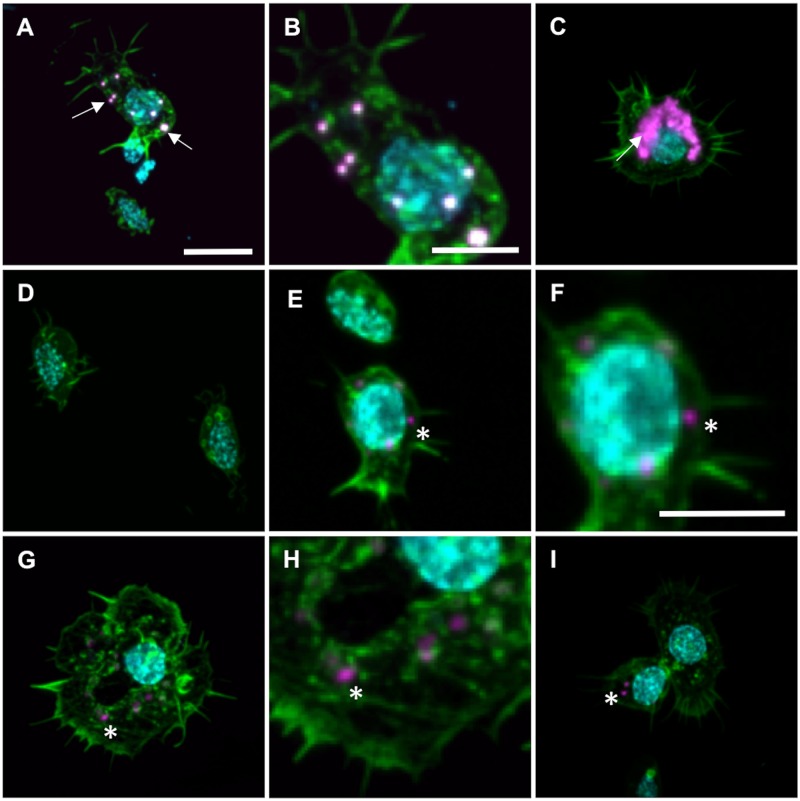
Honey bees as other insects rely on the innate immune system for protection against diseases. The innate immune system includes the circulating hemocytes (immune cells) that clear pathogens from hemolymph (blood) by phagocytosis, nodulation or encapsulation. Honey bee hemocyte numbers have been linked to hemolymph levels of vitellogenin. Vitellogenin is a multifunctional protein with immune-supportive functions identified in a range of species, including the honey bee. Hemocyte numbers can increase via mitosis, and this recruitment process can be important for immune system function and maintenance. Here, we tested if hemocyte mediated phagocytosis differs among the physiologically different honey bee worker castes (nurses, foragers and winter bees), and study possible interactions with vitellogenin and hemocyte recruitment. To this end, we adapted phagocytosis assays, which-together with confocal microscopy and flow cytometry-allow qualitative and quantitative assessment of hemocyte performance. We found that nurses are more efficient in phagocytic uptake than both foragers and winter bees. We detected vitellogenin within the hemocytes, and found that winter bees have the highest numbers of vitellogenin-positive hemocytes. Connections between phagocytosis, hemocyte-vitellogenin and mitosis were worker caste dependent. Our results demonstrate that the phagocytic performance of immune cells differs significantly between honey bee worker castes, and support increased immune competence in nurses as compared to forager bees. Our data, moreover, provides support for roles of vitellogenin in hemocyte activity.
蜜蜂与其他昆虫一样,依靠先天免疫系统来抵御疾病。先天免疫系统包括循环血细胞(免疫细胞),这些细胞通过吞噬作用、结节形成或包囊作用从血淋巴(血液)中清除病原体。蜜蜂的血细胞数量与卵黄原蛋白的血淋巴水平有关。卵黄原蛋白是一种多功能蛋白质,在包括蜜蜂在内的一系列物种中都具有免疫支持功能。血细胞数量可通过有丝分裂增加,这种募集过程对免疫系统的功能和维持可能很重要。在这里,我们测试了在生理上不同的蜜蜂工蜂等级(保育蜂、采集蜂和越冬蜂)中,血细胞介导的吞噬作用是否存在差异,并研究了其与卵黄原蛋白和血细胞募集之间可能的相互作用。为此,我们采用了吞噬作用测定法,该方法与共聚焦显微镜和流式细胞术一起,可对血细胞性能进行定性和定量评估。我们发现,保育蜂在吞噬摄取方面比采集蜂和越冬蜂更有效。我们在血细胞中检测到了卵黄原蛋白,并且发现越冬蜂的卵黄原蛋白阳性血细胞数量最多。吞噬作用、血细胞 - 卵黄原蛋白和有丝分裂之间的联系取决于工蜂等级。我们的结果表明,免疫细胞的吞噬性能在蜜蜂工蜂等级之间存在显著差异,并支持保育蜂相比采集蜂具有更高的免疫能力。此外,我们的数据为卵黄原蛋白在血细胞活性中的作用提供了支持。