Department of Integrative Biology, University of Texas at Austin, Austin, TX, United States of America.
Department of Entomology, Texas A&M University, College Station, TX, United States of America.
PLoS One. 2023 May 19;18(5):e0286070. doi: 10.1371/journal.pone.0286070. eCollection 2023.
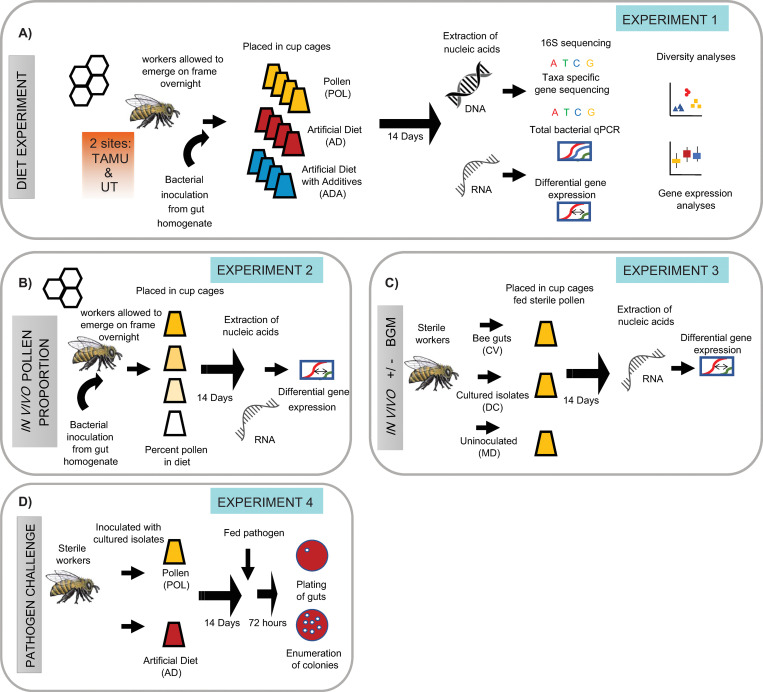
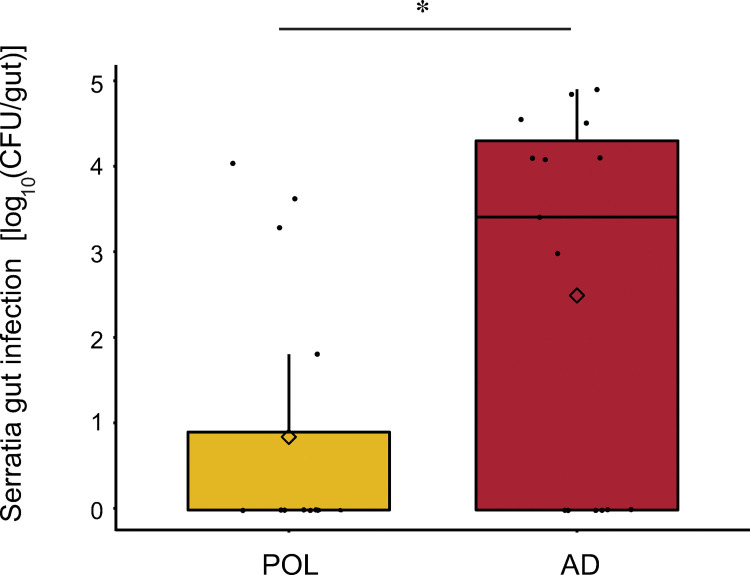
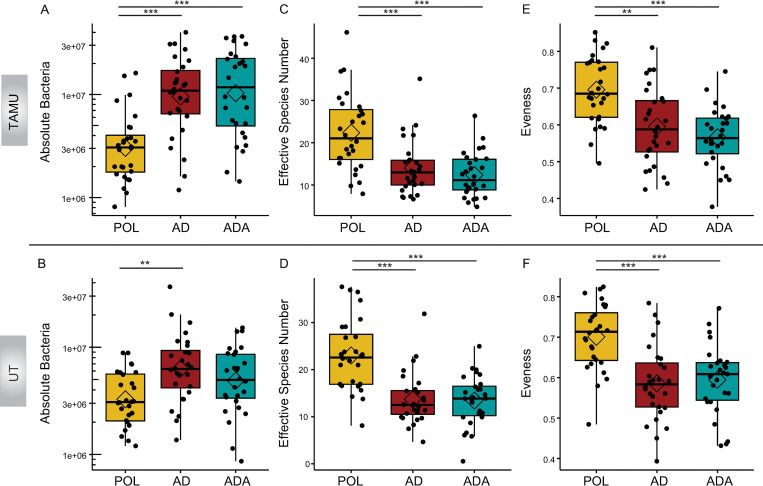
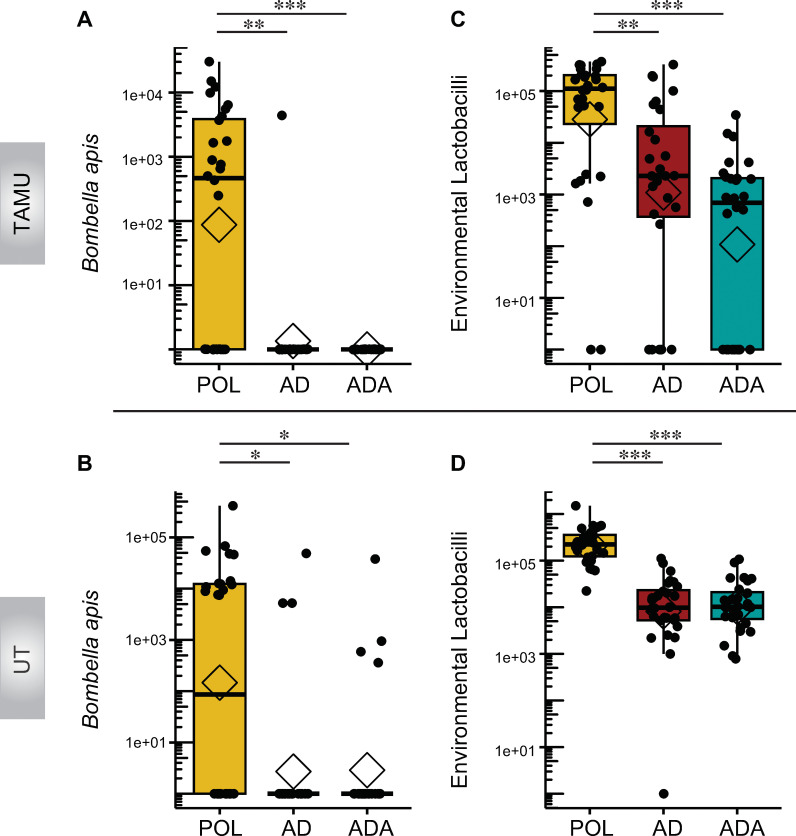
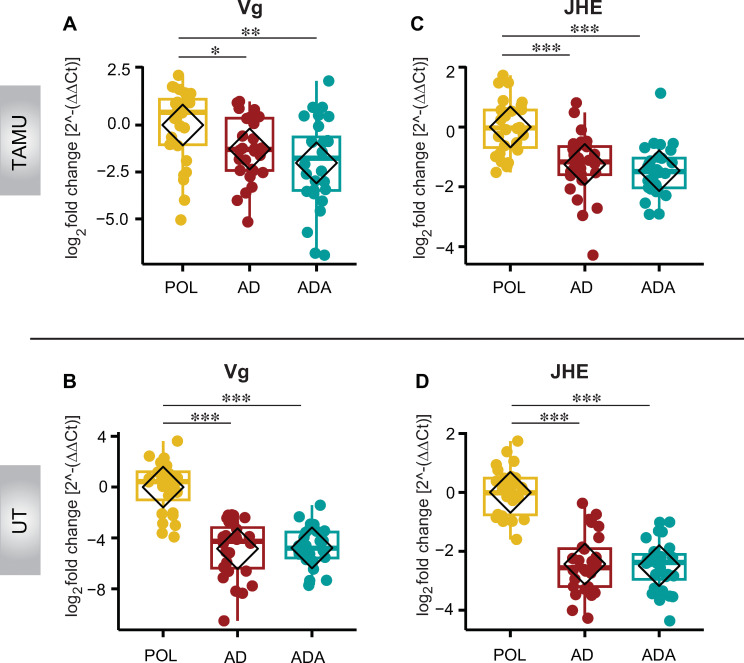
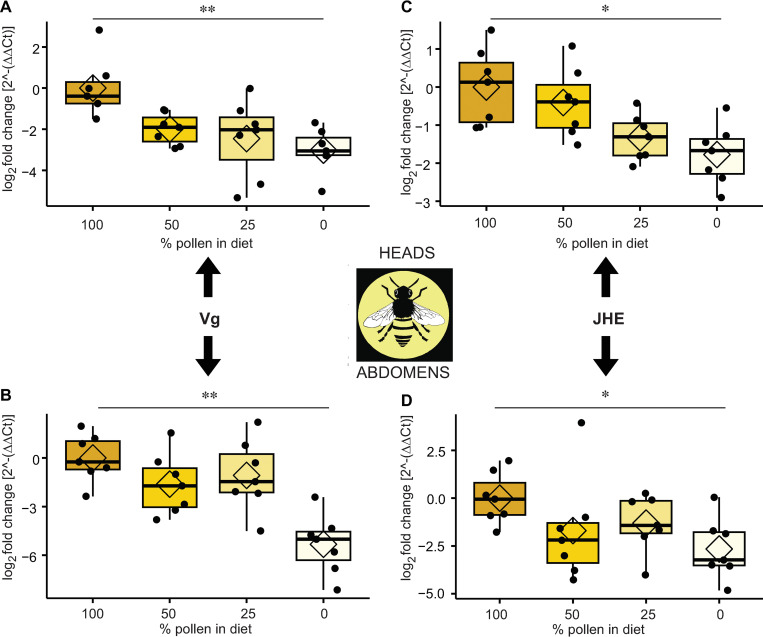
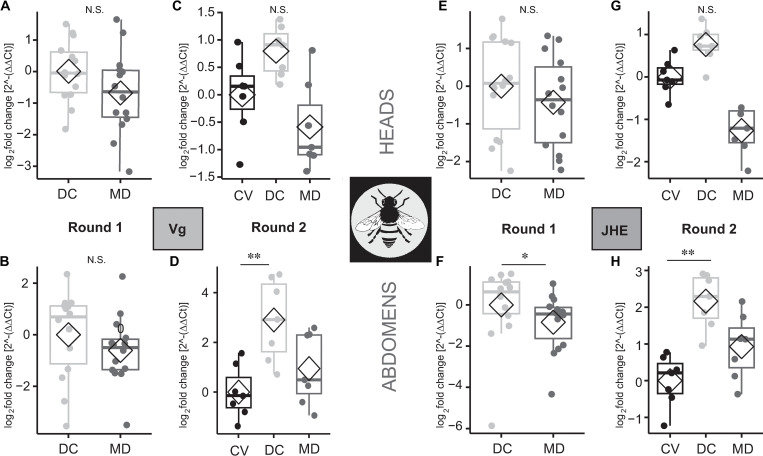
Pollen is the primary source of dietary protein for honey bees. It also includes complex polysaccharides in its outer coat, which are largely indigestible by bees but can be metabolized by bacterial species within the gut microbiota. During periods of reduced availability of floral pollen, supplemental protein sources are frequently provided to managed honey bee colonies. The crude proteins in these supplemental feeds are typically byproducts from food manufacturing processes and are rarely derived from pollen. Our experiments on the impact of different diets showed that a simplified pollen-free diet formulated to resemble the macronutrient profile of a monofloral pollen source resulted in larger microbial communities with reduced diversity, reduced evenness, and reduced levels of potentially beneficial hive-associated bacteria. Furthermore, the pollen-free diet sharply reduced the expression of genes central to honey bee development. In subsequent experiments, we showed that these shifts in gene expression may be linked to colonization by the gut microbiome. Lastly, we demonstrated that for bees inoculated with a defined gut microbiota, those raised on an artificial diet were less able to suppress infection from a bacterial pathogen than those that were fed natural pollen. Our findings demonstrate that a pollen-free diet significantly impacts the gut microbiota and gene expression of honey bees, indicating the importance of natural pollen as a primary protein source.
花粉是蜜蜂的主要食物蛋白质来源。它的外壳还含有复杂的多糖,这些多糖对蜜蜂来说基本无法消化,但可以被肠道微生物群中的细菌种类代谢。在花源花粉供应减少的时期,经常向管理中的蜜蜂群提供补充蛋白质来源。这些补充饲料中的粗蛋白通常是食品制造过程的副产品,很少来自花粉。我们关于不同饮食影响的实验表明,一种简化的、不含花粉的饮食配方,其设计旨在模仿单花源花粉的宏量营养素分布,结果导致微生物群落更大,但多样性降低、均匀度降低,以及潜在有益的与蜂群相关的细菌水平降低。此外,不含花粉的饮食大大降低了与蜜蜂发育相关的基因的表达。在随后的实验中,我们表明这些基因表达的变化可能与肠道微生物组的定植有关。最后,我们证明对于接种了特定肠道微生物组的蜜蜂来说,那些以人工饮食饲养的蜜蜂比那些以天然花粉为食的蜜蜂更难以抑制细菌病原体的感染。我们的研究结果表明,不含花粉的饮食会显著影响蜜蜂的肠道微生物群和基因表达,表明天然花粉作为主要蛋白质来源的重要性。