Abu-Madi Marawan, Boughattas Sonia, Behnke Jerzy M, Sharma Aarti, Ismail Ahmed
Department of Biomedical Science, College of Health Sciences, Biomedical Research Center, Qatar University, P.O. Box 2713, Doha, Qatar.
School of Life Sciences, University of Nottingham, University Park, Nottingham, NG7 2RD, UK.
Parasit Vectors. 2017 Sep 6;10(1):414. doi: 10.1186/s13071-017-2346-7.
Intestinal parasitosis is one of several health concerns about immigrants who travel from endemic to non-endemic regions. Reliable rapid sensitive diagnostic tools, for use in non-endemic regions, are urgently required to enable frequent assessment of immigrant workers in jobs where risk of local transmission is a particular concern (e.g. food-handlers). We assessed the burden of intestinal protozoa in newly arrived immigrants and those applying for renewal of work permits in Qatar (n = 735), by both microscopic examination of stool samples and by Real Time PCR methodology.
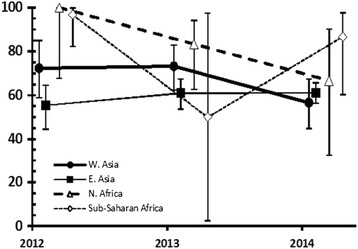
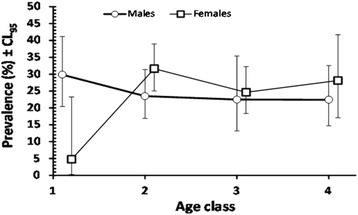
Prevalence was considerably higher using RT-PCR compared with coproscopy (Blastocystis hominis: 65.2 vs 7.6%; Giardia duodenalis: 14.3 vs 2.9%; Entamoeba histolytica: 1.6 vs 1.2%). Dientamoeba fragilis was sought only by RT-PCR (prevalence of 25.4%). Prevalence of G. duodenalis was significantly higher in male subjects, associated with blue collar workers and declined over time. Prevalence of B. hominis varied significantly with region of origin of subjects with highest values recorded among African immigrants. Prevalence of D. fragilis also varied with region of origin of subjects, and was lower in young female subjects and in renewal applicants compared with first-time applicants for work permits.
We strongly recommend that, henceforth, intestinal protozoa should be screened by RT-PCR, with a particular focus on frequent assessment of immigrant food-handlers.
肠道寄生虫病是从流行地区前往非流行地区的移民所面临的若干健康问题之一。迫切需要可靠、快速且灵敏的诊断工具,以便在非流行地区对从事特别关注本地传播风险工作的移民工人(如食品处理人员)进行频繁评估。我们通过粪便样本显微镜检查和实时聚合酶链反应(PCR)方法,评估了卡塔尔新抵达移民和申请工作许可续签者(n = 735)肠道原生动物的感染负担。
与粪便检查相比,使用实时PCR检测出的患病率要高得多(人芽囊原虫:65.2% 对 7.6%;十二指肠贾第虫:14.3% 对 2.9%;溶组织内阿米巴:1.6% 对 1.2%)。脆弱双核阿米巴仅通过实时PCR检测(患病率为25.4%)。十二指肠贾第虫在男性受试者中的患病率显著更高,与蓝领工人有关,且随时间下降。人芽囊原虫的患病率因受试者的原籍地区而异,在非洲移民中记录到的患病率最高。脆弱双核阿米巴的患病率也因受试者的原籍地区而异,在年轻女性受试者和续签申请者中低于首次申请工作许可者。
我们强烈建议,今后应通过实时PCR筛查肠道原生动物,尤其要重点对移民食品处理人员进行频繁评估。