Laboratory of Genetics and Genomics.
Laboratory of Cardiovascular Sciences.
J Clin Invest. 2023 Jun 15;133(12):e165933. doi: 10.1172/JCI165933.
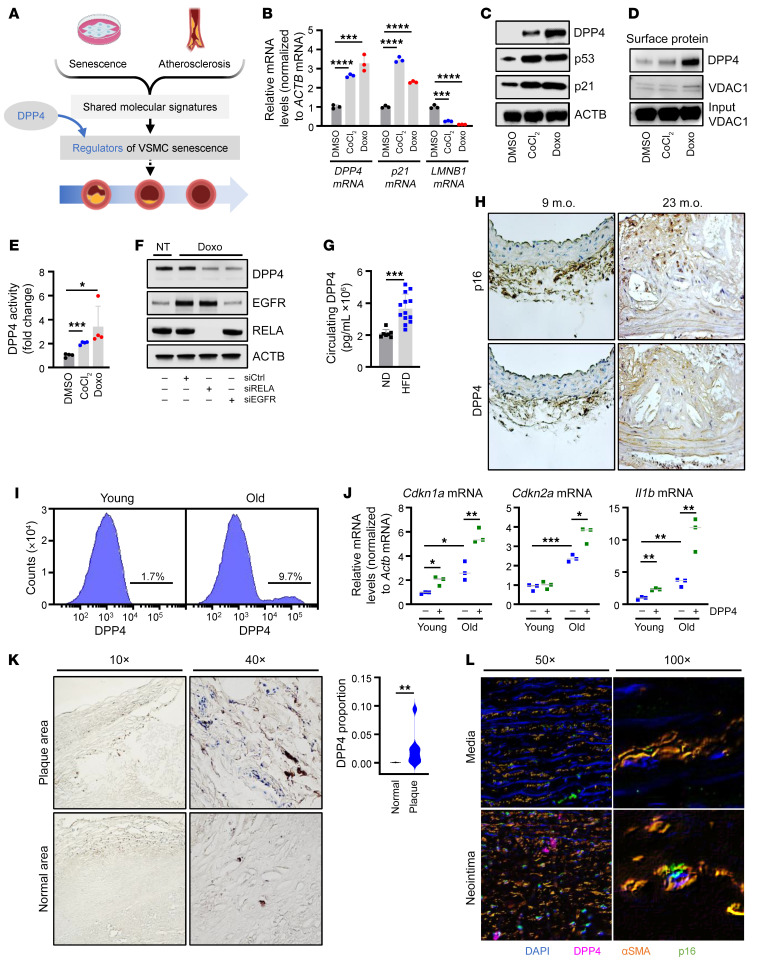
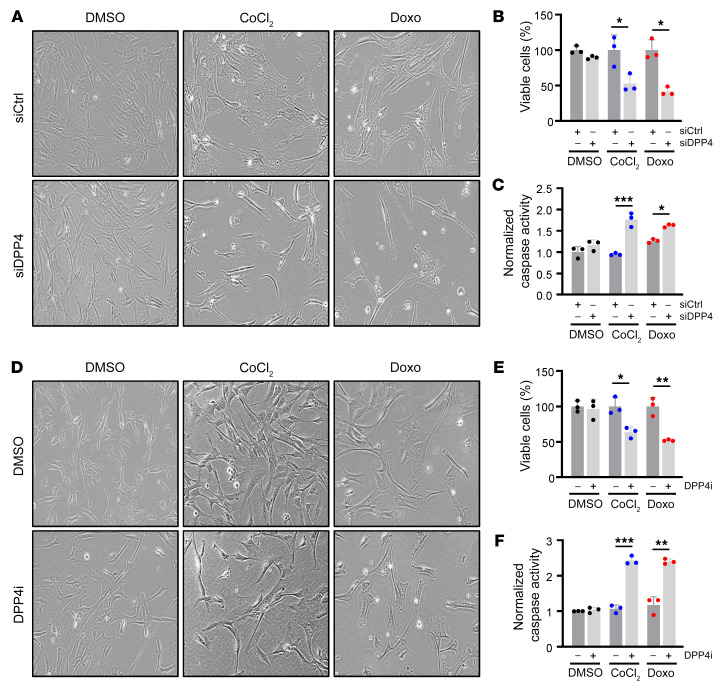
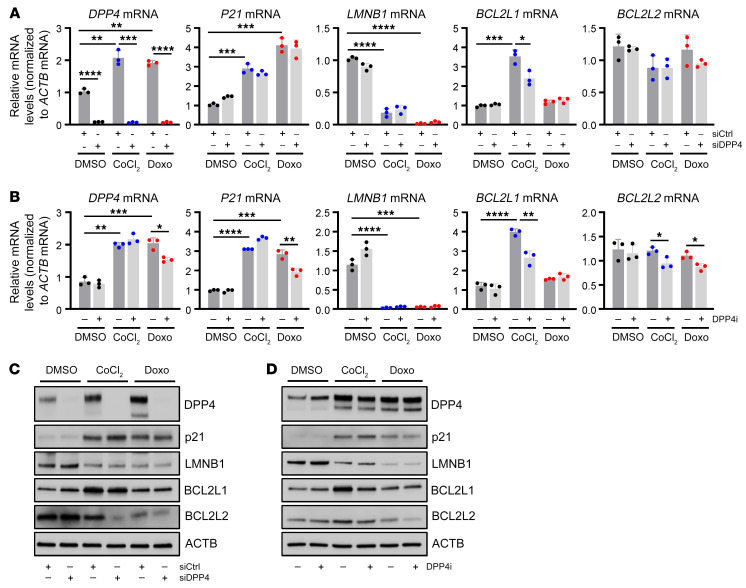
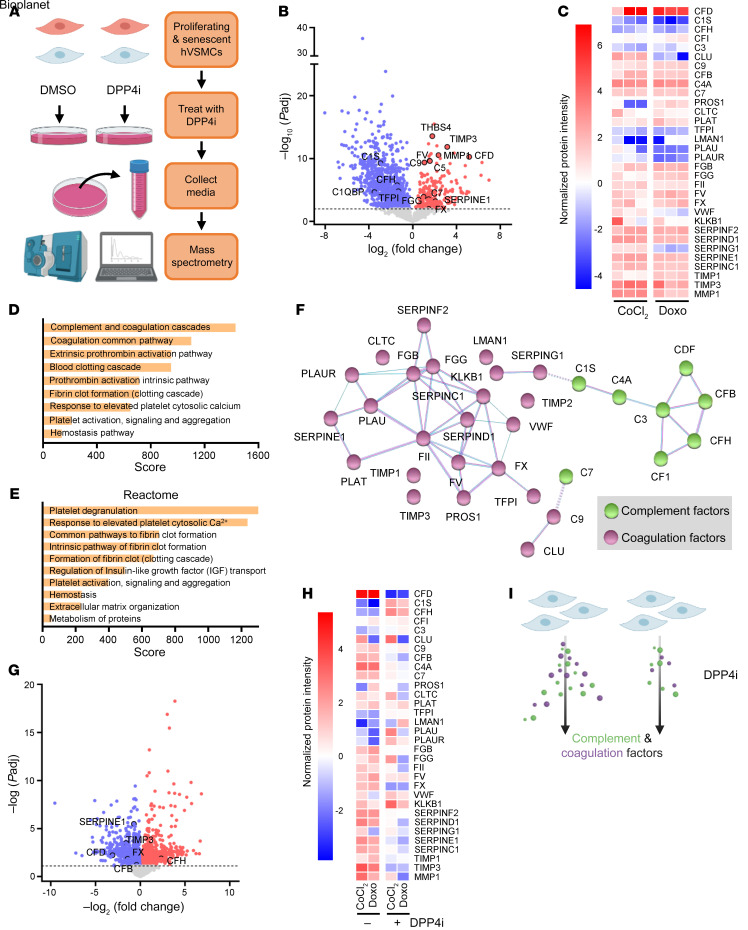
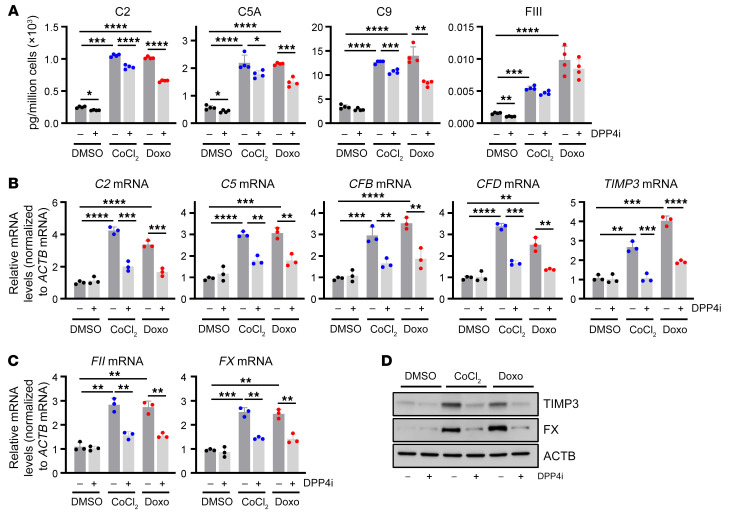
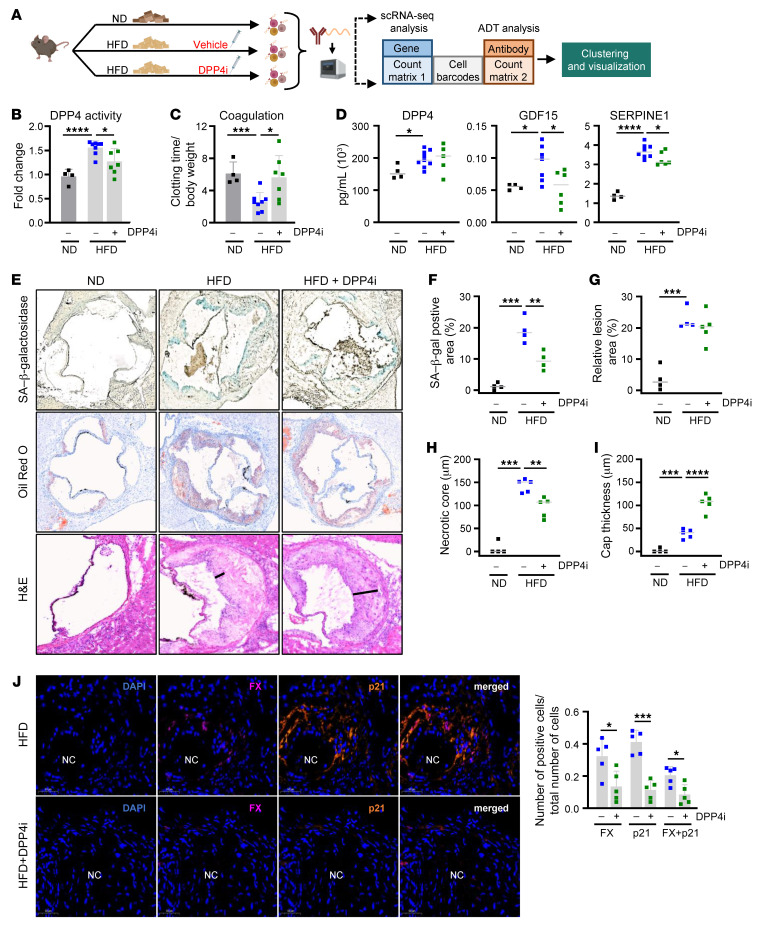
Senescent vascular smooth muscle cells (VSMCs) accumulate in the vasculature with age and tissue damage and secrete factors that promote atherosclerotic plaque vulnerability and disease. Here, we report increased levels and activity of dipeptidyl peptidase 4 (DPP4), a serine protease, in senescent VSMCs. Analysis of the conditioned media from senescent VSMCs revealed a unique senescence-associated secretory phenotype (SASP) signature comprising many complement and coagulation factors; silencing or inhibiting DPP4 reduced these factors and increased cell death. Serum samples from persons with high risk for cardiovascular disease contained high levels of DPP4-regulated complement and coagulation factors. Importantly, DPP4 inhibition reduced senescent cell burden and coagulation and improved plaque stability, while single-cell resolution of senescent VSMCs reflected the senomorphic and senolytic effects of DPP4 inhibition in murine atherosclerosis. We propose that DPP4-regulated factors could be exploited therapeutically to reduce senescent cell function, reverse senohemostasis, and improve vascular disease.
衰老的血管平滑肌细胞(VSMCs)随着年龄的增长和组织损伤在血管中积累,并分泌促进动脉粥样硬化斑块脆弱性和疾病的因子。在这里,我们报告二肽基肽酶 4(DPP4),一种丝氨酸蛋白酶,在衰老的 VSMCs 中的水平和活性增加。对衰老 VSMCs 的条件培养基的分析显示出一种独特的衰老相关分泌表型(SASP)特征,包括许多补体和凝血因子;沉默或抑制 DPP4 减少了这些因子并增加了细胞死亡。心血管疾病高危人群的血清样本中含有高水平的 DPP4 调节的补体和凝血因子。重要的是,DPP4 抑制减少了衰老细胞负担和凝血,并改善了斑块稳定性,而衰老 VSMCs 的单细胞分辨率反映了 DPP4 抑制在小鼠动脉粥样硬化中的衰老表型和衰老溶酶体效应。我们提出,DPP4 调节的因子可以被用于治疗,以减少衰老细胞的功能,逆转衰老的止血功能,并改善血管疾病。