Department of Animal Science and Technology, Chung-Ang University, Anseong, Gyeonggi-do 456-756, Korea.
Int J Mol Sci. 2017 Sep 6;18(9):1909. doi: 10.3390/ijms18091909.
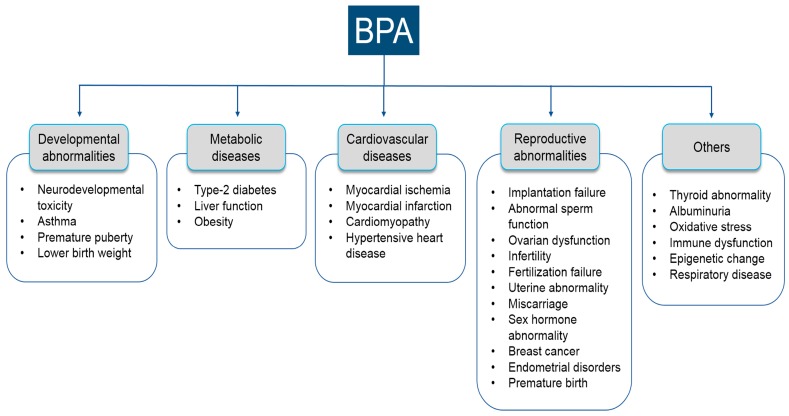
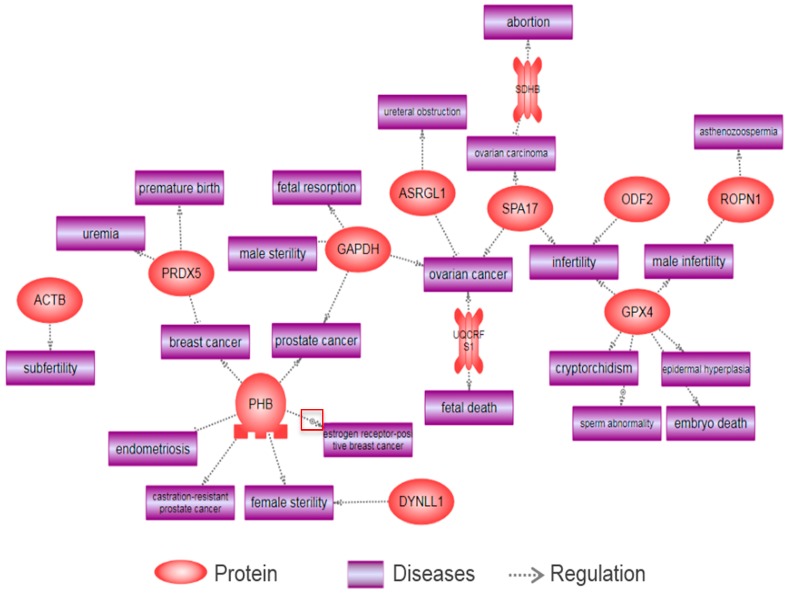
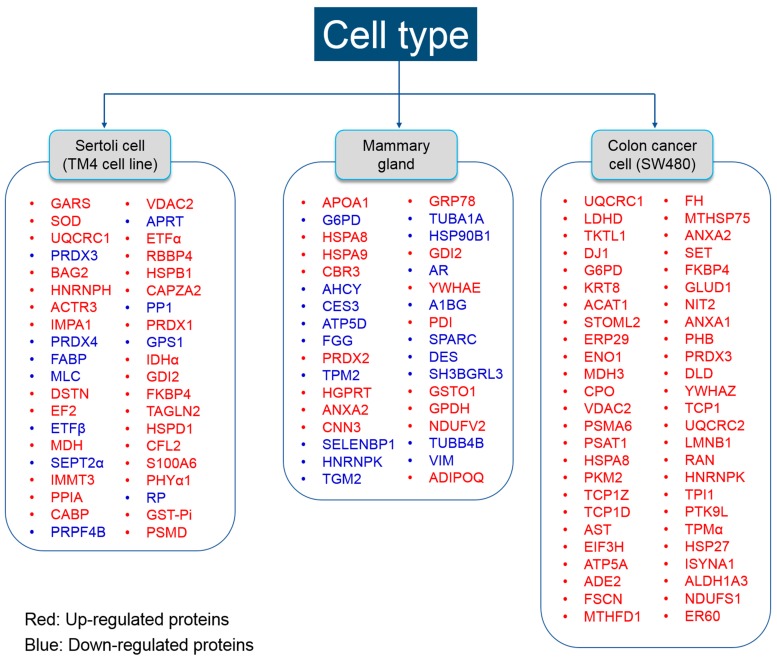
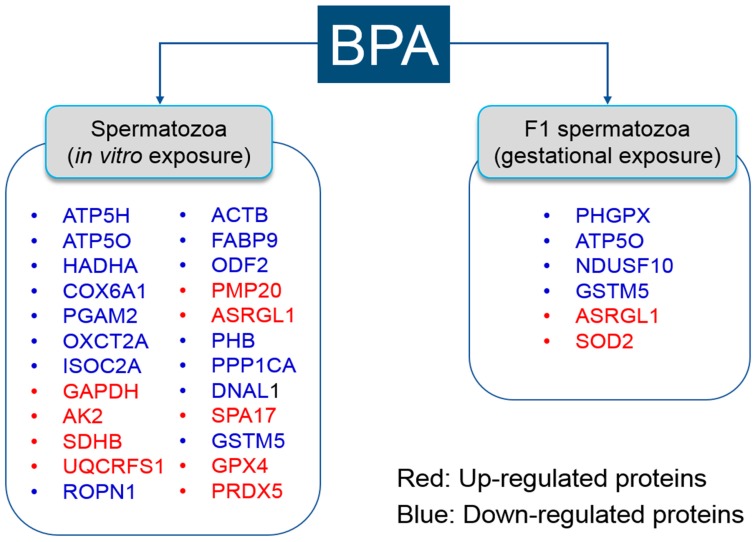
Bisphenol-A (BPA) is a ubiquitous endocrine-disrupting chemical. Recently, many issues have arisen surrounding the disease pathogenesis of BPA. Therefore, several studies have been conducted to investigate the proteomic biomarkers of BPA that are associated with disease processes. However, studies on identifying highly sensitive biological cell model systems in determining BPA health risk are lacking. Here, we determined suitable cell model systems and potential biomarkers for predicting BPA-mediated disease using the bioinformatics tool Pathway Studio. We compiled known BPA-mediated diseases in humans, which were categorized into five major types. Subsequently, we investigated the differentially expressed proteins following BPA exposure in several cell types, and analyzed the efficacy of altered proteins to investigate their associations with BPA-mediated diseases. Our results demonstrated that colon cancer cells (SW480), mammary gland, and Sertoli cells were highly sensitive biological model systems, because of the efficacy of predicting the majority of BPA-mediated diseases. We selected glucose-6-phosphate dehydrogenase (G6PD), cytochrome b-c1 complex subunit 1 (UQCRC1), and voltage-dependent anion-selective channel protein 2 (VDAC2) as highly sensitive biomarkers to predict BPA-mediated diseases. Furthermore, we summarized proteomic studies in spermatozoa following BPA exposure, which have recently been considered as another suitable cell type for predicting BPA-mediated diseases.
双酚 A(BPA)是一种普遍存在的内分泌干扰化学物质。最近,围绕 BPA 的疾病发病机制出现了许多问题。因此,已经进行了一些研究来调查与疾病过程相关的 BPA 的蛋白质组生物标志物。然而,在确定用于确定 BPA 健康风险的高度敏感的生物细胞模型系统方面,研究还很缺乏。在这里,我们使用生物信息学工具 Pathway Studio 确定了合适的细胞模型系统和潜在的生物标志物,以预测 BPA 介导的疾病。我们编译了人类中已知的 BPA 介导的疾病,将其分为五类。随后,我们研究了几种细胞类型在 BPA 暴露后的差异表达蛋白,并分析了改变蛋白的功效,以研究它们与 BPA 介导的疾病的关联。我们的结果表明,结肠癌细胞(SW480)、乳腺和睾丸支持细胞是高度敏感的生物模型系统,因为它们能够有效地预测大多数 BPA 介导的疾病。我们选择葡萄糖-6-磷酸脱氢酶(G6PD)、细胞色素 b-c1 复合物亚基 1(UQCRC1)和电压依赖性阴离子选择通道蛋白 2(VDAC2)作为高度敏感的生物标志物来预测 BPA 介导的疾病。此外,我们总结了 BPA 暴露后精子中的蛋白质组研究,这些研究最近被认为是另一种用于预测 BPA 介导的疾病的合适细胞类型。