Chen Lina, Zhang Jie, Li Haoxian, Niu Juan, Xue Hui, Liu Beibei, Wang Qi, Luo Xiang, Zhang Fuhong, Zhao Diguang, Cao Shangyin
Zhengzhou Fruit Research Institute, Chinese Academy of Agricultural SciencesZhengzhou, China.
Front Plant Sci. 2017 Aug 23;8:1430. doi: 10.3389/fpls.2017.01430. eCollection 2017.
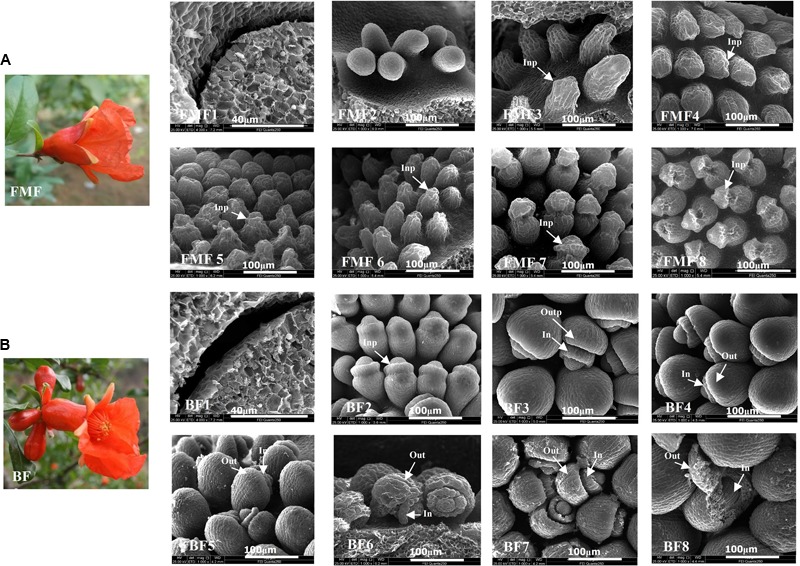
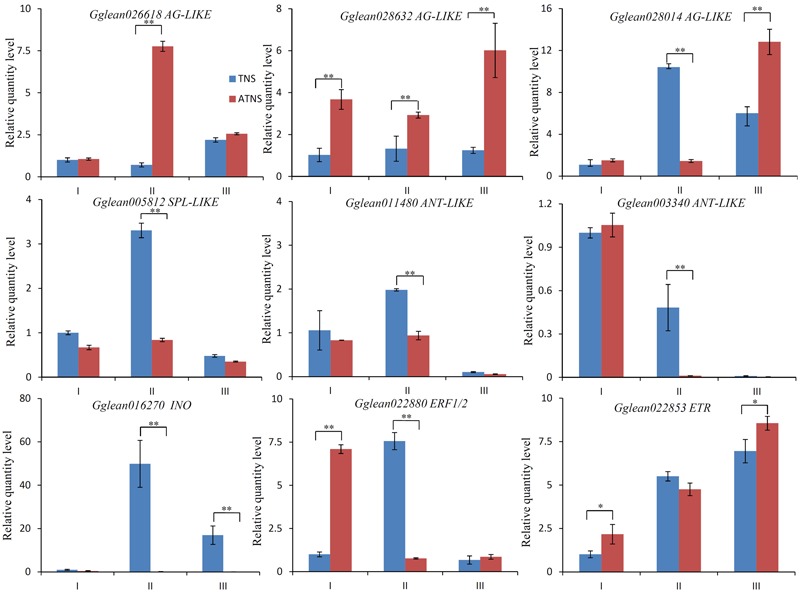
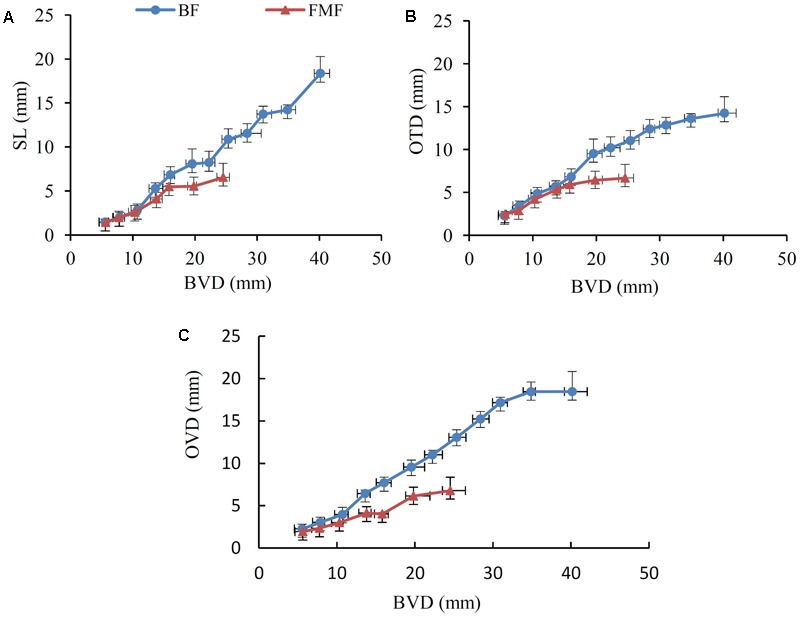
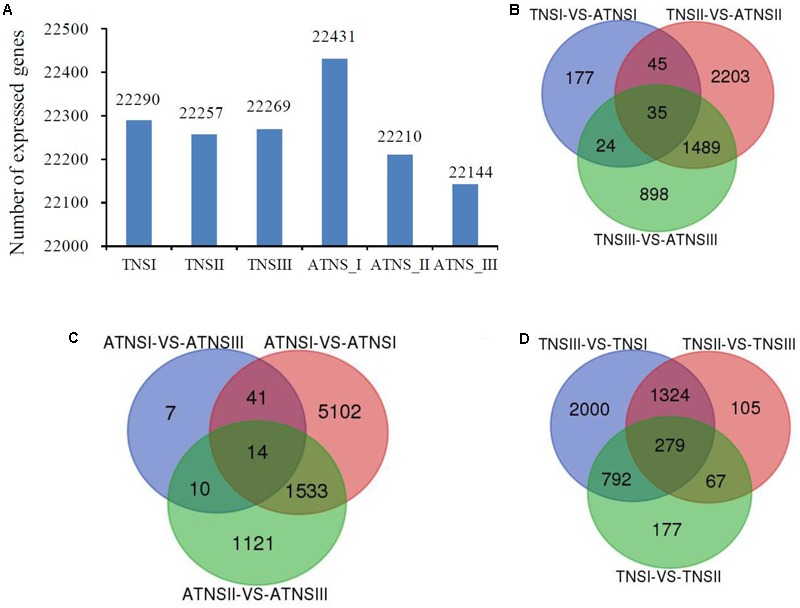
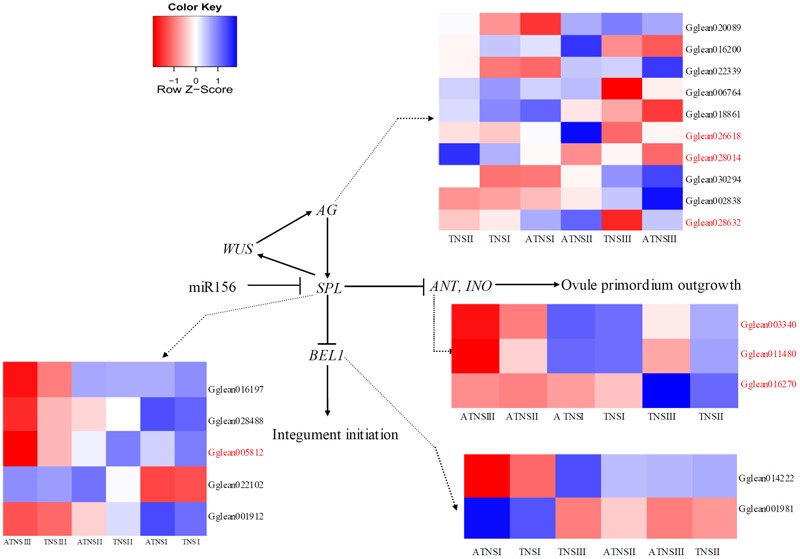
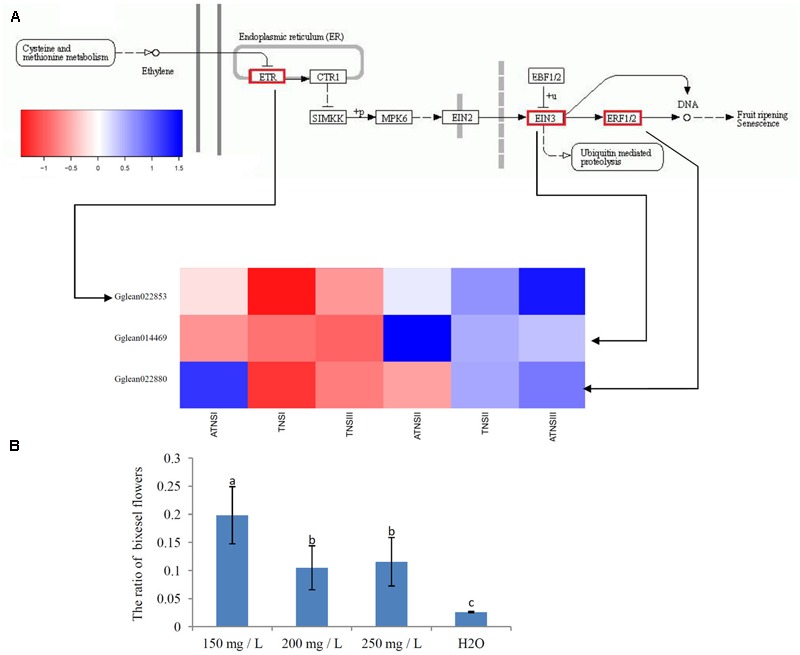
Pomegranate has two types of flowers on the same plant: functional male flowers (FMF) and bisexual flowers (BF). BF are female-fertile flowers that can set fruits. FMF are female-sterile flowers that fail to set fruit and that eventually drop. The putative cause of pomegranate FMF female sterility is abnormal ovule development. However, the key stage at which the FMF pomegranate ovules become abnormal and the mechanism of regulation of pomegranate female sterility remain unknown. Here, we studied ovule development in FMF and BF, using scanning electron microscopy to explore the key stage at which ovule development was terminated and then analyzed genes differentially expressed (differentially expressed genes - DEGs) between FMF and BF to investigate the mechanism responsible for pomegranate female sterility. Ovule development in FMF ceased following the formation of the inner integument primordium. The key stage for the termination of FMF ovule development was when the bud vertical diameter was 5.0-13.0 mm. Candidate genes influencing ovule development may be crucial factors in pomegranate female sterility. () () and homolog genes ( and ), which regulate the development of the integument, showed down-regulation in FMF at the key stage of ovule development cessation (ATNSII). Their upstream regulator genes, such as (, and ) and homolog genes (), also showed differential expression pattern between BF and FMF at this key stage. The differential expression of the ethylene response signal genes, () () and () (), between FMF and BF indicated that ethylene signaling may also be an important factor in the development of pomegranate female sterility. The increase in BF observed after spraying with ethephon supported this interpretation. Results from qRT-PCR confirmed the findings of the transcriptomic analysis.
功能性雄花(FMF)和两性花(BF)。两性花是雌蕊可育的花,能够结果。功能性雄花是雌蕊不育的花,不能结果,最终会掉落。石榴功能性雄花雌蕊不育的推测原因是胚珠发育异常。然而,功能性雄花石榴胚珠变得异常的关键阶段以及石榴雌蕊不育的调控机制仍不清楚。在这里,我们研究了功能性雄花和两性花的胚珠发育,使用扫描电子显微镜探索胚珠发育终止的关键阶段,然后分析功能性雄花和两性花之间差异表达的基因(差异表达基因-DEGs),以研究石榴雌蕊不育的机制。功能性雄花的胚珠发育在内珠被原基形成后停止。功能性雄花胚珠发育终止的关键阶段是芽垂直直径为5.0-至13.0毫米时。影响胚珠发育的候选基因可能是石榴雌蕊不育的关键因素。调控珠被发育的()()和同源基因(和)在胚珠发育停止的关键阶段(ATNSII)在功能性雄花中表现出下调。它们的上游调控基因,如(,和)和同源基因(),在这个关键阶段在两性花和功能性雄花之间也表现出差异表达模式。功能性雄花和两性花之间乙烯反应信号基因()()和()()的差异表达表明乙烯信号传导也可能是石榴雌蕊不育发育的一个重要因素。用乙烯利喷洒后观察到两性花增加支持了这一解释。qRT-PCR的结果证实了转录组分析的结果。