Roger Isolda, Wilson Claire, Senn Hans M, Sproules Stephen, Symes Mark D
WestCHEM, School of Chemistry, University of Glasgow, University Avenue, Glasgow G12 8QQ, UK.
R Soc Open Sci. 2017 Aug 16;4(8):170593. doi: 10.1098/rsos.170593. eCollection 2017 Aug.
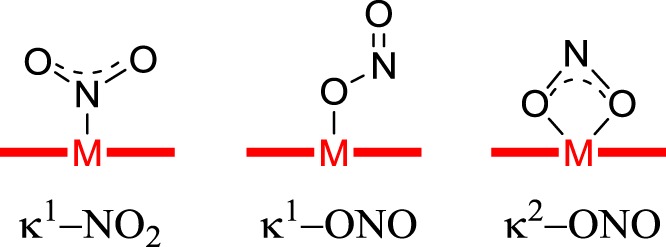
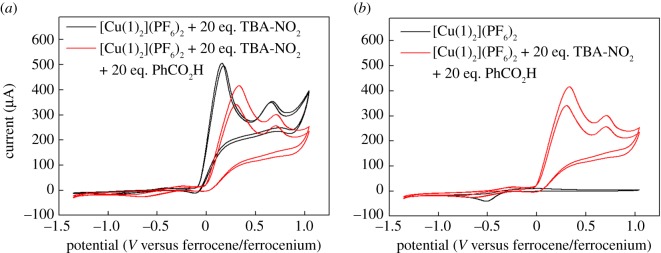
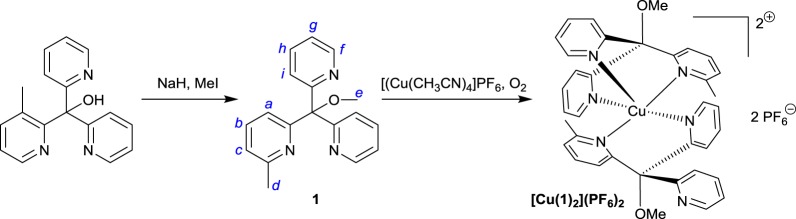
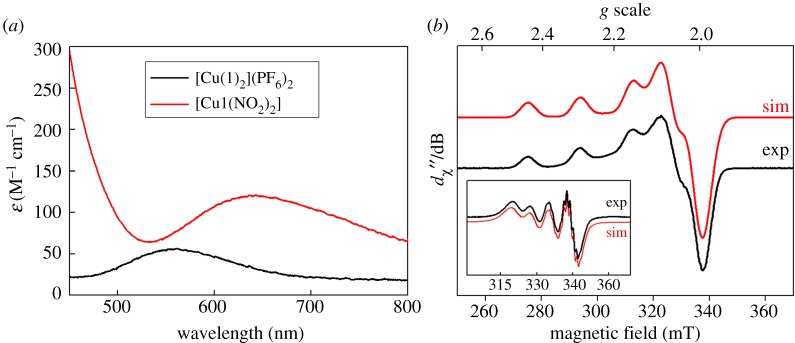
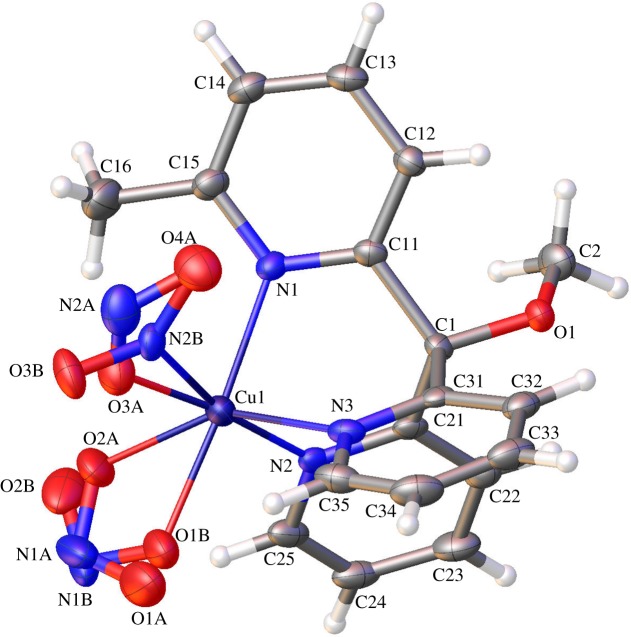
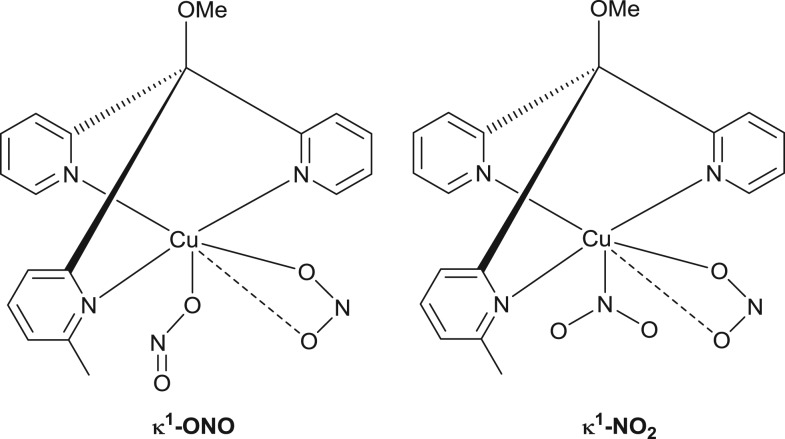
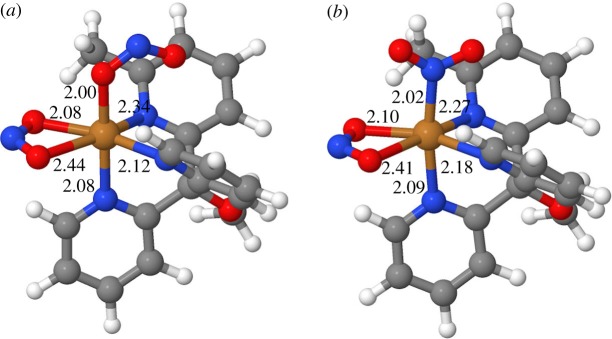
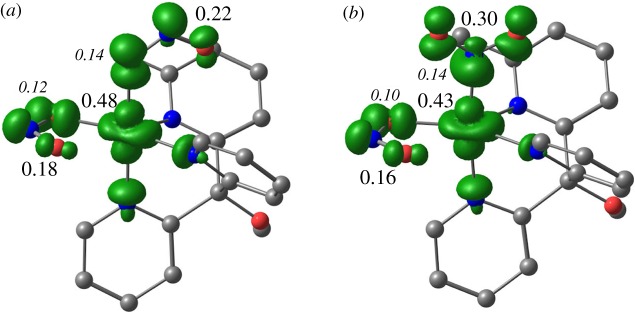
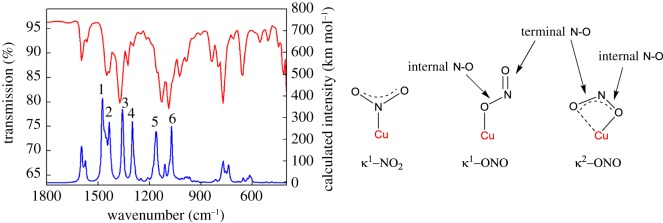
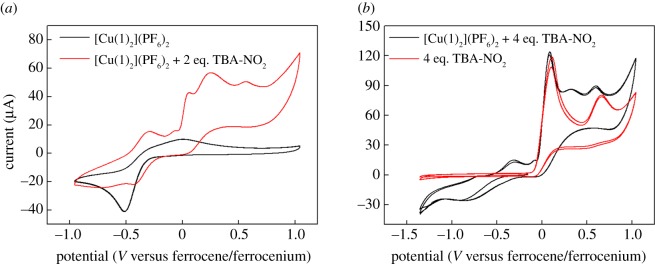
The copper-containing nitrite reductases (CuNIRs) are a class of enzymes that mediate the reduction of nitrite to nitric oxide in biological systems. Metal-ligand complexes that reproduce the salient features of the active site of CuNIRs are therefore of fundamental interest, both for elucidating the possible mode of action of the enzymes and for developing biomimetic catalysts for nitrite reduction. Herein, we describe the synthesis and characterization of a new tris(2-pyridyl) copper complex ([Cu(NO)]) that binds two molecules of nitrite, and displays all three of the common binding modes for [Formula: see text], with one nitrite bound in an asymmetric quasi-bidentate κ-ONO manner and the other bound in a monodentate fashion with a linkage isomerism between the κ-ONO and κ-NO binding modes. We use density functional theory to help rationalize the presence of all three of these linkage isomers in one compound, before assessing the redox activity of [Cu(NO)]. These latter studies show that the complex is not a competent nitrite reduction electrocatalyst in non-aqueous solvent, even in the presence of additional proton donors, a finding which may have implications for the design of biomimetic catalysts for nitrite reduction.
含铜亚硝酸还原酶(CuNIRs)是一类在生物系统中介导亚硝酸还原为一氧化氮的酶。因此,能够重现CuNIRs活性位点显著特征的金属 - 配体配合物,对于阐明酶的可能作用模式以及开发用于亚硝酸还原的仿生催化剂都具有根本重要性。在此,我们描述了一种新的三(2 - 吡啶基)铜配合物([Cu(NO)])的合成与表征,该配合物能结合两个亚硝酸分子,并呈现出[化学式:见原文]的所有三种常见结合模式,其中一个亚硝酸以不对称准双齿κ - ONO方式结合,另一个以单齿方式结合,在κ - ONO和κ - NO结合模式之间存在键合异构。在评估[Cu(NO)]的氧化还原活性之前,我们使用密度泛函理论来帮助解释一种化合物中所有这三种键合异构体的存在。这些后续研究表明,即使在存在额外质子供体的情况下,该配合物在非水溶剂中也不是一种有效的亚硝酸还原电催化剂,这一发现可能对亚硝酸还原仿生催化剂的设计有影响。