Shin Sooil, Kim Seungoh
Department of Advanced General Dentistry, School of Dentistry, Dankook University, Cheonan, Korea.
Department of Anesthesiololgy, School of Dentistry, Dankook University, Cheonan, Korea.
J Dent Anesth Pain Med. 2017 Mar;17(1):65-69. doi: 10.17245/jdapm.2017.17.1.65. Epub 2017 Mar 27.
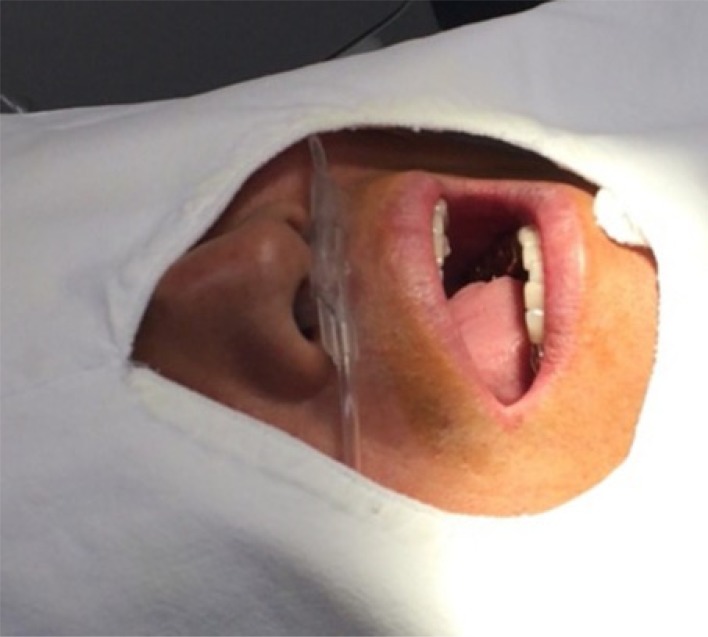
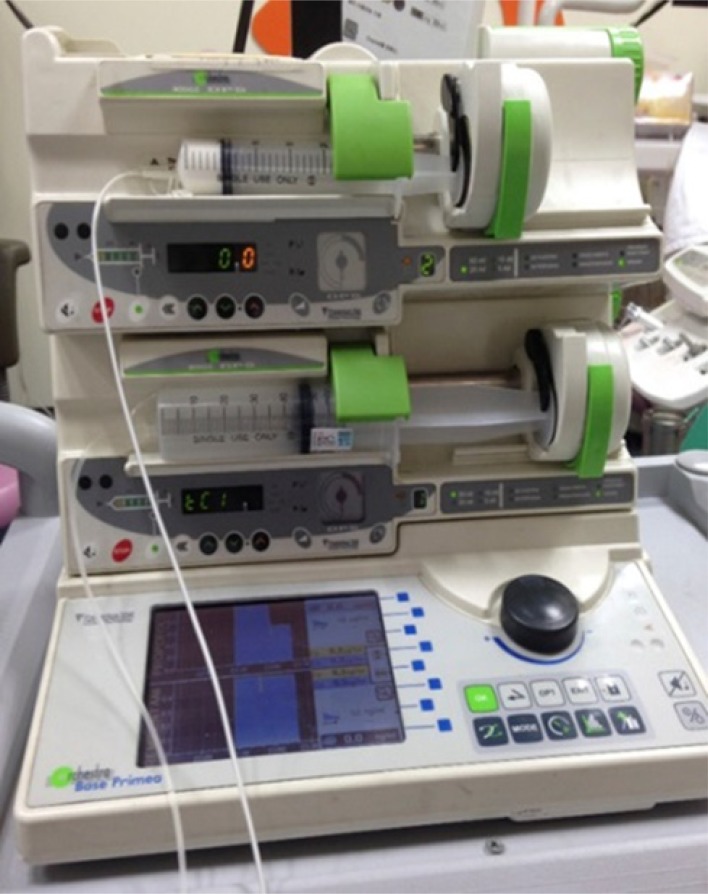
Patients with severe gag reflex (SGR) have difficulty getting the treatment they require in local clinics, and many tend to postpone the start of their treatment. To address this problem, dentists have used behavioral techniques and/or pharmacological techniques for treatment. Among the pharmacological methods available, propofol IV sedation is preferred over general anesthesia because it is a simpler procedure. Propofol in combination with remifentanil is characterized by stable sedative effects and quick recovery, leading to a deep sedation. Remifentanil acts to reduce the pain caused by lipid-soluble propofol on injection. The synergistic effects of propofol-remifentanil include reduction in the total amount of drug required to achieve a desired sedation level and anti-emetic effects. In this case report, we outline how the use of propofol-remifentanil IV sedation enabled us to successfully complete a wide range of dental treatments in a patient with SGR.
严重 gag 反射(SGR)患者在当地诊所接受所需治疗存在困难,许多人往往会推迟治疗的开始。为解决这一问题,牙医采用了行为技术和/或药理学技术进行治疗。在现有的药理学方法中,丙泊酚静脉镇静比全身麻醉更受青睐,因为它是一种更简单的程序。丙泊酚与瑞芬太尼联合使用具有镇静效果稳定、恢复快的特点,可实现深度镇静。瑞芬太尼的作用是减轻脂溶性丙泊酚注射时引起的疼痛。丙泊酚 - 瑞芬太尼的协同作用包括减少达到所需镇静水平所需的药物总量以及抗呕吐作用。在本病例报告中,我们概述了丙泊酚 - 瑞芬太尼静脉镇静的使用如何使我们成功地为一名 SGR 患者完成了广泛的牙科治疗。