Congdon Peter
School of Geography, Queen Mary University of London, London E1 4NS, UK.
Int J Environ Res Public Health. 2017 Sep 7;14(9):1023. doi: 10.3390/ijerph14091023.
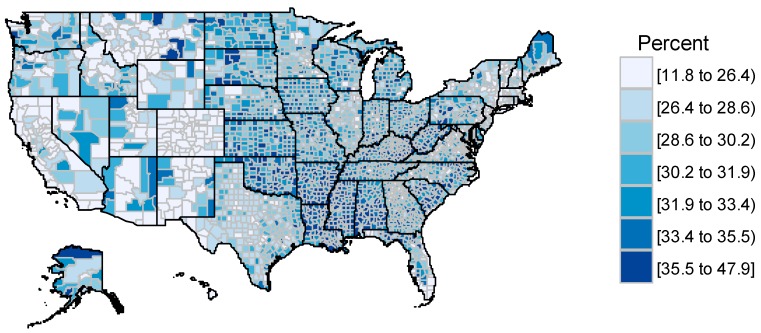
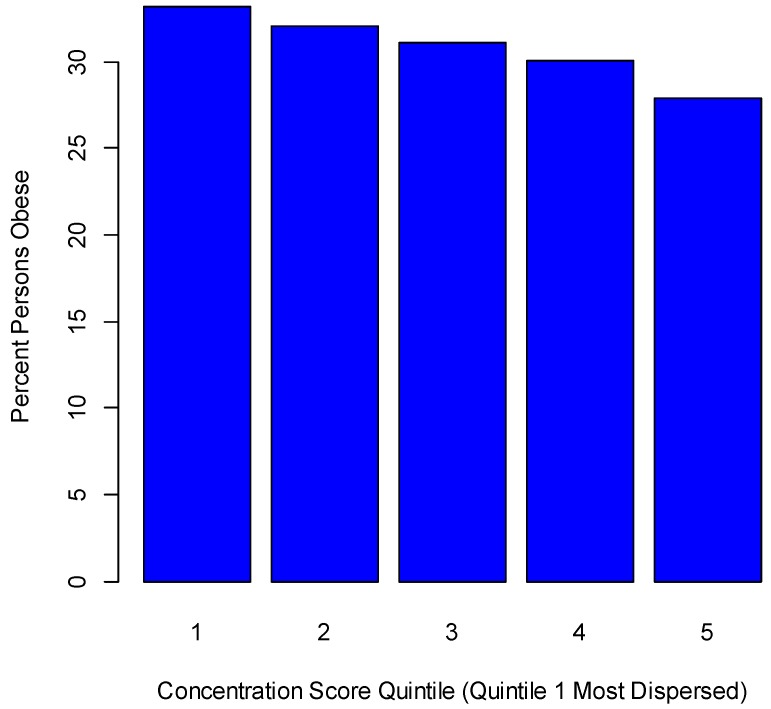
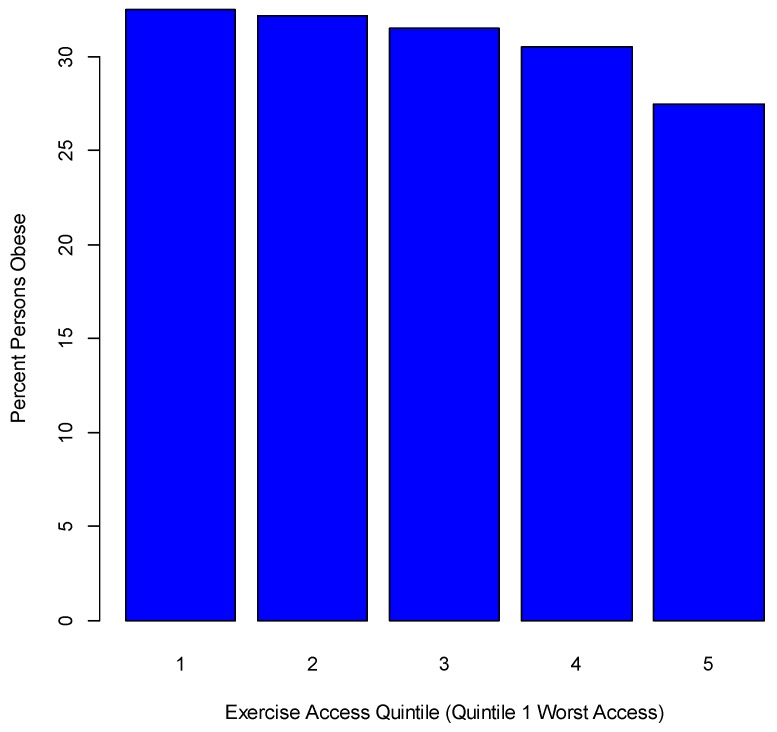
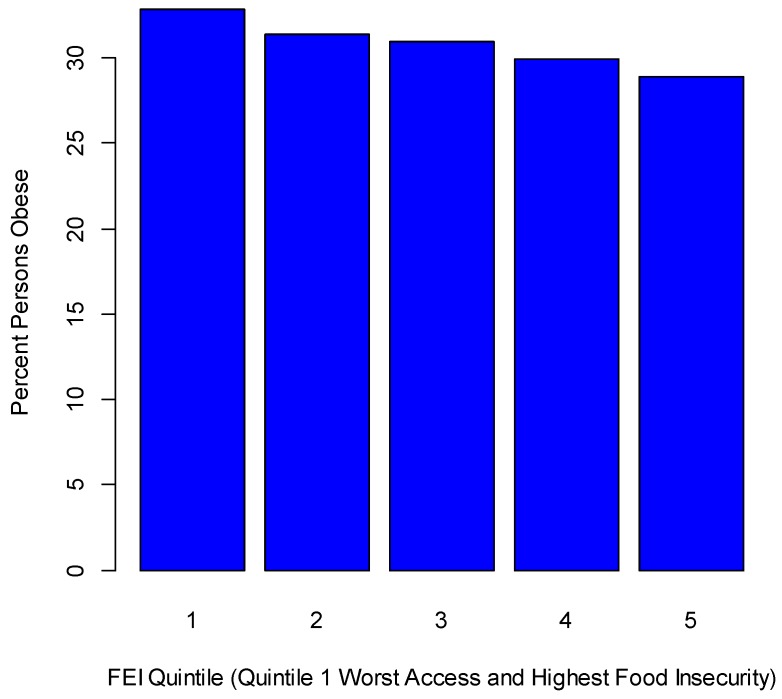
There is much ongoing research about the effect of the urban environment as compared with individual behaviour on growing obesity levels, including food environment, settlement patterns (e.g., sprawl, walkability, commuting patterns), and activity access. This paper considers obesity variations between US counties, and delineates the main dimensions of geographic variation in obesity between counties: by urban-rural status, by region, by area poverty status, and by majority ethnic group. Available measures of activity access, food environment, and settlement patterns are then assessed in terms of how far they can account for geographic variation. A county level regression analysis uses a Bayesian methodology that controls for spatial correlation in unmeasured area risk factors. It is found that environmental measures do play a significant role in explaining geographic contrasts in obesity.
与个体行为相比,城市环境对肥胖率上升的影响正在进行大量研究,包括食物环境、居住模式(如城市扩张、步行便利性、通勤模式)和活动可达性。本文研究了美国各县之间的肥胖差异,并描绘了各县肥胖地理差异的主要维度:按城乡状况、地区、地区贫困状况和主要种族群体划分。然后评估了现有的活动可达性、食物环境和居住模式指标在解释地理差异方面的作用。县级回归分析采用贝叶斯方法,控制未测量区域风险因素中的空间相关性。研究发现,环境指标在解释肥胖的地理差异方面确实发挥了重要作用。