Department of Ophthalmology, The First Affiliated Hospital of Nanjing Medical University, State Key Laboratory of Reproductive Medicine, Nanjing 210029, China.
Department of Ophthalmology and Vision Science, Eye &ENT Hospital, Shanghai Medical College, Fudan University, Shanghai 200023, China.
Cell Death Dis. 2017 Sep 7;8(9):e3046. doi: 10.1038/cddis.2017.382.
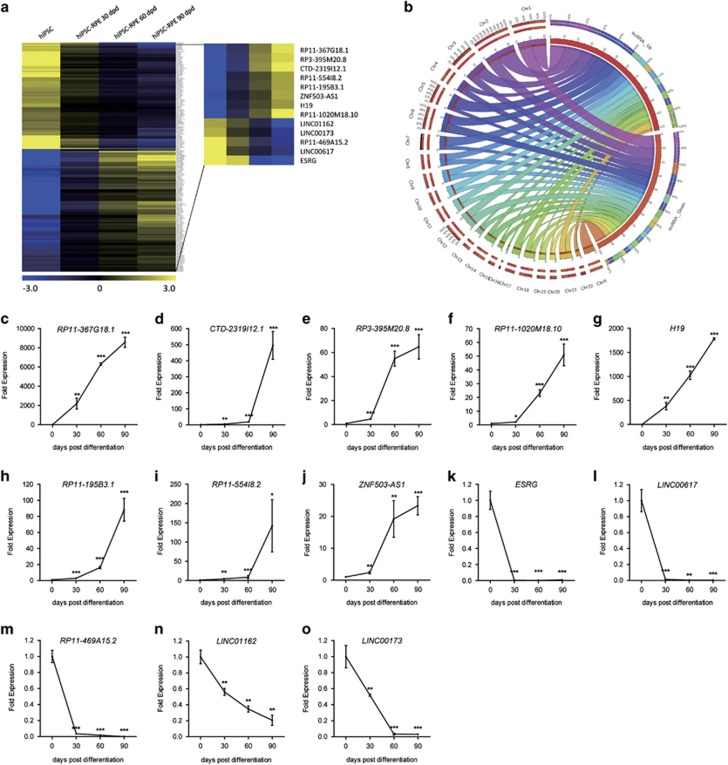
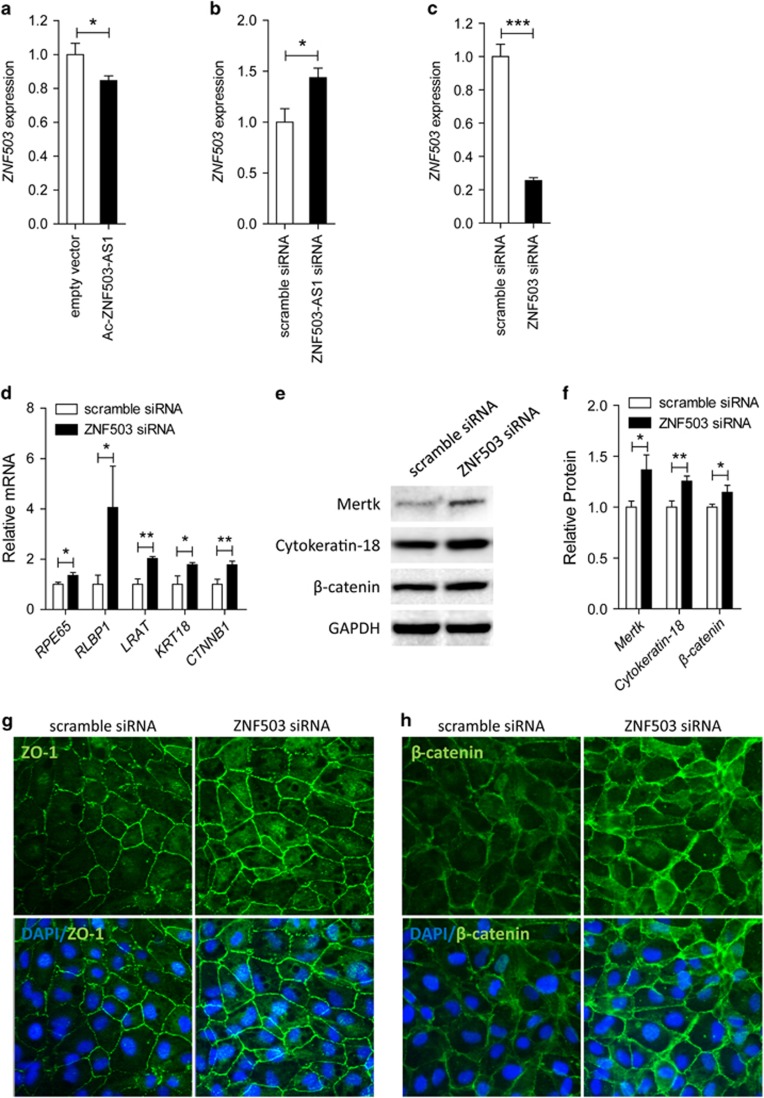
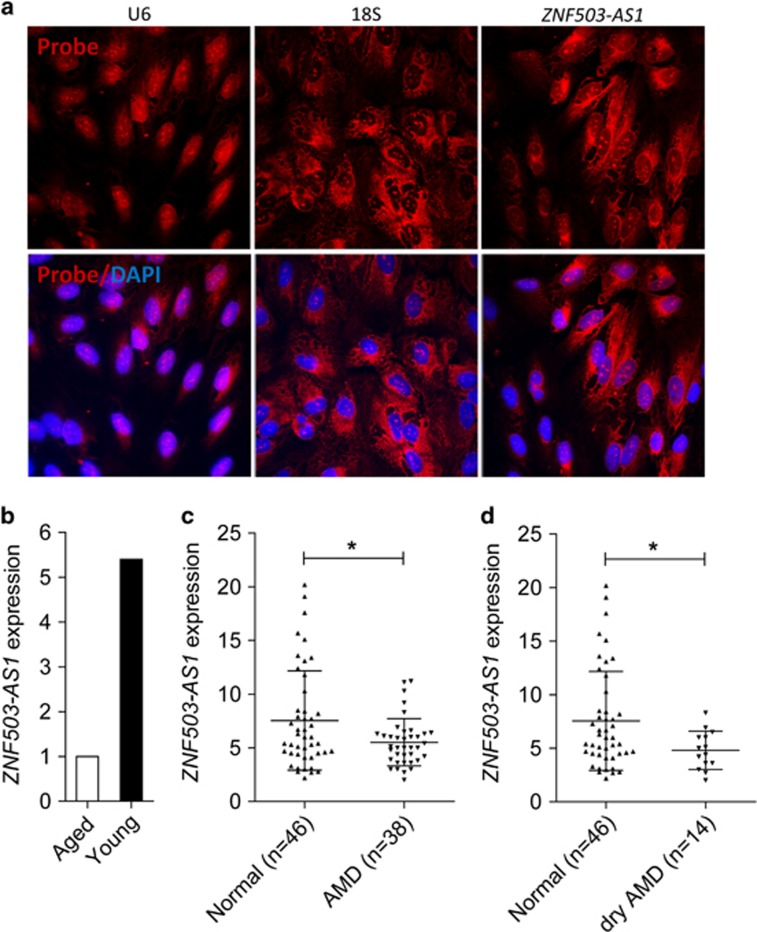
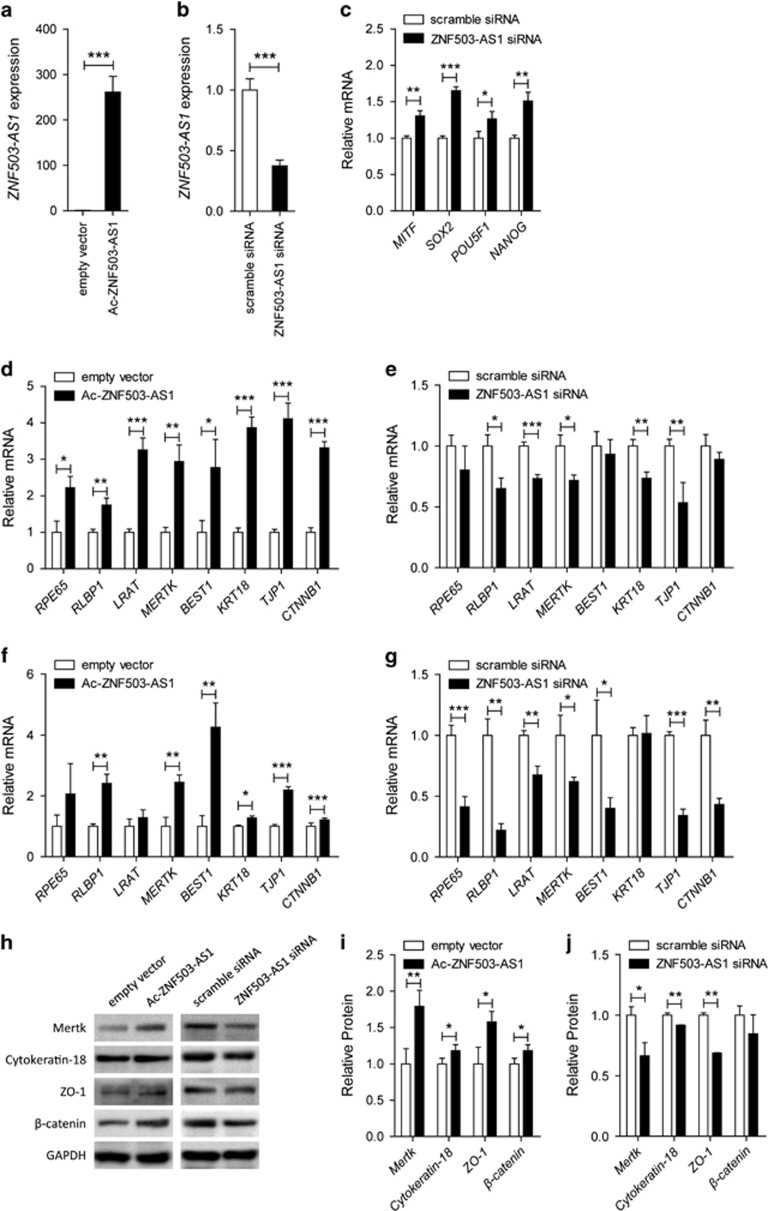
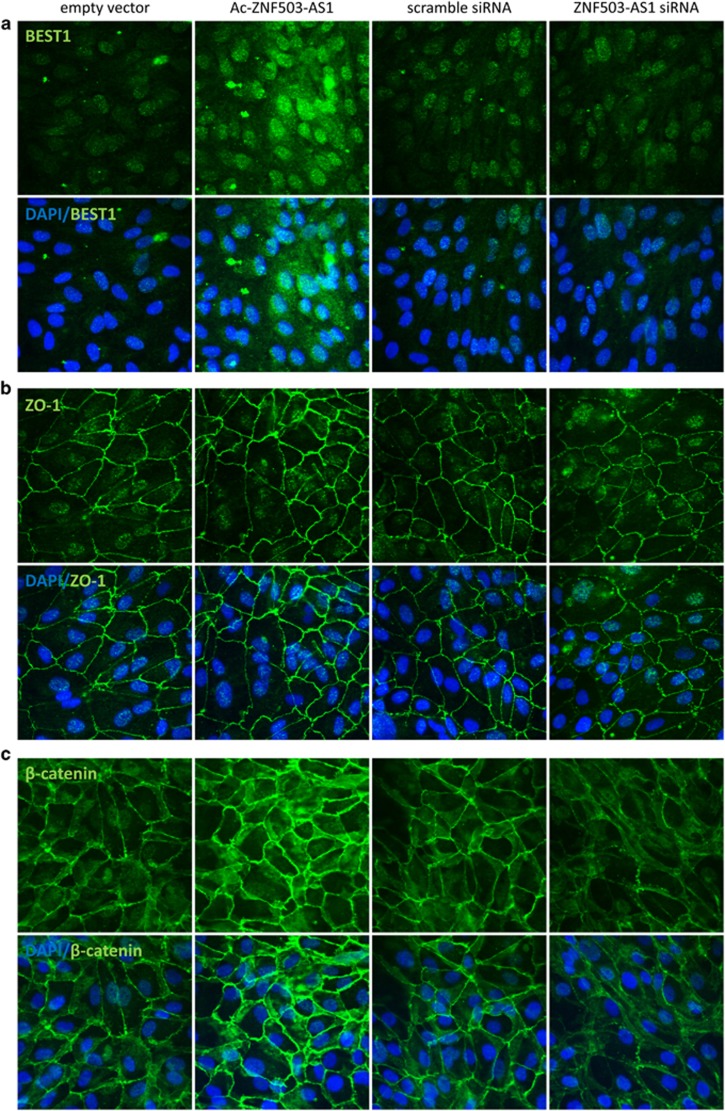
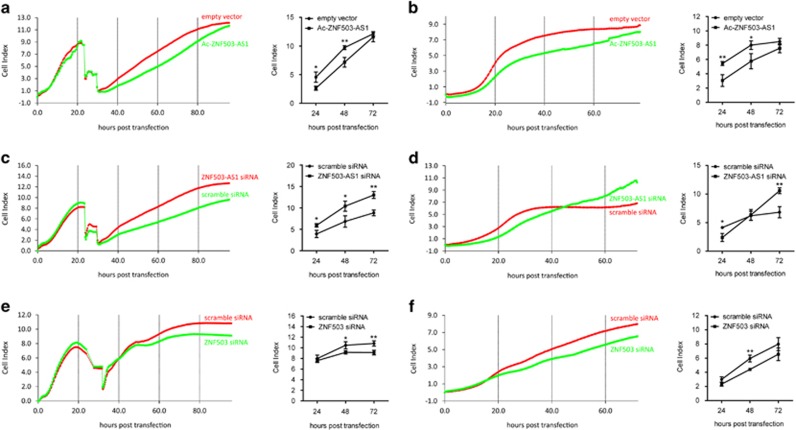
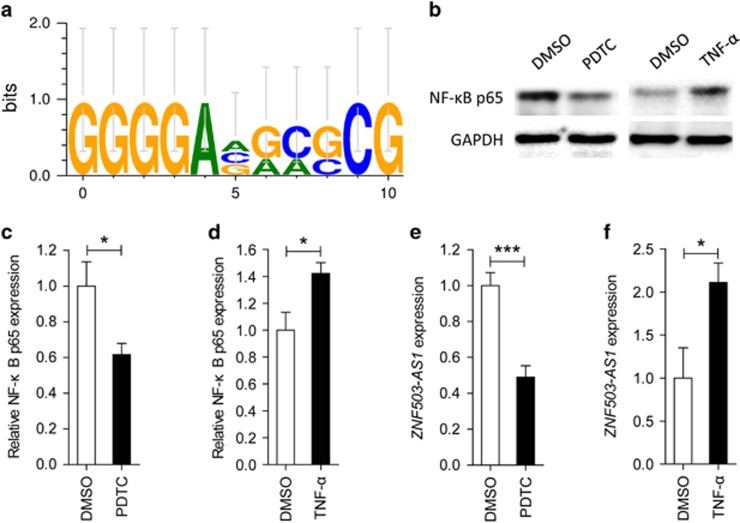
Long noncoding RNAs (lncRNAs) have important roles in various biological processes. Our previous work has revealed that dedifferentiation of retinal pigment epithelium (RPE) cells contributes to the pathology of age-related macular degeneration (AMD). Herein, we show roles of lncRNAs in RPE differentiation. We used microarray to identify lncRNA expression profiles in human induced pluripotent stem cells (hiPSCs) and hiPSC-derived RPE cells. A total of 217 differentially expressed lncRNAs along with the differentiation were initially identified, among which 13 lncRNAs showed a consistent fold change of over 2. LncRNA ZNF503-AS1, located in the cytoplasm of RPE cells, was found consistently upregulated along with RPE differentiation, and downregulated in the RPE-choroid of AMD patients. In vitro study further suggested that ZNF503-AS1 insufficiency could inhibit RPE differentiation, and promote its proliferation and migration. As ZNF503-AS1 is transcribed from the antisense strand of the ZNF503 gene locus, we further revealed its regulatory role in ZNF503 expression. ZNF503-AS1 was reversely correlated with ZNF503 expression. Our results also suggested that ZNF503 could inhibit RPE differentiation, and promote its proliferation and migration. Thus, ZNF503-AS1 potentially promotes RPE differentiation through downregulation of ZNF503 expression. In addition, nuclear factor-κB was recognized as a potential upstream transcript factor for ZNF503-AS1, which might participate in promoting RPE differentiation by regulating the expression of ZNF503-AS1. Taken together, our study identifies a group of RPE differentiation relevant lncRNAs, and the potential role of ZNF503-AS1 in the pathology of atrophic AMD, which might help with the intervention of AMD patients.
长链非编码 RNA(lncRNA)在各种生物过程中发挥着重要作用。我们之前的工作揭示了视网膜色素上皮(RPE)细胞的去分化有助于年龄相关性黄斑变性(AMD)的发病机制。在此,我们研究了 lncRNA 在 RPE 分化中的作用。我们使用微阵列鉴定了人诱导多能干细胞(hiPSC)和 hiPSC 衍生的 RPE 细胞中的 lncRNA 表达谱。总共鉴定出 217 个随着分化而差异表达的 lncRNA,其中 13 个 lncRNA 的倍数变化超过 2。lncRNA ZNF503-AS1 位于 RPE 细胞的细胞质中,随着 RPE 分化持续上调,在 AMD 患者的 RPE-脉络膜中下调。体外研究进一步表明,ZNF503-AS1 不足可抑制 RPE 分化,并促进其增殖和迁移。由于 ZNF503-AS1 是从 ZNF503 基因座的反义链转录而来的,我们进一步揭示了其对 ZNF503 表达的调节作用。ZNF503-AS1 与 ZNF503 的表达呈负相关。我们的结果还表明,ZNF503 可抑制 RPE 分化,并促进其增殖和迁移。因此,ZNF503-AS1 通过下调 ZNF503 的表达,可能促进 RPE 分化。此外,核因子-κB 被认为是 ZNF503-AS1 的潜在上游转录因子,通过调节 ZNF503-AS1 的表达参与促进 RPE 分化。综上所述,我们的研究确定了一组与 RPE 分化相关的 lncRNA,以及 ZNF503-AS1 在萎缩性 AMD 发病机制中的潜在作用,这可能有助于 AMD 患者的干预。