Department of Ophthalmology, The First Affiliated Hospital of Nanjing Medical University, Nanjing Medical University, 210029, Nanjing, China.
Department of Ophthalmology, Children's Hospital of Zhengzhou, 450053, Zhengzhou, China.
Cell Death Dis. 2018 May 1;9(5):451. doi: 10.1038/s41419-018-0481-5.
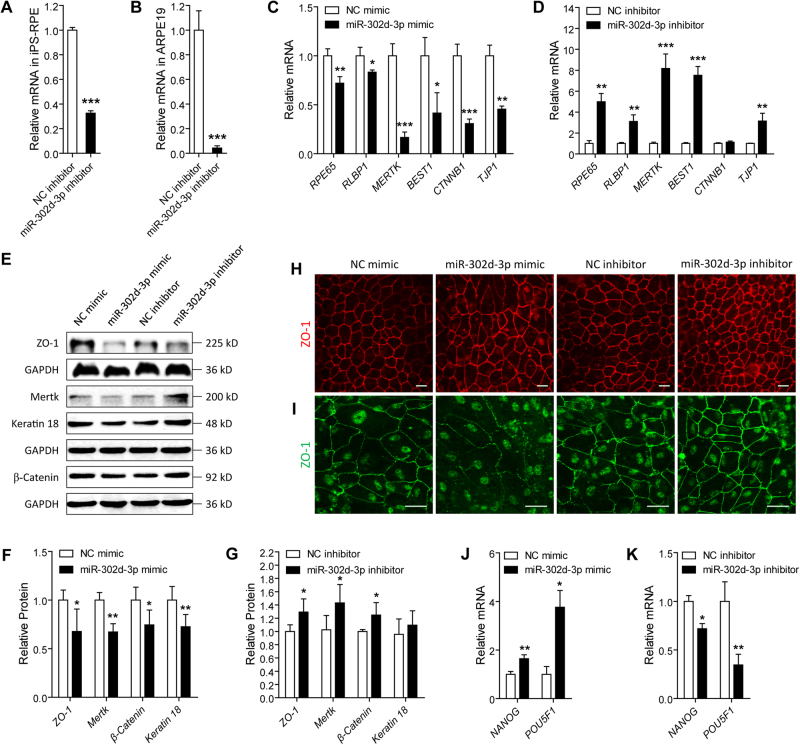
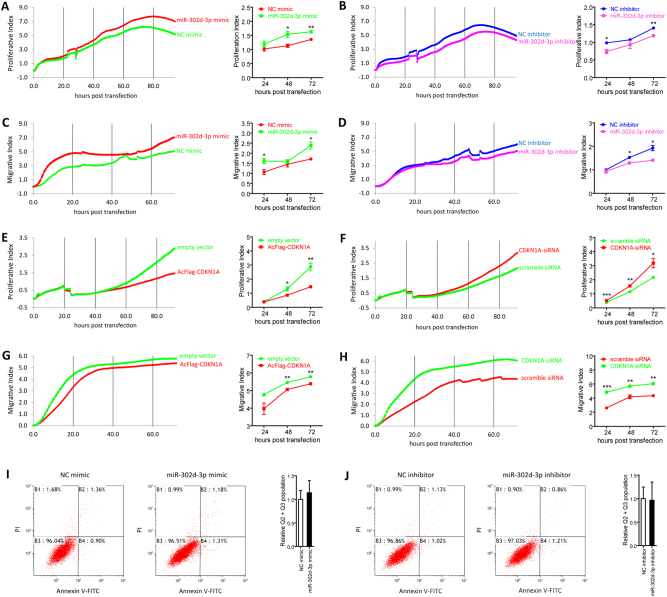
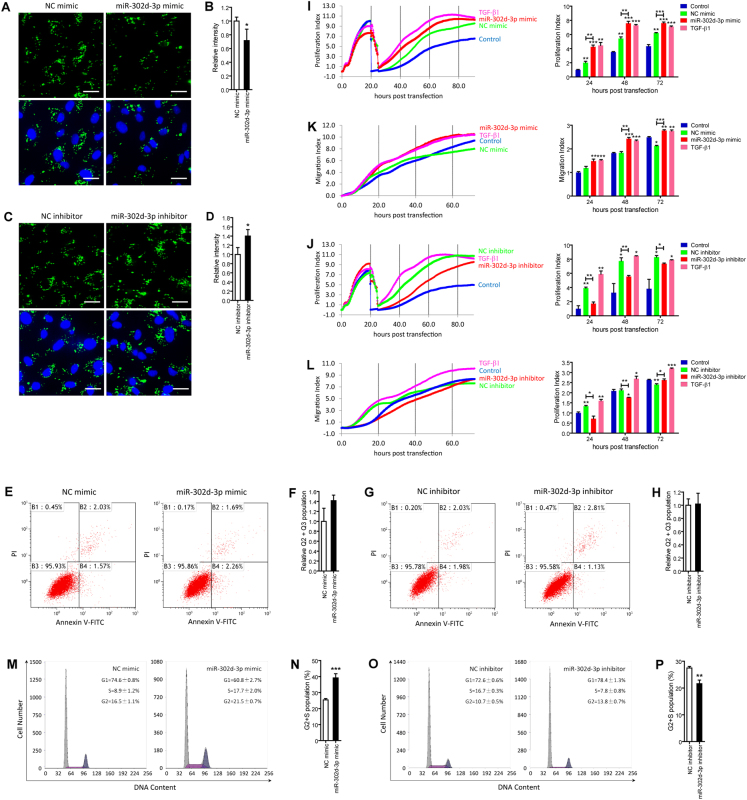
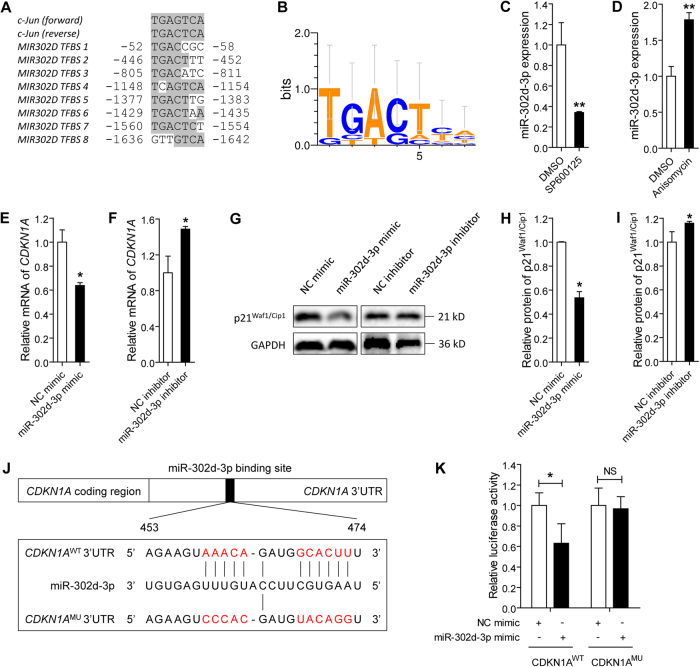
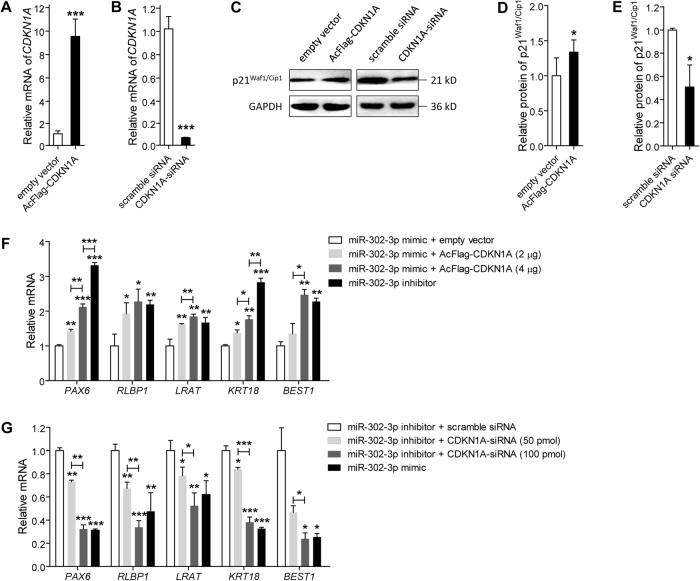
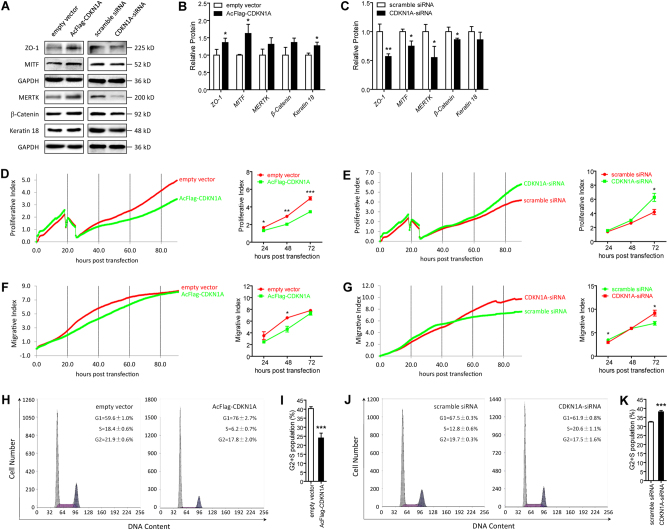
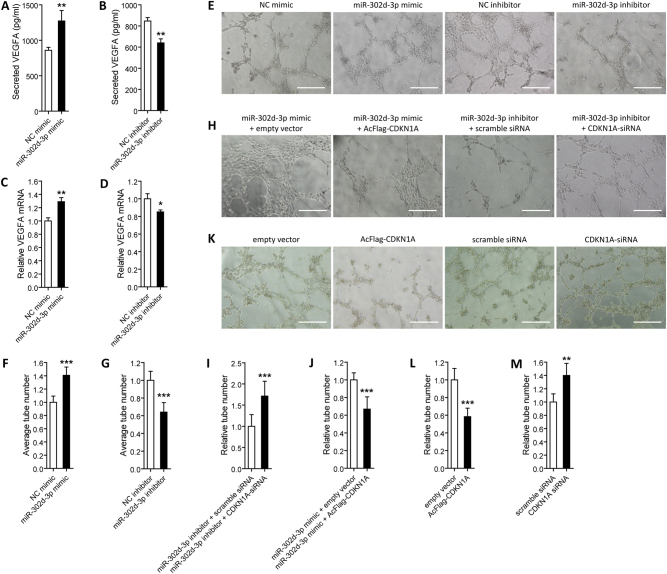
Dedifferentiation of retinal pigment epithelium (RPE) cells and choroidal neovascularization (CNV) contributes to the pathogenesis of age-related macular degeneration (AMD). MicroRNAs (miRNAs) have crucial roles in AMD onset and progression. We thus aim to investigate the effects of miRNAs on RPE dedifferentiation and endothelium cell (EC) behavior, and analyze its downstream pathways. We have previously identified miR-302d-3p as the most downregulated miRNA signature along with RPE differentiation. Herein, in vitro study supported that miR-302d-3p induces RPE dedifferentiation typified by reduction of RPE characteristic markers, interrupts its phagocytosis, and promotes its migration, proliferation, and cell-cycle progression. c-Jun was identified as a potential upstream transcript factor for MIR302D, which might modulate RPE function by regulating miR-302d-3p expression. P21, a cyclin-dependent kinase inhibitor encoded by the CDKN1A gene, was identified as a downstream target of miR-302d-3p. Our data suggested that p21 could promote RPE differentiation, and inhibit its proliferation, migration, and cell-cycle progression. We also demonstrated that miR-302d-3p suppresses RPE differentiation through directly targeting p21. In addition, the miR-302d-3p/CDKN1A axis was also involved in regulating tube formation of ECs, indicating its potential involvement in CNV formation. Taken together, our study implies that miR-302d-3p, regulated by c-Jun, contributes to the pathogenesis of both atrophic and exudative AMD. MiR-302d-3p promotes RPE dedifferentiation, migration, proliferation and cell-cycle progression, inhibits RPE phagocytosis, and induces abnormal EC behavior by targeting p21. Pharmacological miR-302d-3p inhibitors are prospective therapeutic options for prevention and treatment of AMD.
视网膜色素上皮 (RPE) 细胞的去分化和脉络膜新生血管 (CNV) 导致年龄相关性黄斑变性 (AMD) 的发病机制。MicroRNAs (miRNAs) 在 AMD 的发病和进展中起着至关重要的作用。因此,我们旨在研究 miRNAs 对 RPE 去分化和内皮细胞 (EC) 行为的影响,并分析其下游途径。我们之前已经确定 miR-302d-3p 是与 RPE 分化一起下调最明显的 miRNA 特征。在此,体外研究支持 miR-302d-3p 诱导 RPE 去分化,其特征在于减少 RPE 特征标志物,中断其吞噬作用,并促进其迁移、增殖和细胞周期进程。c-Jun 被鉴定为 MIR302D 的潜在上游转录因子,可能通过调节 miR-302d-3p 的表达来调节 RPE 功能。细胞周期蛋白依赖性激酶抑制剂 1A (CDKN1A) 基因编码的 p21 被鉴定为 miR-302d-3p 的下游靶标。我们的数据表明,p21 可以促进 RPE 分化,并抑制其增殖、迁移和细胞周期进程。我们还表明,miR-302d-3p 通过直接靶向 p21 抑制 RPE 分化。此外,miR-302d-3p/CDKN1A 轴也参与调节 EC 的管状形成,表明其可能参与 CNV 的形成。总之,我们的研究表明,受 c-Jun 调控的 miR-302d-3p 有助于萎缩性和渗出性 AMD 的发病机制。miR-302d-3p 通过靶向 p21 促进 RPE 去分化、迁移、增殖和细胞周期进程,抑制 RPE 吞噬作用,并诱导异常的 EC 行为。药理学 miR-302d-3p 抑制剂是预防和治疗 AMD 的有前途的治疗选择。