Pilatti Angelina, Read Jennifer P, Pautassi Ricardo M
Centro de Investigaciones de la Facultad de Psicológia (CIPSI), Grupo Vinculado al Centro de Investigaciones y Estudios sobre Cultura y Sociedad (CIECS), Consejo Nacional de Investigaciones Científicas y Técnicas (CONICET), Universidad Nacional de CórdobaCórdoba, Argentina.
Department of Psychology, University of Buffalo, BuffaloNY, United States.
Front Psychol. 2017 Aug 25;8:1452. doi: 10.3389/fpsyg.2017.01452. eCollection 2017.
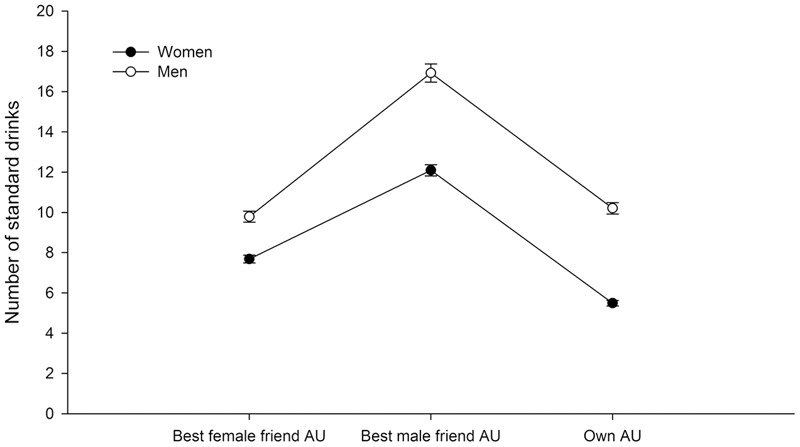
The transition from high school to college is a high-risk stage for the initiation and escalation of substance use. Substance use and its associated risk factors have been thoroughly described in developed countries, such as the United States, but largely neglected in Argentina, a South American country with patterns of a collectivist culture. The present cross-sectional study describes the occurrence of alcohol, tobacco, and marijuana use and the association between these behaviors and the age of onset of substance use and cognitive (i.e., risk perception) and social (i.e., prescriptive) variables in a large sample of Argentinean college freshmen ( = 4083, 40.1% men; mean age = 19.39 ± 2.18 years). The response rate across courses was ≥90% and was similarly distributed across sex. Participants completed a survey that measured substance use (alcohol [with a focus on heavy drinking and binge drinking behaviors], tobacco, and marijuana), age of onset of the use of each substance, perceived risk associated with various substance use behaviors, prescriptive norms associated with substance use, and descriptive norms for alcohol use (AU). The results indicated that AU is nearly normative (90.4 and 80.3% with last year and last month use, respectively) in this population, and heavy drinking is highly prevalent (68.6 and 54.9% with heavy episodic and binge drinking, respectively), especially among those with an early drinking onset (97.8 and 93.6% with last year and last month use and 87.8 and 76.3% with heavy episodic and binge drinking, respectively). The last-year occurrence of tobacco and marijuana use was 36 and 28%, respectively. Early substance use was associated with the greater use of that specific substance. The students overestimated their same-sex friend's AU, and women overestimated the level of AU of their best male friend. At the multivariate level, all of the predictors, with the exception of the parents' prescriptive norms, significantly explained the frequency of marijuana and tobacco use and frequency of hazardous drinking. Overall, despite important cultural and contextual differences between Argentina and the United States, our findings suggest that certain vulnerability factors have a similar influence across these cultural contexts.
从高中到大学的过渡阶段是物质使用开始及升级的高风险时期。在美国等发达国家,物质使用及其相关风险因素已得到详尽描述,但在阿根廷这个具有集体主义文化模式的南美国家,却很大程度上被忽视了。本横断面研究描述了阿根廷大学新生大样本((n = 4083),40.1%为男性;平均年龄 = 19.39 ± 2.18岁)中酒精、烟草和大麻使用的情况,以及这些行为与物质使用开始年龄、认知(即风险感知)和社会(即规定性)变量之间的关联。各课程的回复率≥90%,且在性别间分布相似。参与者完成了一项调查,该调查测量了物质使用情况(酒精[重点关注大量饮酒和暴饮行为]、烟草和大麻)、每种物质使用开始的年龄、与各种物质使用行为相关的感知风险、与物质使用相关的规定性规范以及酒精使用的描述性规范(AU)。结果表明,在该人群中,AU几乎是常态(去年和上个月使用的分别为90.4%和80.3%),大量饮酒非常普遍(重度间歇性饮酒和暴饮分别为68.6%和54.9%),尤其是那些饮酒开始较早的人(去年和上个月使用的分别为97.8%和93.6%,重度间歇性饮酒和暴饮分别为87.8%和76.3%)。去年烟草和大麻使用的发生率分别为36%和28%。早期物质使用与该特定物质的更多使用相关。学生高估了同性朋友的AU,而女性高估了她们最好男性朋友的AU水平。在多变量层面,除了父母的规定性规范外,所有预测因素都显著解释了大麻和烟草使用频率以及危险饮酒频率。总体而言,尽管阿根廷和美国之间存在重要的文化和背景差异,但我们的研究结果表明,某些脆弱因素在这些文化背景下具有相似的影响。