Tunc-Ozdemir Meral, Li Bo, Jaiswal Dinesh K, Urano Daisuke, Jones Alan M, Torres Matthew P
Department of Biology, University of North Carolina at Chapel Hill, Chapel HillNC, United States.
Temasek Life Sciences Laboratory, National University of SingaporeSingapore, Singapore.
Front Plant Sci. 2017 Aug 25;8:1456. doi: 10.3389/fpls.2017.01456. eCollection 2017.
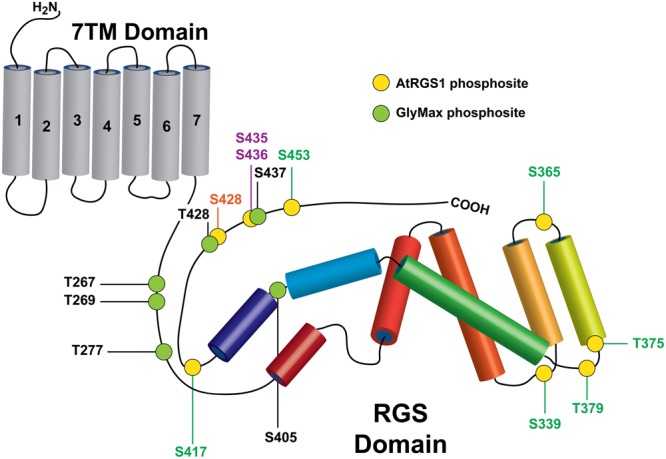
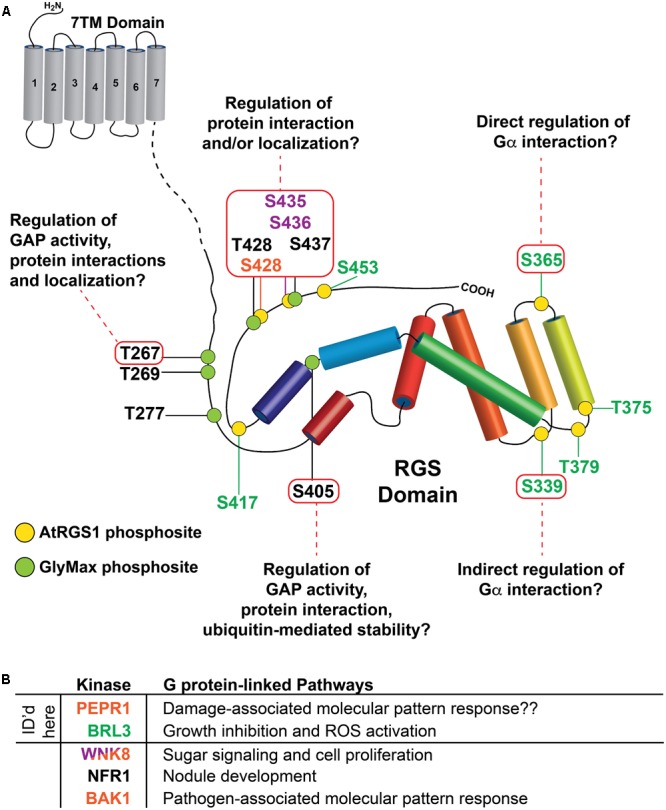
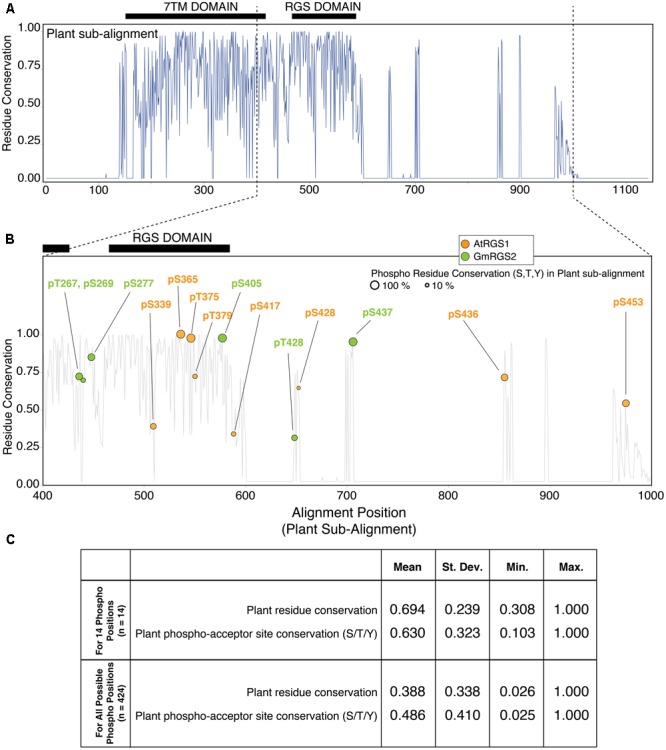
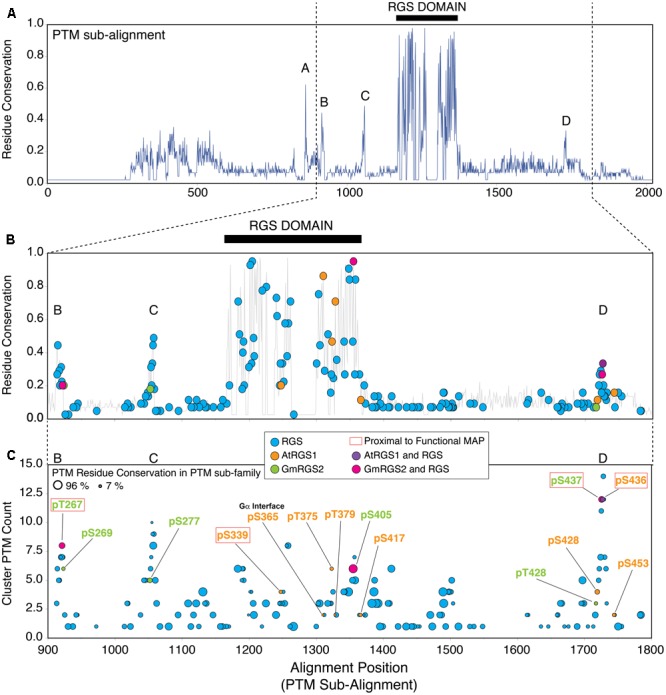
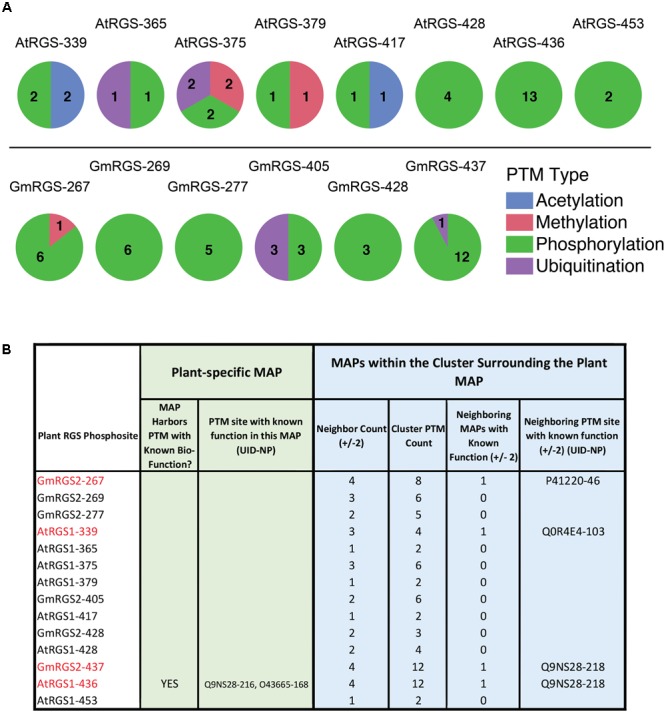
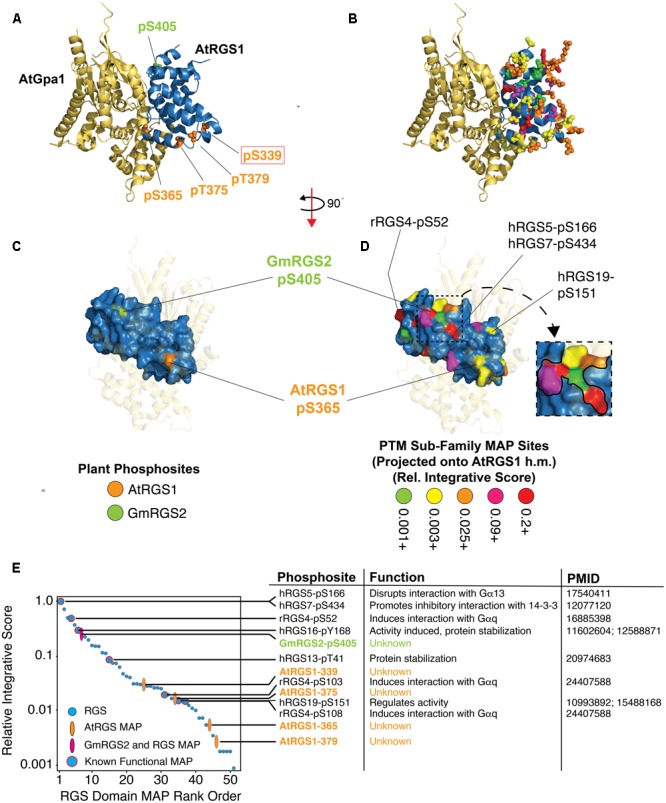
Heterotrimeric G proteins function in development, biotic, and abiotic stress responses, hormone signaling as well as sugar sensing. We previously proposed that discrimination of these various external signals in the G protein pathway is accomplished in plants by membrane-localized receptor-like kinases (RLKs) rather than G-protein-coupled receptors. Regulator of G Signaling protein 1 (AtRGS1) modulates G protein activation and is phosphorylated by several RLKs and by WITH-NO-LYSINE kinases (WNKs). Here, a combination of kinase assays, mass spectrometry, and computational bioinformatics identified and functionally prioritized phosphorylation sites in AtRGS1. Phosphosites for two more RLKs (BRL3 and PEPR1) were identified and added to the AtRGS1 phosphorylation profile. Bioinformatics analyses revealed that RLKs and WNK kinases phosphorylate plant RGS proteins within regions that are conserved across eukaryotes and at a high frequency. Four phospho-sites among 14 identified are proximal to equivalent mammalian phosphosites that impact RGS function, including: pS437 and pT267 in GmRGS2, and pS339 and pS436 in AtRGS1. Based on these analyses, we propose that pS437 and pS436 regulate GmRGS2 and AtRGS1 protein interactions and/or localization, whereas pT267 is important for modulation of GmRGS2 GAP activity and localization. Moreover, pS339 most likely affects AtRGS1 activation.
异源三聚体G蛋白在发育、生物和非生物胁迫反应、激素信号传导以及糖感知中发挥作用。我们之前提出,植物中G蛋白途径对这些不同外部信号的区分是通过膜定位的类受体激酶(RLK)而非G蛋白偶联受体来完成的。G信号调节蛋白1(AtRGS1)调节G蛋白的激活,并被几种RLK和无赖氨酸激酶(WNK)磷酸化。在这里,激酶分析、质谱和计算生物信息学相结合,鉴定了AtRGS1中的磷酸化位点并对其功能进行了优先级排序。另外两种RLK(BRL3和PEPR1)的磷酸化位点被鉴定出来,并添加到AtRGS1的磷酸化图谱中。生物信息学分析表明,RLK和WNK激酶在真核生物中保守且高频的区域内磷酸化植物RGS蛋白。在鉴定出的14个磷酸化位点中,有4个与影响RGS功能的等效哺乳动物磷酸化位点相邻,包括:GmRGS2中的pS437和pT267,以及AtRGS1中的pS339和pS436。基于这些分析,我们提出pS437和pS436调节GmRGS2和AtRGS1的蛋白相互作用和/或定位,而pT267对调节GmRGS2的GAP活性和定位很重要。此外,pS339很可能影响AtRGS1的激活。