Department of Biochemistry and Molecular Genetics, Israel Institute for Biological Research, Ness-Ziona 76100, Israel.
Toxins (Basel). 2017 Sep 11;9(9):278. doi: 10.3390/toxins9090278.
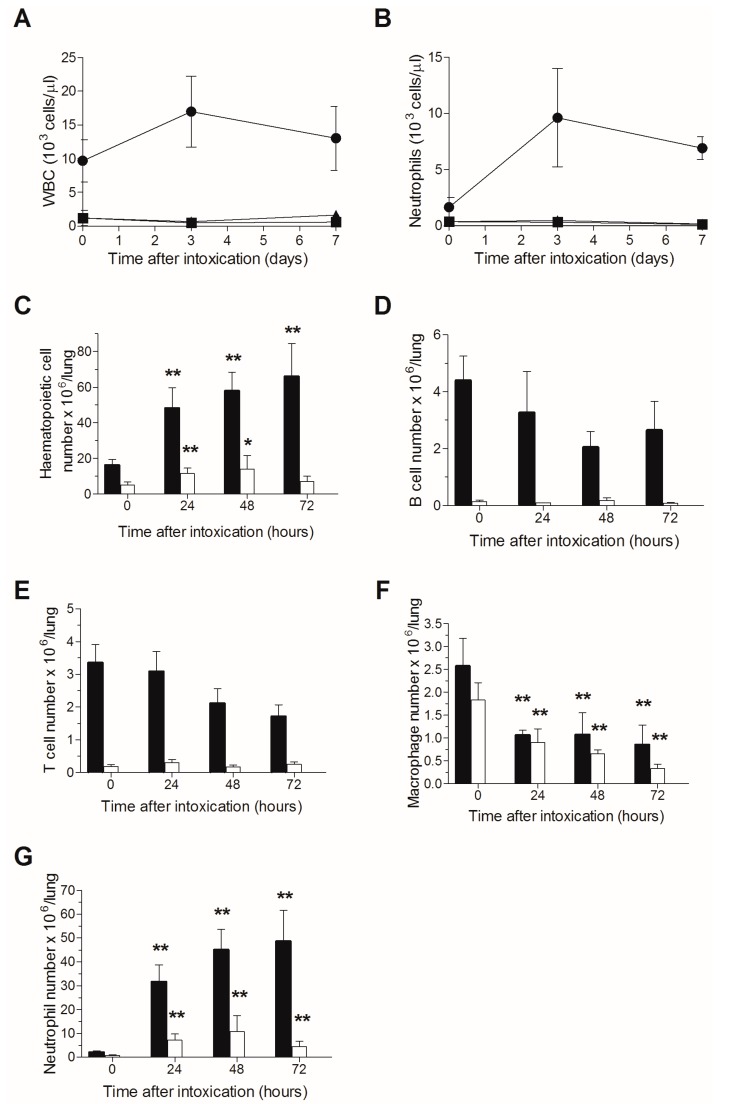
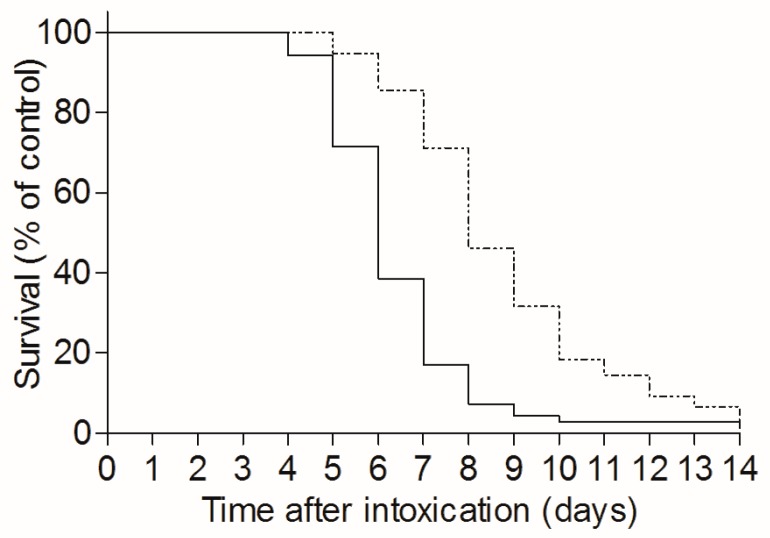
Ricin, a highly toxic plant-derived toxin, is considered a potential weapon in biowarfare and bioterrorism due to its pronounced toxicity, high availability, and ease of preparation. Pulmonary exposure to ricin results in the generation of an acute edematous inflammation followed by respiratory insufficiency and death. Massive neutrophil recruitment to the lungs may contribute significantly to ricin-mediated morbidity. In this study, total body irradiation (TBI) served as a non-pharmacological tool to decrease the potential neutrophil-induced lung injury. TBI significantly postponed the time to death of intranasally ricin-intoxicated mice, given that leukopenia remained stable following intoxication. This increase in time to death coincided with a significant reduction in pro-inflammatory marker levels, and led to marked extension of the therapeutic time window for anti-ricin antibody treatment.
蓖麻毒素是一种毒性很强的植物源性毒素,由于其显著的毒性、高可用性和易于制备,被认为是生物战和生物恐怖主义的潜在武器。肺部接触蓖麻毒素会导致急性水肿性炎症,随后出现呼吸功能不全和死亡。大量中性粒细胞向肺部募集可能会对蓖麻毒素介导的发病机制产生重大影响。在这项研究中,全身放射(TBI)作为一种非药物手段,可以减少潜在的中性粒细胞引起的肺部损伤。TBI 显著推迟了经鼻吸入蓖麻毒素中毒小鼠的死亡时间,因为中毒后白细胞减少保持稳定。死亡时间的这种延长与促炎标志物水平的显著降低相吻合,并为抗蓖麻毒素抗体治疗的治疗时间窗显著延长提供了依据。