Gal Yoav, Mazor Ohad, Alcalay Ron, Seliger Nehama, Aftalion Moshe, Sapoznikov Anita, Falach Reut, Kronman Chanoch, Sabo Tamar
Department of Biochemistry and Molecular Genetics, Israel Institute for Biological Research, Ness-Ziona, Israel.
Toxicol Rep. 2014 Aug 1;1:496-504. doi: 10.1016/j.toxrep.2014.07.013. eCollection 2014.
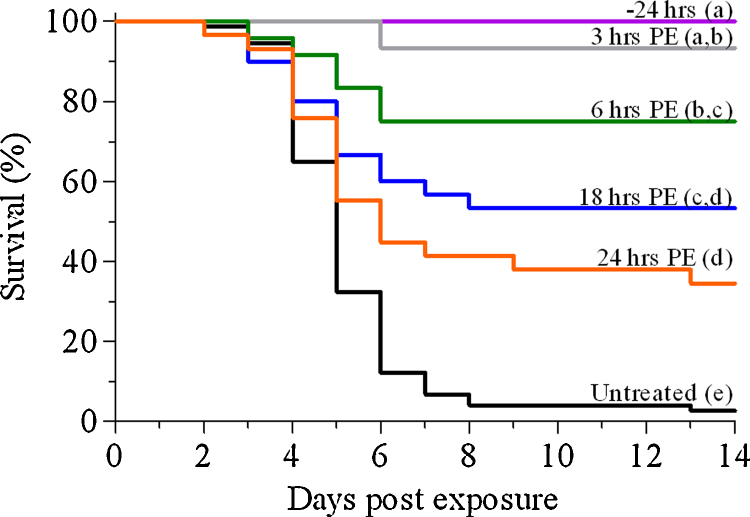
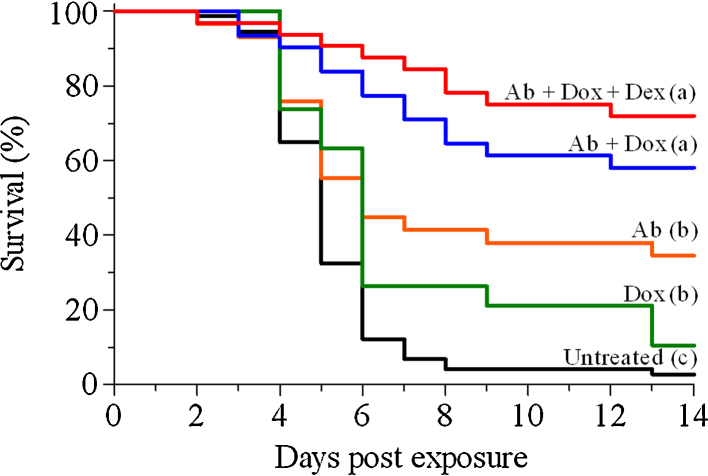
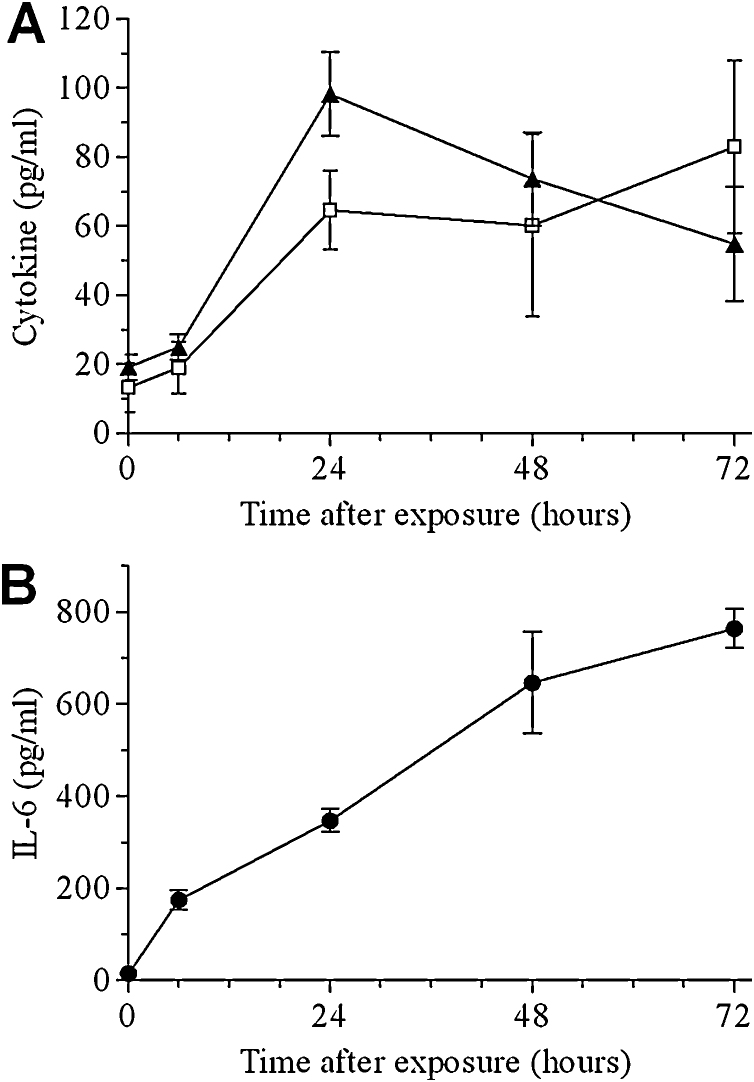
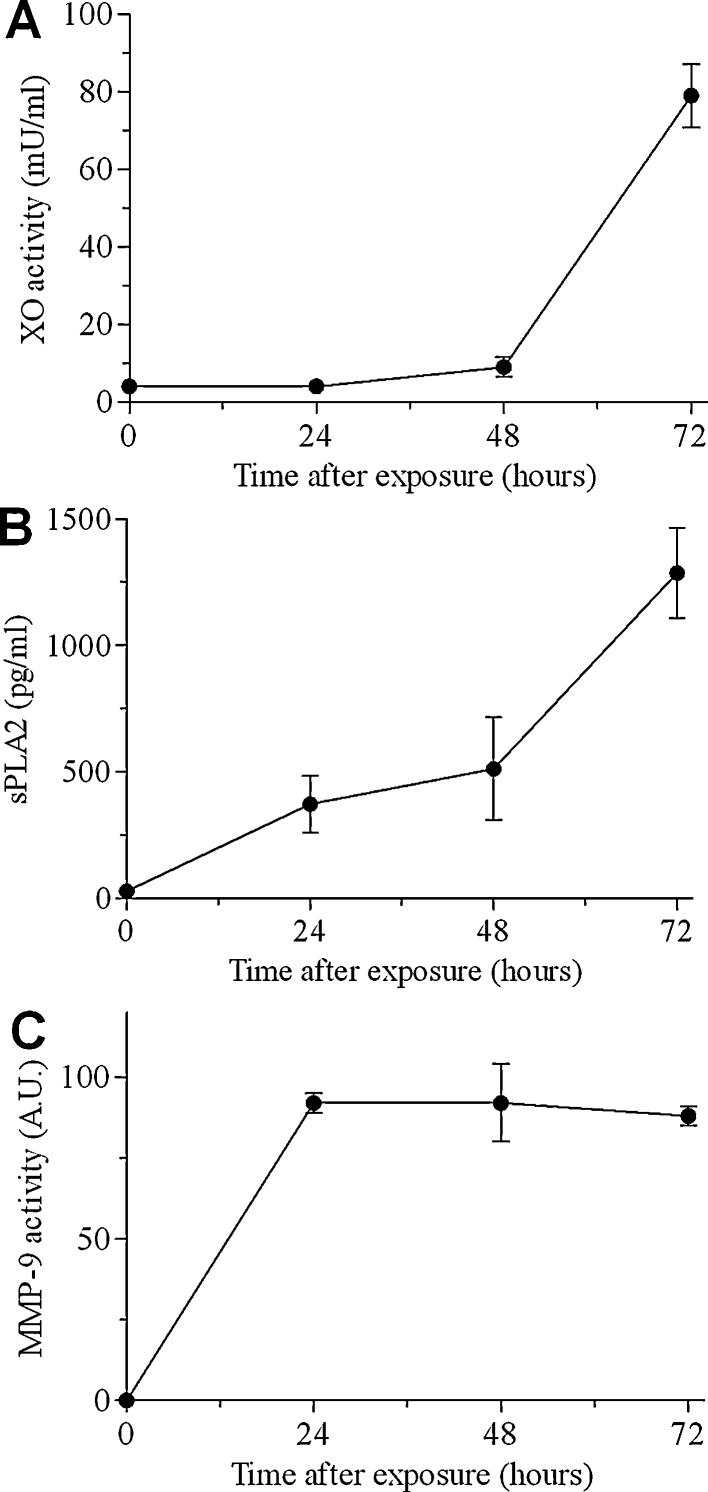
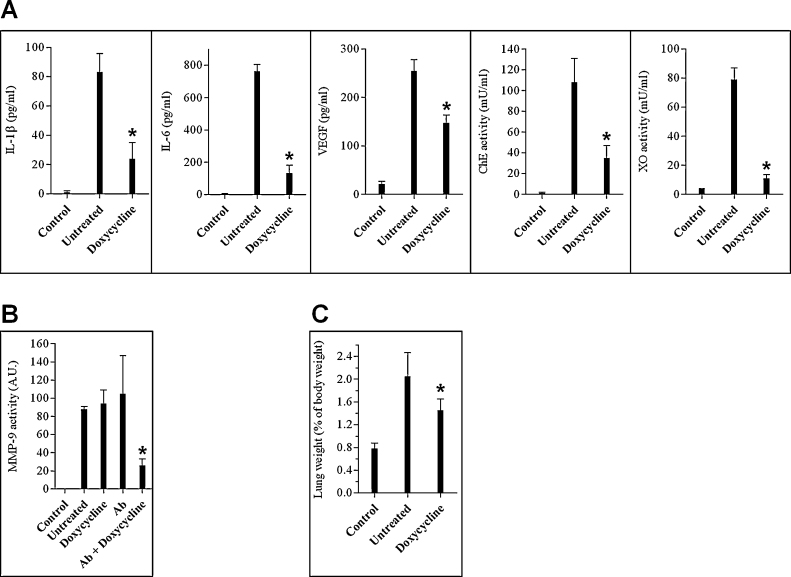
Ricin, a highly toxic plant-derived toxin, is considered a potential weapon in biological warfare due to its high availability and ease of preparation. Pulmonary exposure to ricin results in the generation of an acute edematous inflammation followed by respiratory insufficiency and death. Passive immunization with polyclonal anti-ricin antibodies conferred protection against pulmonary ricinosis, however, at clinically-relevant time points for treatment, survival rates were limited. In this study, intranasal instillation of a lethal dose of ricin to mice, served as a lung challenge model for the evaluation and comparison of different therapeutic modalities against pulmonary ricinosis. We show that treatment with doxycycline resulted in a significant reduction of pro-inflammatory cytokines, markers of oxidative stress and capillary permeability in the lungs of the mice. Moreover, survival rates of mice intoxicated with ricin and treated 24 h later with anti-ricin antibody were significantly improved by co-administration of doxycycline. In contrast, co-administration of the steroid drug dexamethasone with anti-ricin antibodies did not increase survival rates when administered at late hours after intoxication, however dexamethasone did exert a positive effect on survival when applied in conjunction with the doxycycline treatment. These studies strongly suggest that combined therapy, comprised of neutralizing anti-ricin antibodies and an appropriate anti-inflammatory agent, can promote high-level protection against pulmonary ricinosis at clinically-relevant time points post-exposure.
蓖麻毒素是一种剧毒的植物源毒素,因其易于获取和制备,被视为生物战中的一种潜在武器。肺部接触蓖麻毒素会引发急性水肿性炎症,随后导致呼吸功能不全和死亡。用多克隆抗蓖麻毒素抗体进行被动免疫可提供针对肺部蓖麻毒素中毒的保护作用,然而,在临床相关的治疗时间点,存活率有限。在本研究中,给小鼠经鼻滴注致死剂量的蓖麻毒素,作为肺部攻击模型,用于评估和比较针对肺部蓖麻毒素中毒的不同治疗方式。我们发现,用强力霉素治疗可显著降低小鼠肺部促炎细胞因子、氧化应激标志物和毛细血管通透性。此外,在中毒24小时后用抗蓖麻毒素抗体治疗的蓖麻毒素中毒小鼠,联合使用强力霉素可显著提高存活率。相比之下,在中毒数小时后给予类固醇药物地塞米松与抗蓖麻毒素抗体联合使用时,并未提高存活率,然而地塞米松与强力霉素联合应用时对存活率有积极影响。这些研究强烈表明,由中和抗蓖麻毒素抗体和适当的抗炎剂组成的联合疗法,可在暴露后的临床相关时间点促进对肺部蓖麻毒素中毒的高水平保护。