Instituto de Microbiologia Paulo de Góes, Universidade Federal do Rio de Janeiro, Rio de Janeiro, Brazil.
The Rockefeller University, New York, United States.
Elife. 2017 Sep 12;6:e30883. doi: 10.7554/eLife.30883.
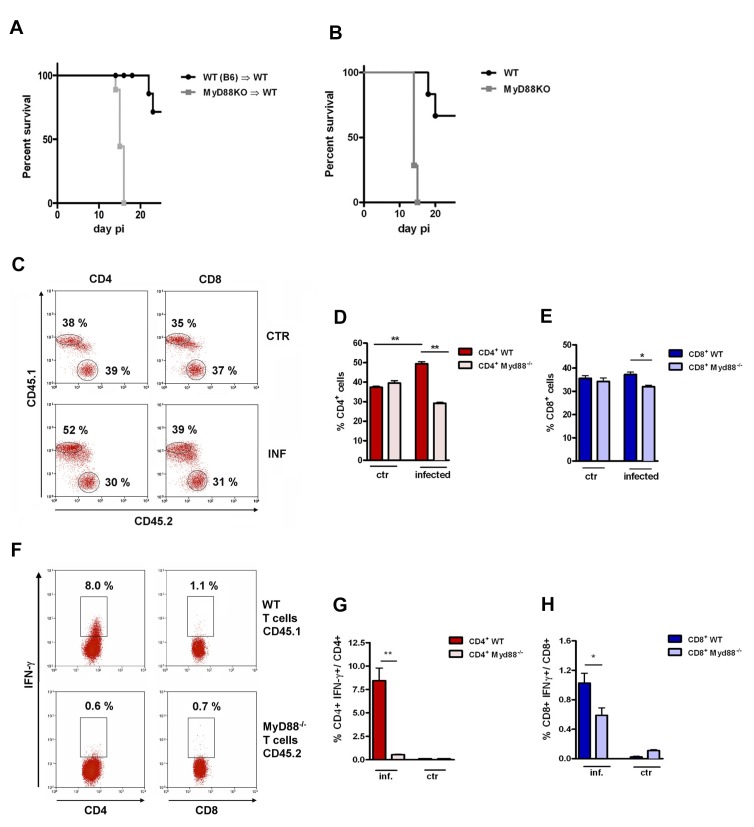
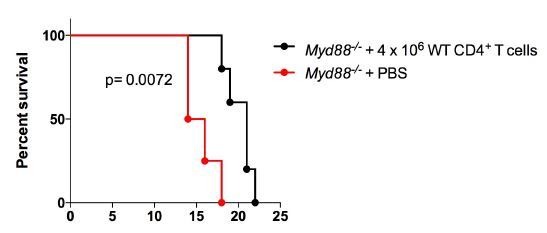
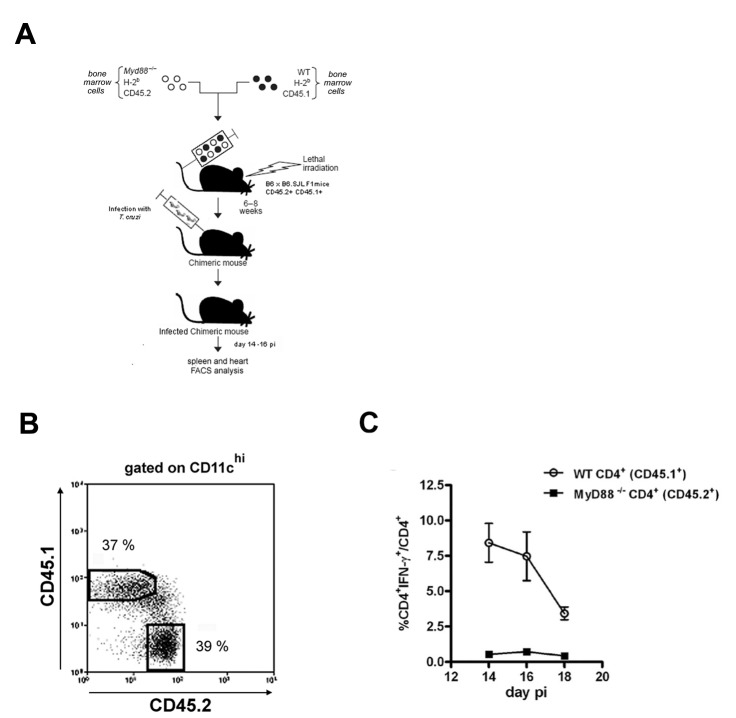
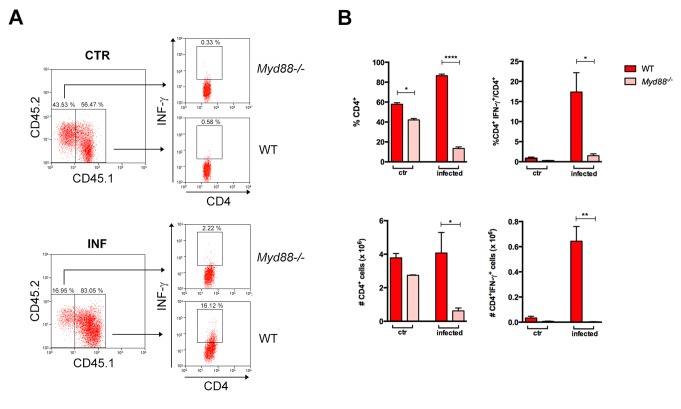
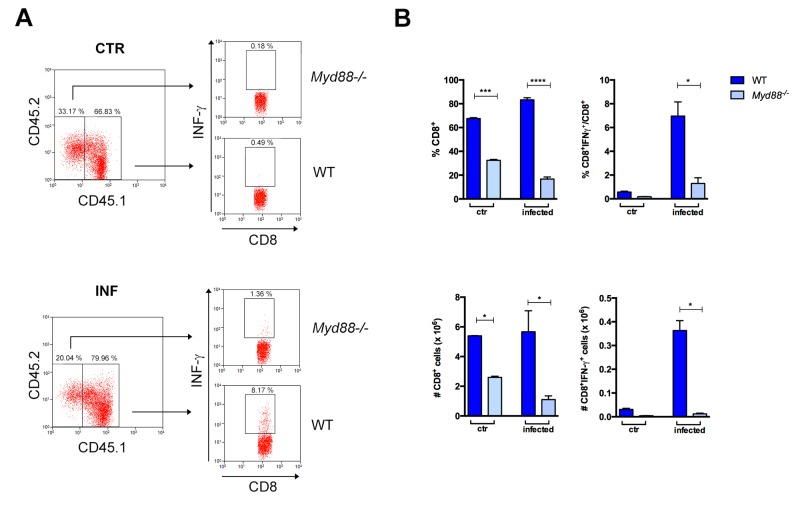
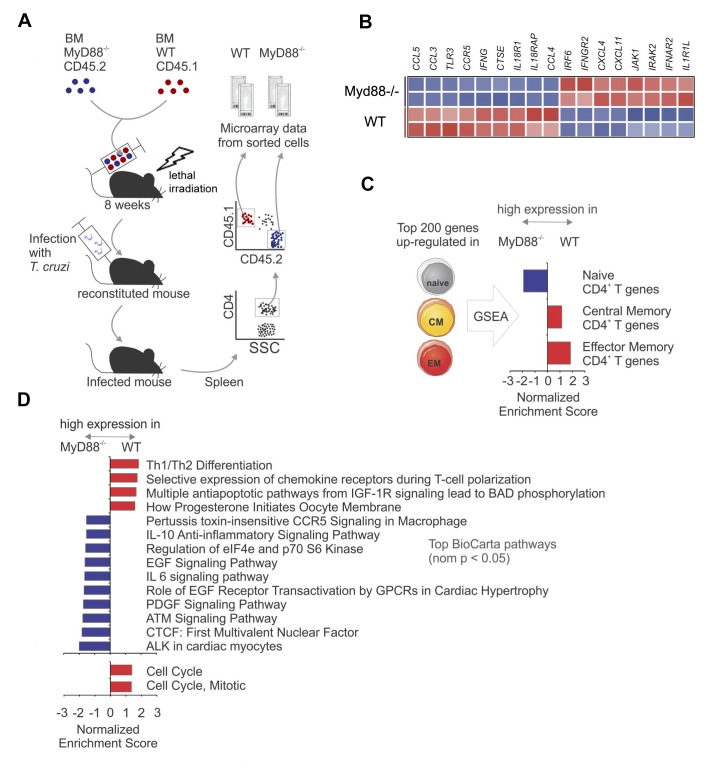
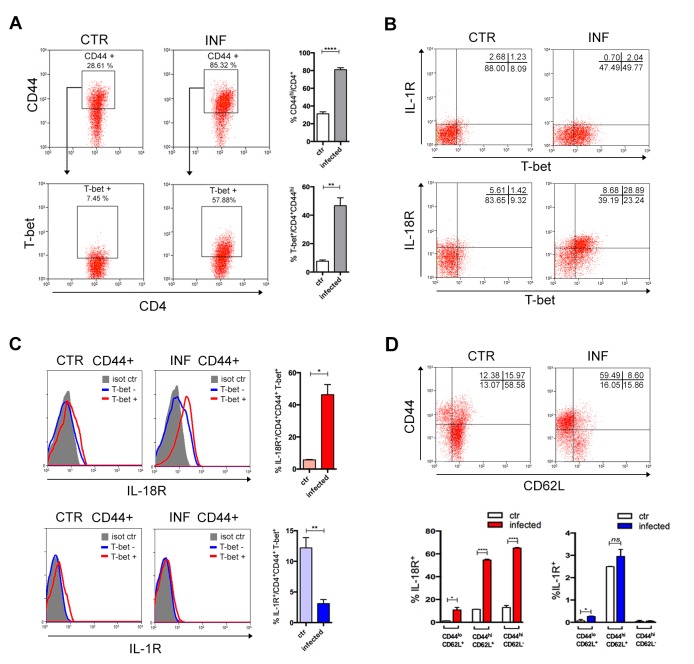
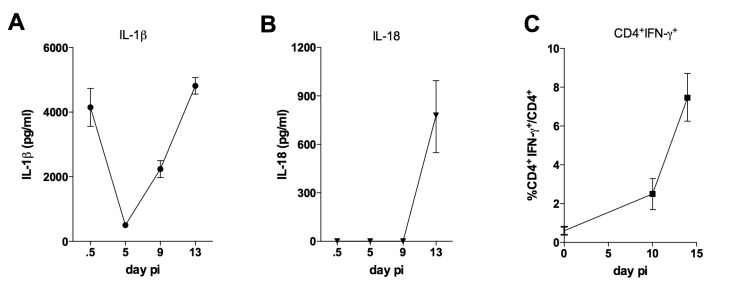
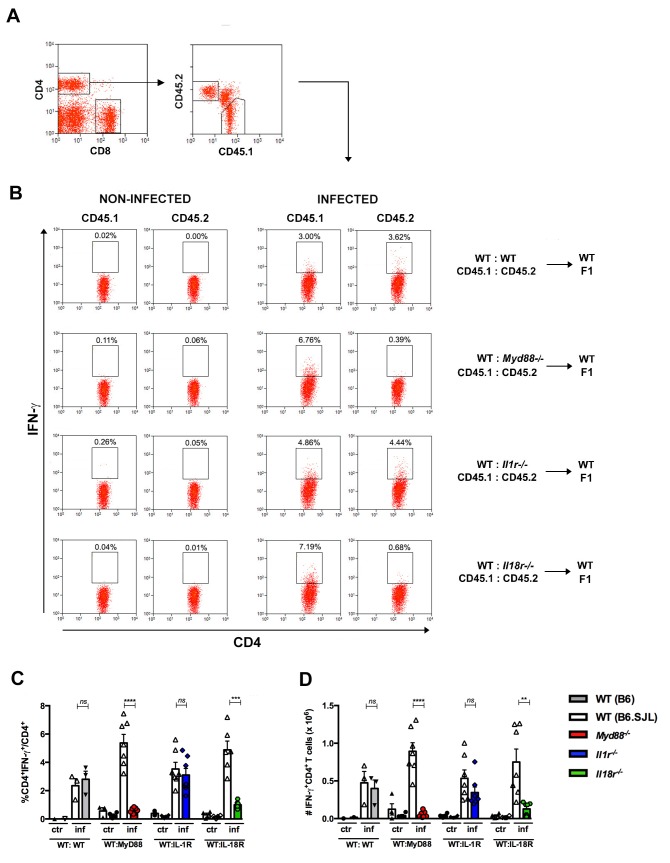
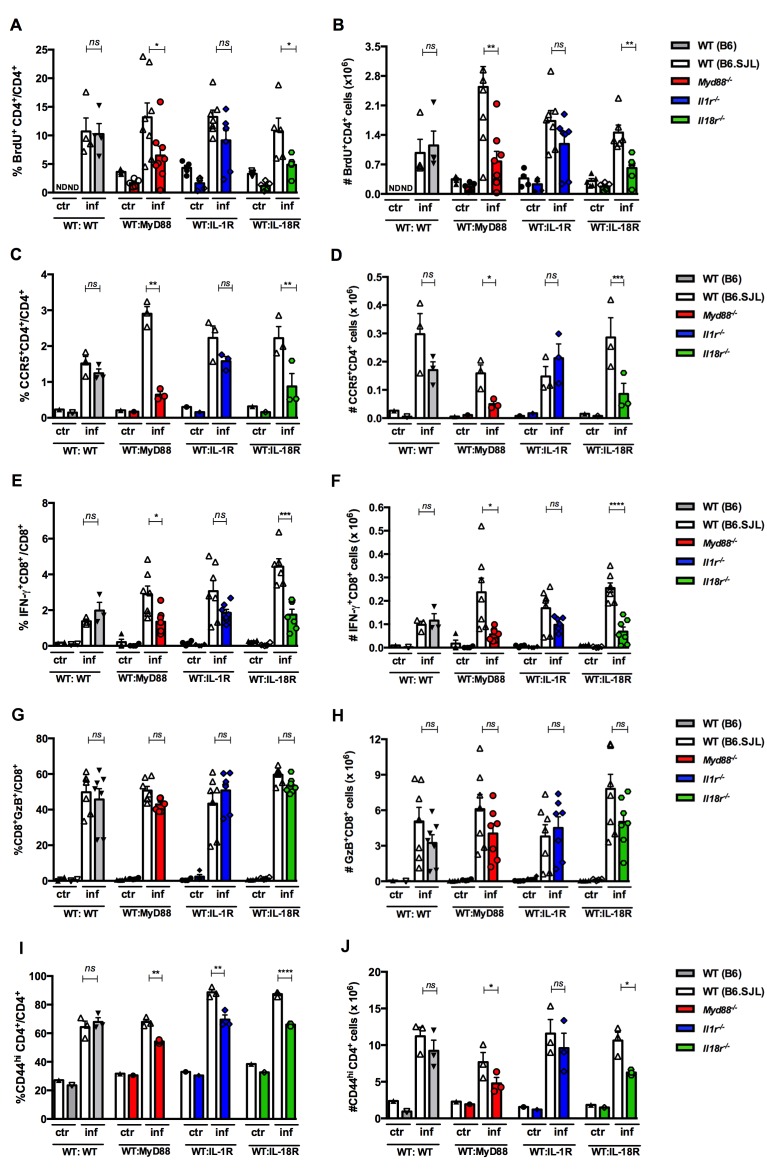
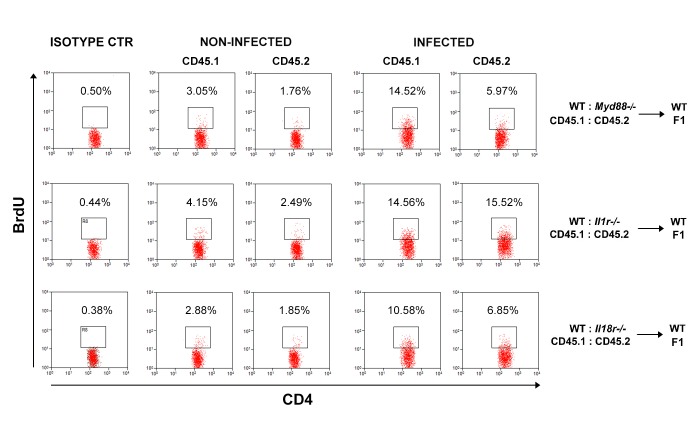
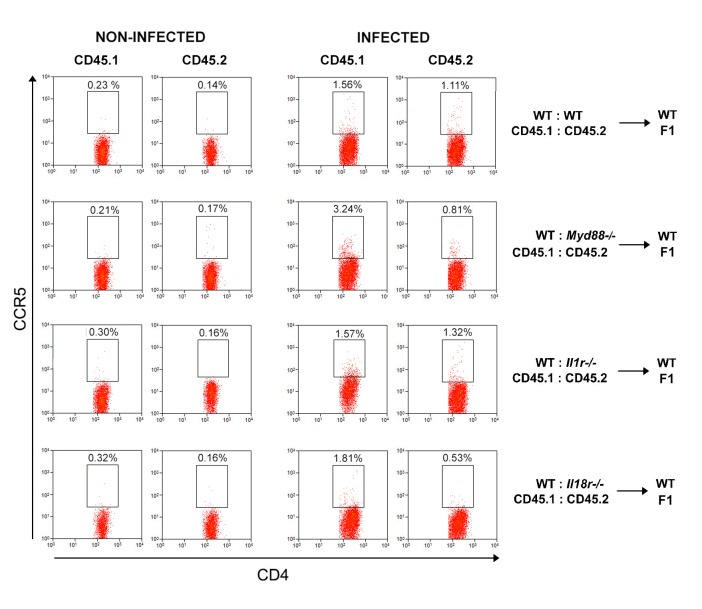
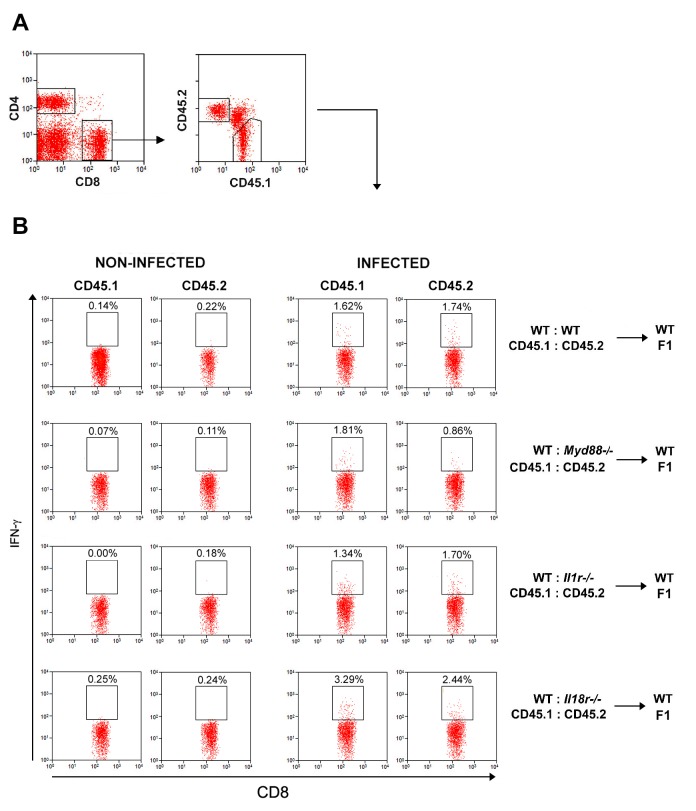
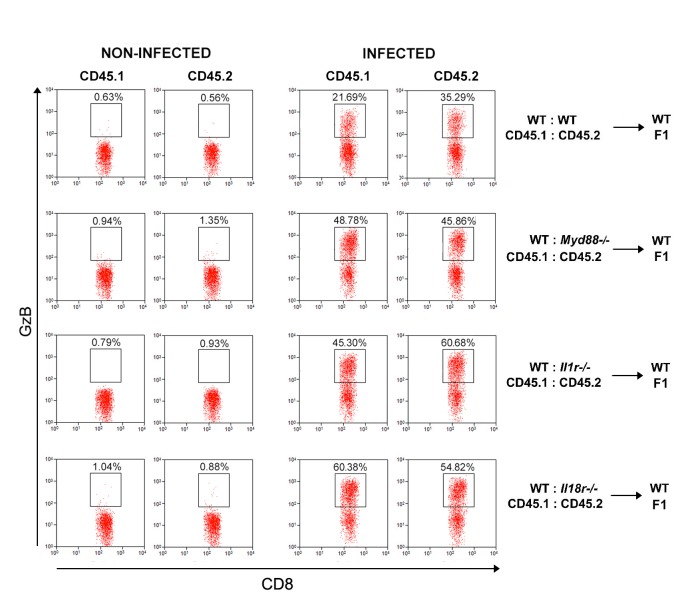
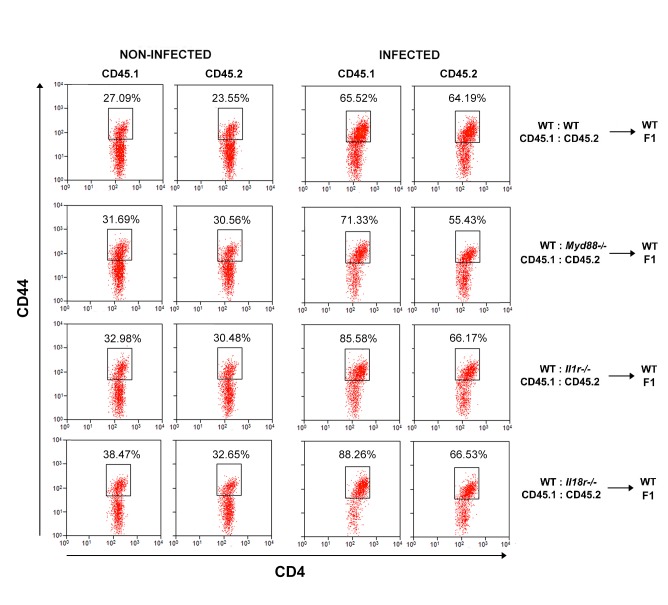
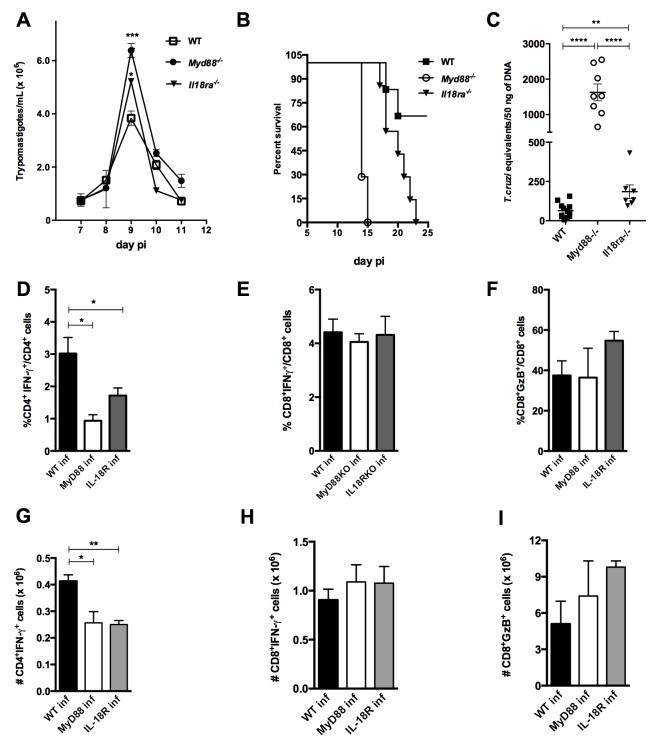
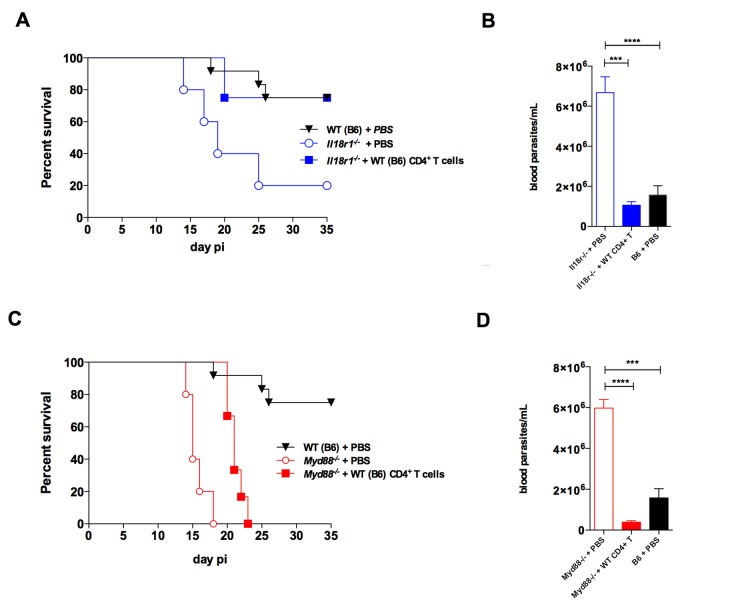
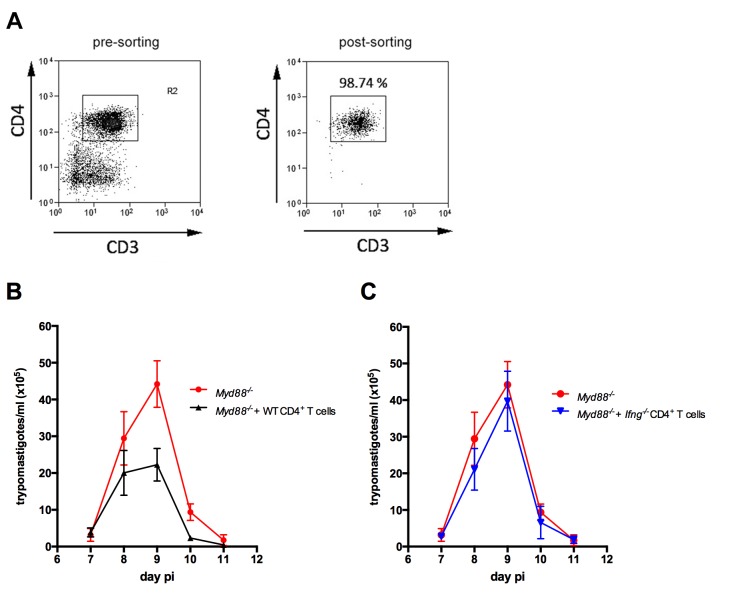
MyD88 is the main adaptor molecule for TLR and IL-1R family members. Here, we demonstrated that T-cell intrinsic MyD88 signaling is required for proliferation, protection from apoptosis and expression of activation/memory genes during infection with the intracellular parasite , as evidenced by transcriptome and cytometry analyses in mixed bone-marrow (BM) chimeras. The lack of direct IL-18R signaling in T cells, but not of IL-1R, phenocopied the absence of the MyD88 pathway, indicating that IL-18R is a critical MyD88-upstream pathway involved in the establishment of the Th1 response against an infection, a presently controvert subject. Accordingly, mice display lower levels of Th1 cells and are highly susceptible to infection, but can be rescued from mortality by the adoptive transfer of WT CD4 T cells. Our findings establish the T-cell intrinsic IL-18R/MyD88 pathway as a crucial element for induction of cognate Th1 responses against an important human pathogen.
MyD88 是 TLR 和 IL-1R 家族成员的主要衔接分子。在这里,我们证明了 T 细胞内源性 MyD88 信号对于感染细胞内寄生虫时的增殖、防止凋亡和激活/记忆基因的表达是必需的,这一点可以通过混合骨髓 (BM) 嵌合体中的转录组和细胞术分析来证明。缺乏 T 细胞中直接的 IL-18R 信号,而不是缺乏 IL-1R,模拟了 MyD88 途径的缺失,表明 IL-18R 是参与 Th1 反应建立的关键 MyD88 上游途径,这是目前有争议的课题。因此,IL-18R-/- 小鼠表现出较低水平的 Th1 细胞,并且对感染高度敏感,但可以通过过继转移 WT CD4 T 细胞来挽救死亡率。我们的研究结果确立了 T 细胞内源性 IL-18R/MyD88 途径作为诱导针对重要人类病原体的同源 Th1 反应的关键因素。