Department of Pathophysiology, Xiangya School of Medicine, Central South University, Changsha 410000, Hunan, China.
Department of Pathology, Medical College of Jishou University, Jishou 416000, Hunan, China.
Molecules. 2017 Sep 12;22(9):1529. doi: 10.3390/molecules22091529.
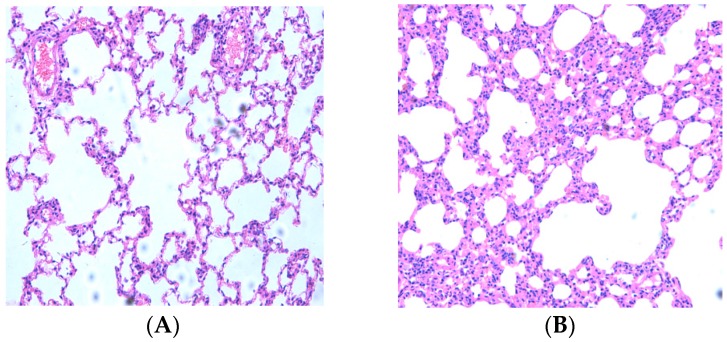
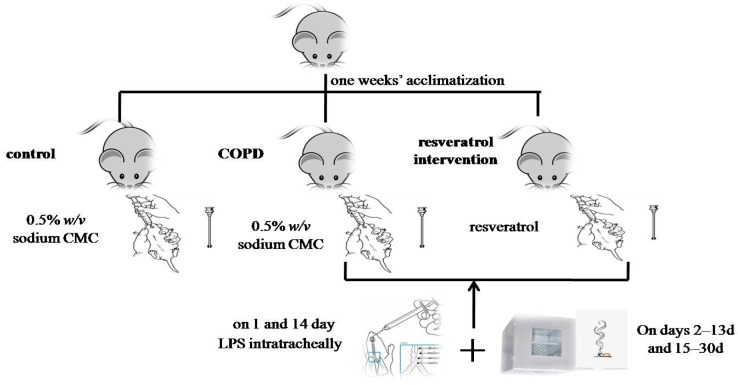
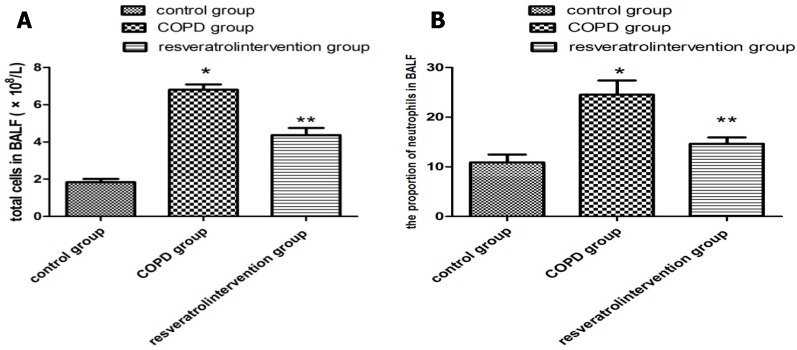
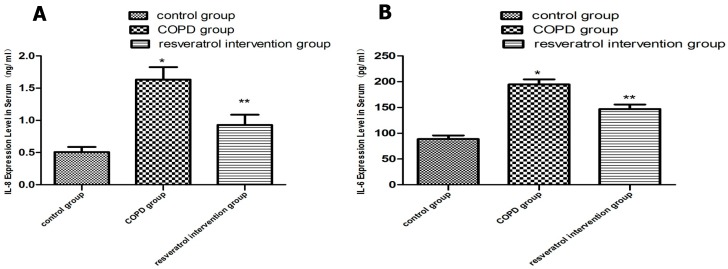
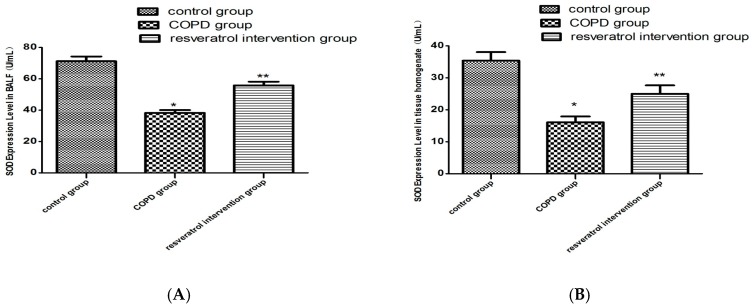
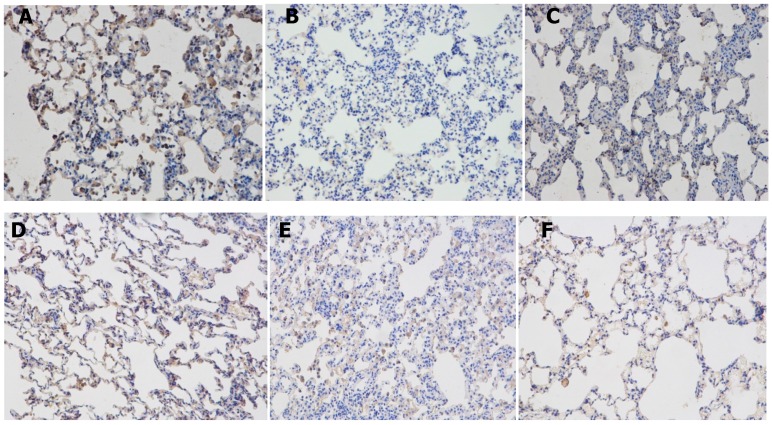
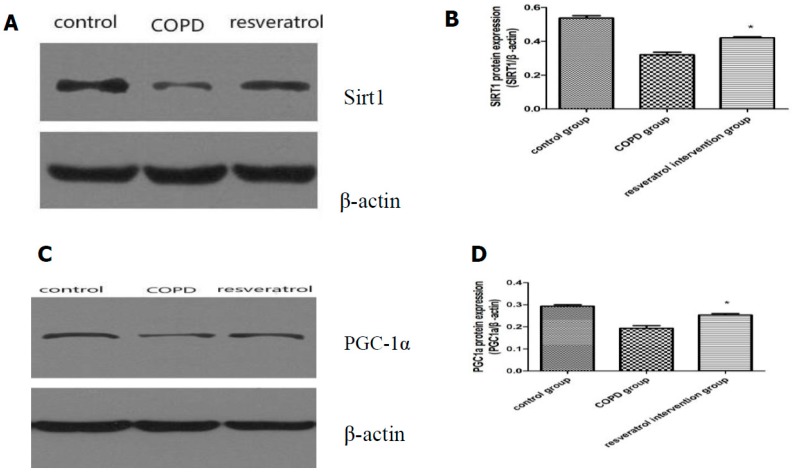
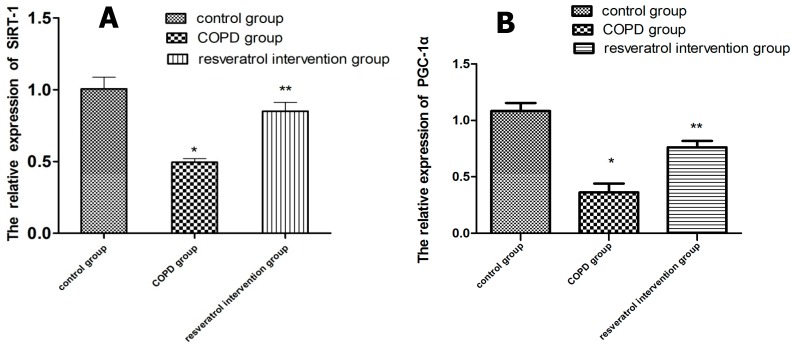
Oxidative stress and inflammation are hypothesized to contribute to the pathogenesis of chronic obstructive pulmonary disease (COPD). Resveratrol (trans-3,5,4'-trihydroxystilbene) is known for its antioxidant and anti-inflammatory properties. The study aimed to investigate the effects of resveratrol in a rat model with COPD on the regulation of oxidative stress and inflammation via the activation of Sirtuin1 (SIRTl) and proliferator-activated receptor-γ coactivator-1α (PGC-1α). Thirty Wistar rats were randomly divided into three groups: control group, COPD group and resveratrol intervention group. The COPD model was established by instilling with lipopolysaccharide (LPS) and challenging with cigarette smoke (CS). The levels of interleukin-6 (IL-6) and interleukin-8 (IL-8) in serum were measured. The levels of malondialdehyde (MDA) and the activity of superoxide dismutase (SOD) were measured. The expression levels of SIRT1 and PGC-1α in the lung tissues were examined by immunohistochemistry as well as real-time reverse transcriptase polymerase chain reaction (real-time RT-PCR) and western blotting analysis. After the treatment with resveratrol (50 mg/kg), compared with the COPD group, alleviation of inflammation and reconstruction in the small airways of the lungs were seen. Resveratrol might be correlated not only with the lower level of MDA and the higher activity of SOD, but also with the upregulation of SIRT1 and PGC-1α expression. Resveratrol treatment decreased serum levels of IL-6 and IL-8. Our findings indicate that resveratrol had a therapeutic effect in our rat COPD model, which is related to the inhibition of oxidative stress and inflammatory response. The mechanism may be related to the activation and upgrading of the SIRT1/PGC-1α signaling pathways. Thus resveratrol might be a therapeutic modality in COPD.
氧化应激和炎症被认为是导致慢性阻塞性肺疾病(COPD)发病机制的因素。白藜芦醇(反式-3,5,4'-三羟基二苯乙烯)以其抗氧化和抗炎特性而闻名。本研究旨在通过激活 Sirtuin1(SIRT1)和过氧化物酶体增殖物激活受体-γ共激活因子-1α(PGC-1α),研究白藜芦醇对 COPD 大鼠模型中氧化应激和炎症的调节作用。30 只 Wistar 大鼠随机分为三组:对照组、COPD 组和白藜芦醇干预组。通过注入脂多糖(LPS)和香烟烟雾(CS)挑战建立 COPD 模型。测定血清白细胞介素-6(IL-6)和白细胞介素-8(IL-8)水平。测定丙二醛(MDA)水平和超氧化物歧化酶(SOD)活性。通过免疫组织化学、实时逆转录聚合酶链反应(real-time RT-PCR)和蛋白质印迹分析检测肺组织中 SIRT1 和 PGC-1α 的表达水平。用 50mg/kg 的白藜芦醇治疗后,与 COPD 组相比,肺部小气道炎症和重建得到缓解。白藜芦醇可能不仅与 MDA 水平降低和 SOD 活性升高有关,还与 SIRT1 和 PGC-1α 表达上调有关。白藜芦醇治疗降低了血清 IL-6 和 IL-8 水平。我们的研究结果表明,白藜芦醇对我们的大鼠 COPD 模型具有治疗作用,这与抑制氧化应激和炎症反应有关。其机制可能与 SIRT1/PGC-1α 信号通路的激活和升级有关。因此,白藜芦醇可能是 COPD 的一种治疗方法。