Laboratoire Matière et Systèmes Complexes (MSC), UMR 7057, CNRS and Université Paris Diderot, 75205, Paris Cedex 13, France.
Department of Cardiovascular Surgery, Hôpital Européen Georges Pompidou; Paris Cardiovascular Research Center, INSERM U970, Université Paris Descartes, Paris, 75015, France.
Nat Commun. 2017 Sep 12;8(1):400. doi: 10.1038/s41467-017-00543-2.
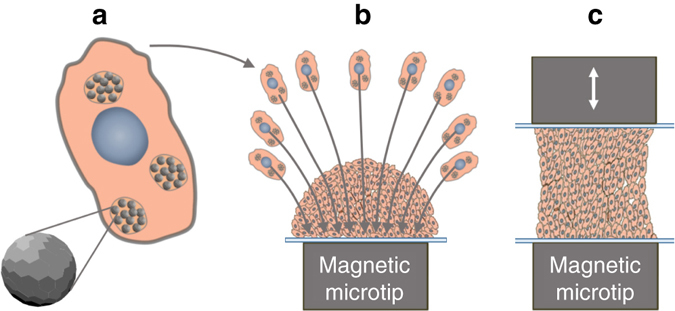
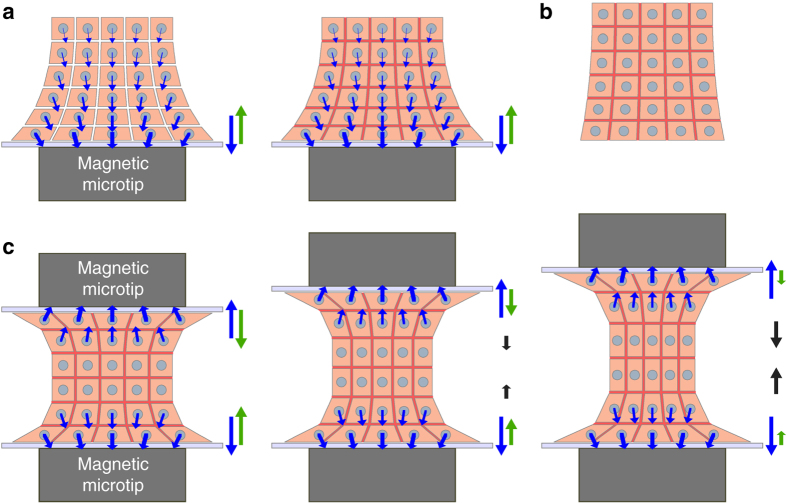
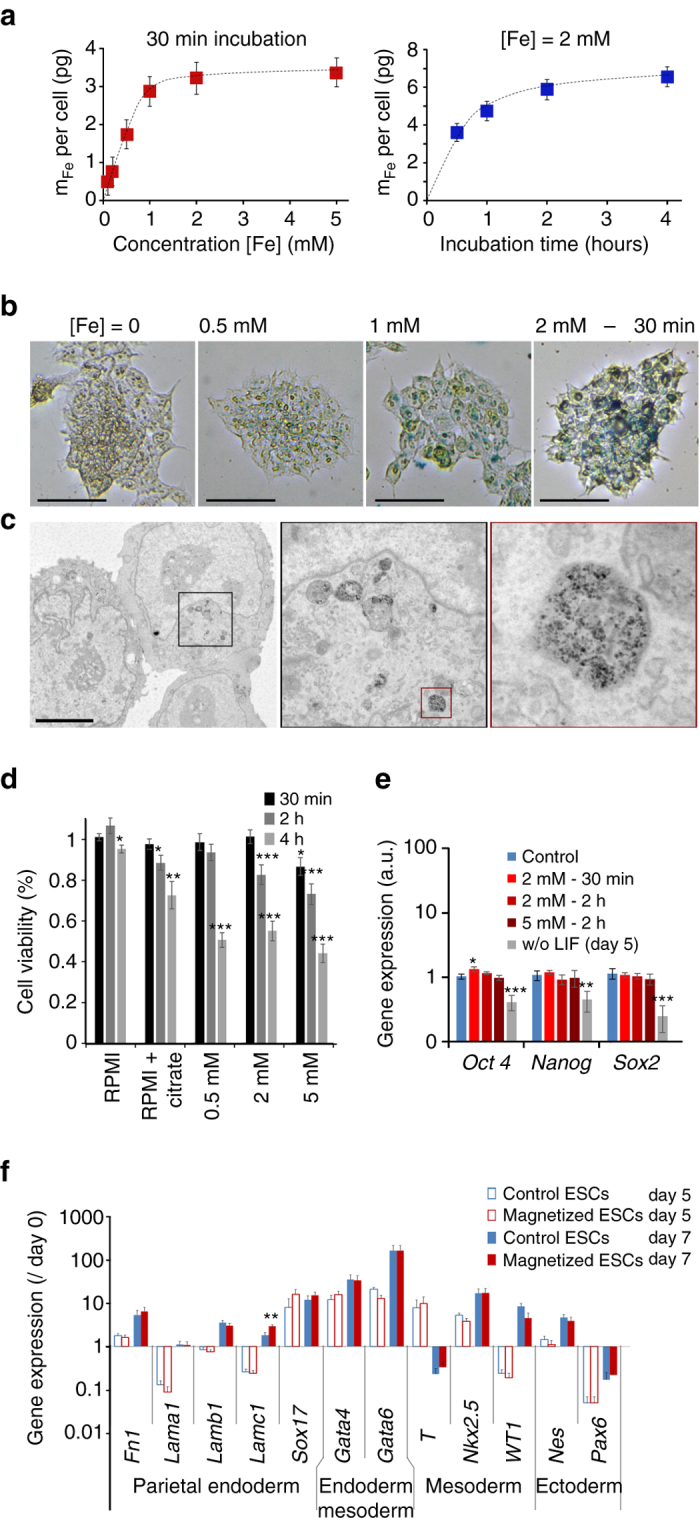
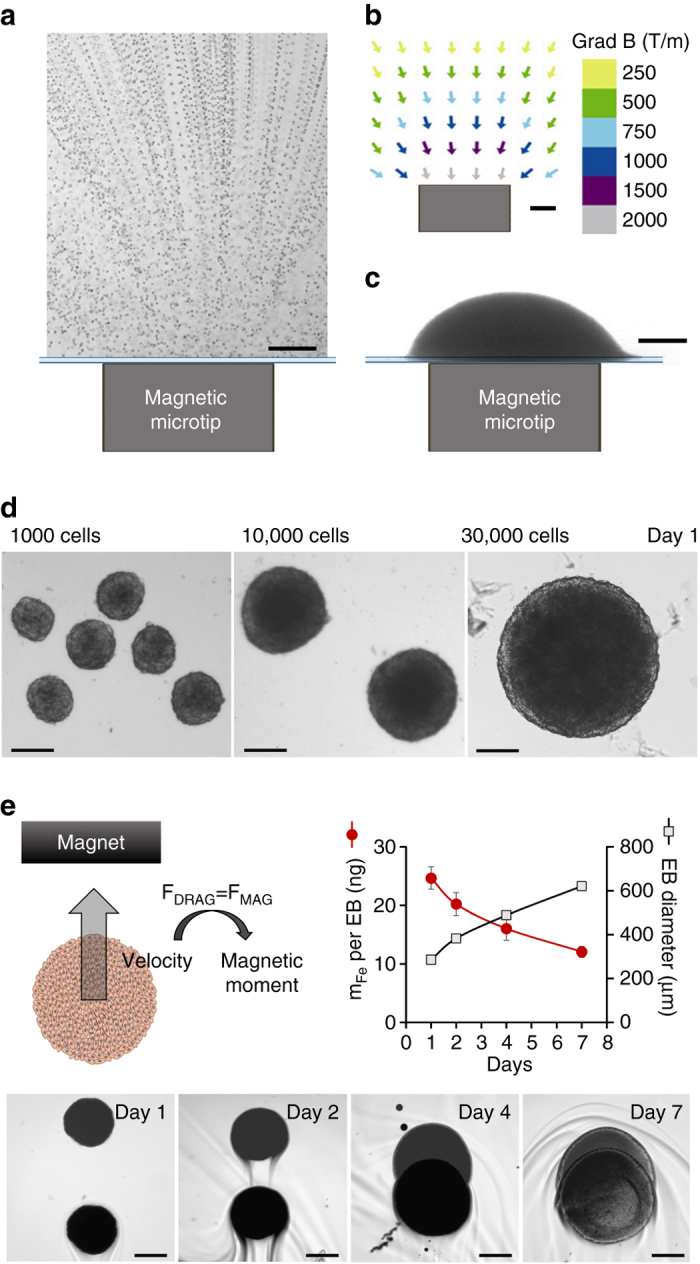
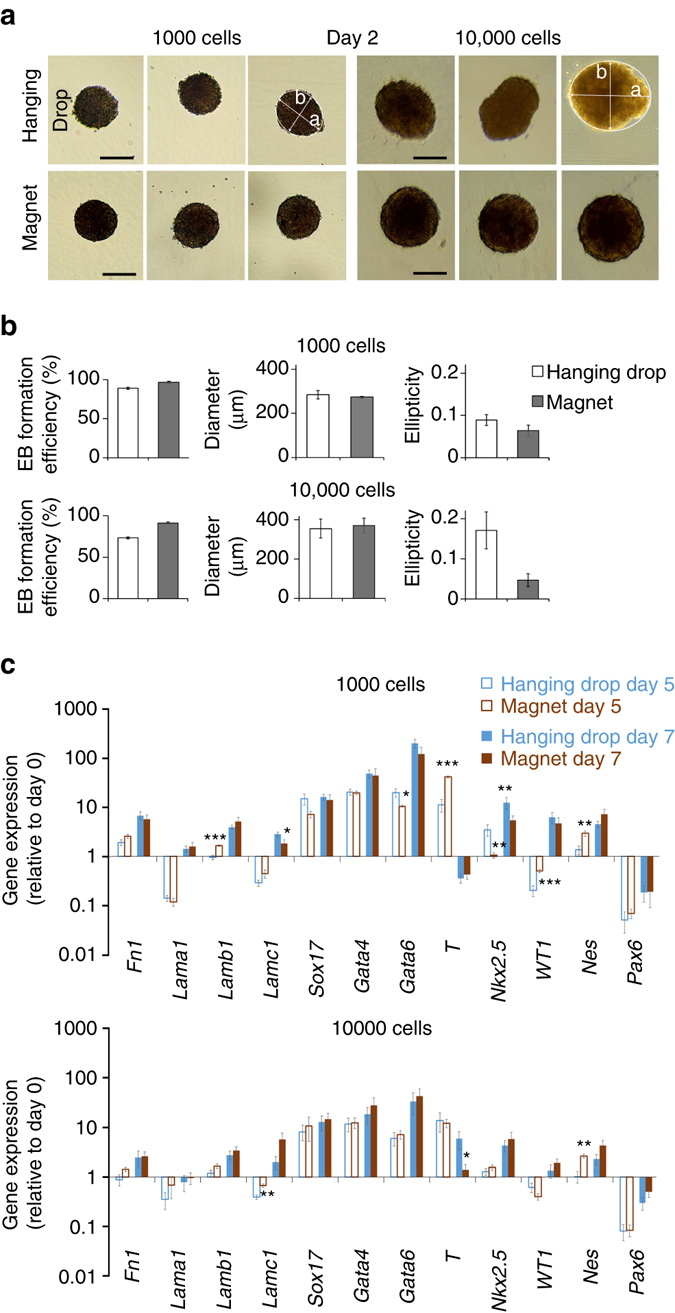
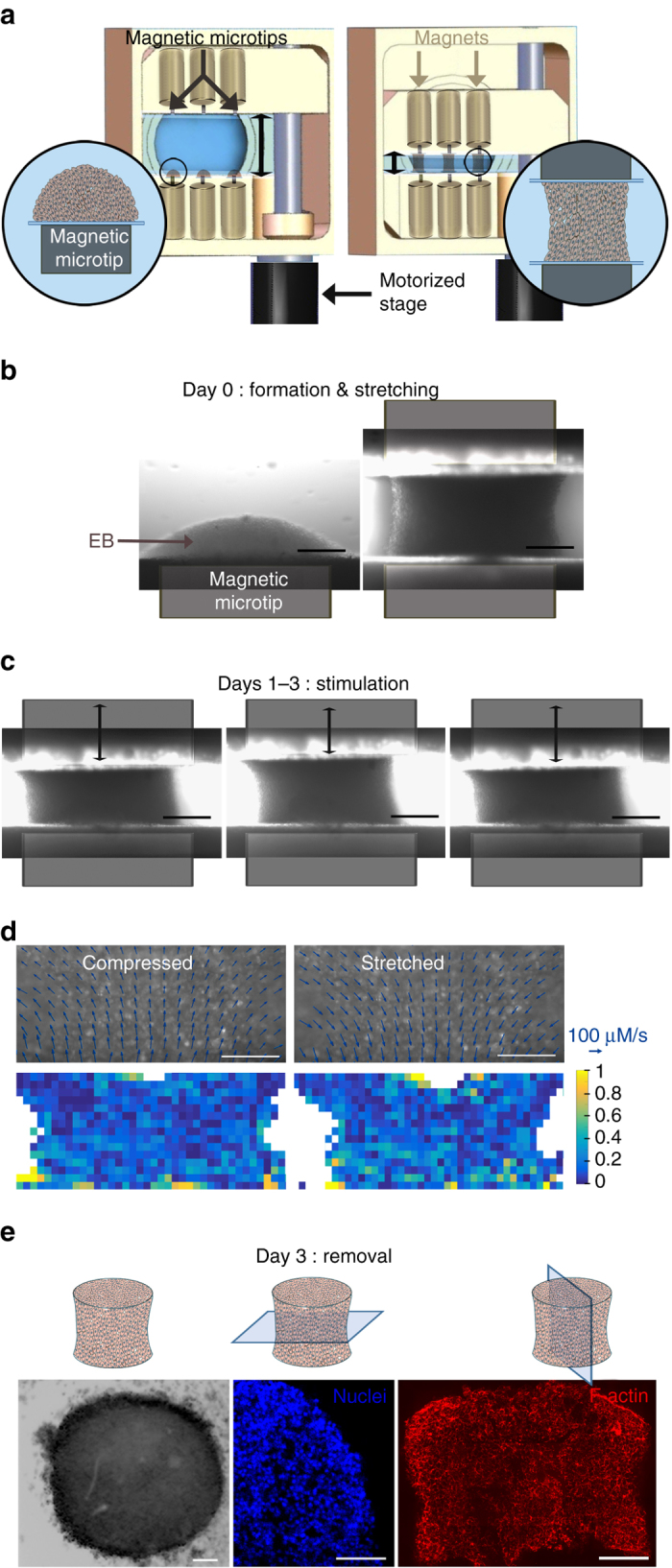
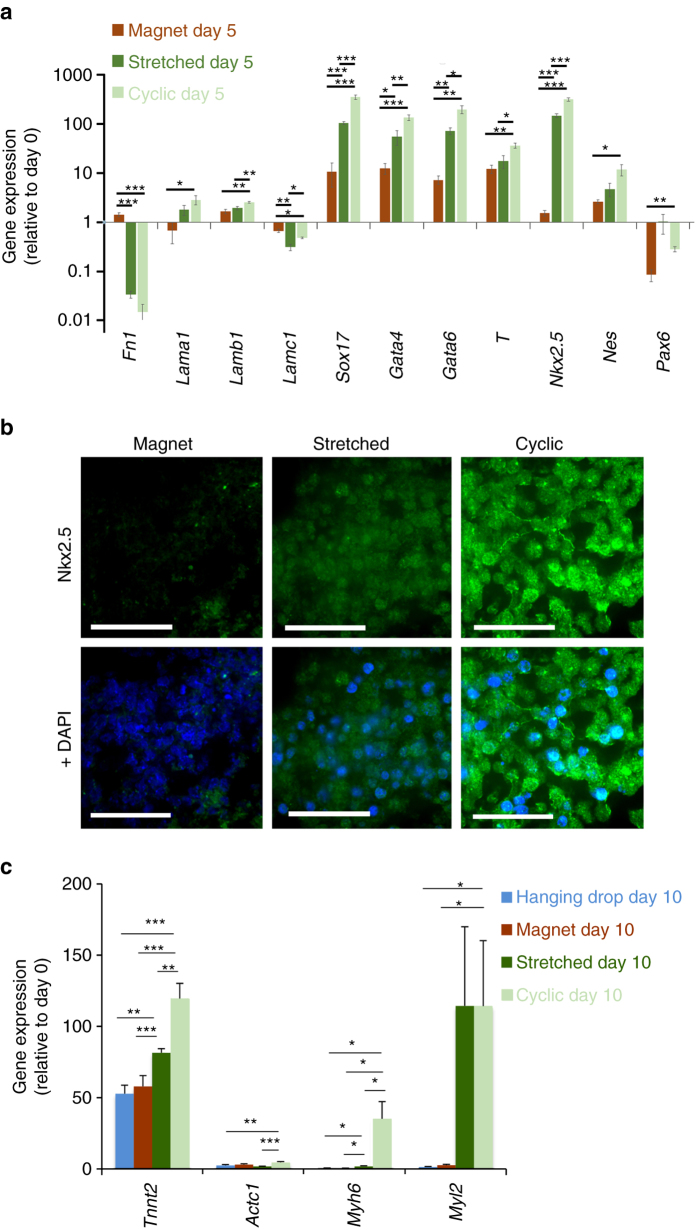
The ability to create a 3D tissue structure from individual cells and then to stimulate it at will is a major goal for both the biophysics and regenerative medicine communities. Here we show an integrated set of magnetic techniques that meet this challenge using embryonic stem cells (ESCs). We assessed the impact of magnetic nanoparticles internalization on ESCs viability, proliferation, pluripotency and differentiation profiles. We developed magnetic attractors capable of aggregating the cells remotely into a 3D embryoid body. This magnetic approach to embryoid body formation has no discernible impact on ESC differentiation pathways, as compared to the hanging drop method. It is also the base of the final magnetic device, composed of opposing magnetic attractors in order to form embryoid bodies in situ, then stretch them, and mechanically stimulate them at will. These stretched and cyclic purely mechanical stimulations were sufficient to drive ESCs differentiation towards the mesodermal cardiac pathway.The development of embryoid bodies that are responsive to external stimuli is of great interest in tissue engineering. Here, the authors culture embryonic stem cells with magnetic nanoparticles and show that the presence of magnetic fields could affect their aggregation and differentiation.
能够从单个细胞中创建 3D 组织结构,然后随意刺激它,这是生物物理学和再生医学领域的主要目标。在这里,我们展示了一套集成的磁技术,使用胚胎干细胞(ESCs)来满足这一挑战。我们评估了磁性纳米粒子内化对 ESC 活力、增殖、多能性和分化谱的影响。我们开发了能够远程将细胞聚集到 3D 胚状体中的磁性吸引子。与悬滴法相比,这种用于胚状体形成的磁方法对 ESC 分化途径没有明显影响。它也是最终磁性设备的基础,该设备由相对的磁性吸引子组成,以便在原位形成胚状体,然后拉伸它们,并随意对它们进行机械刺激。这些拉伸和循环的纯机械刺激足以驱动 ESC 向中胚层心脏途径分化。对外界刺激有反应的胚状体的发育在组织工程中非常重要。在这里,作者用磁性纳米粒子培养胚胎干细胞,并表明磁场的存在可能会影响它们的聚集和分化。