Bioley Gilles, Monnerat Justine, Lötscher Marius, Vonarburg Cédric, Zuercher Adrian, Corthésy Blaise
R&D Laboratory, Division of Immunology and Allergy, Lausanne University Hospital (CHUV), Lausanne, Switzerland.
CSL Behring AG, Bern, Switzerland.
Front Immunol. 2017 Aug 29;8:1043. doi: 10.3389/fimmu.2017.01043. eCollection 2017.
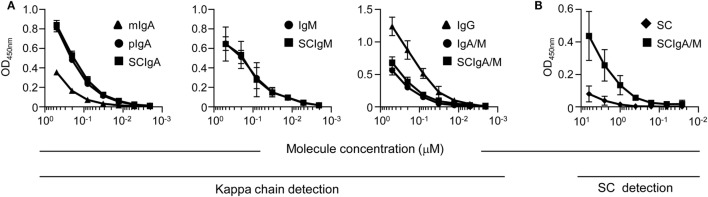
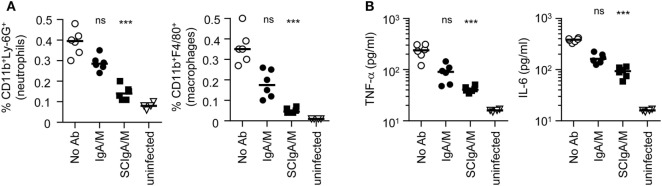
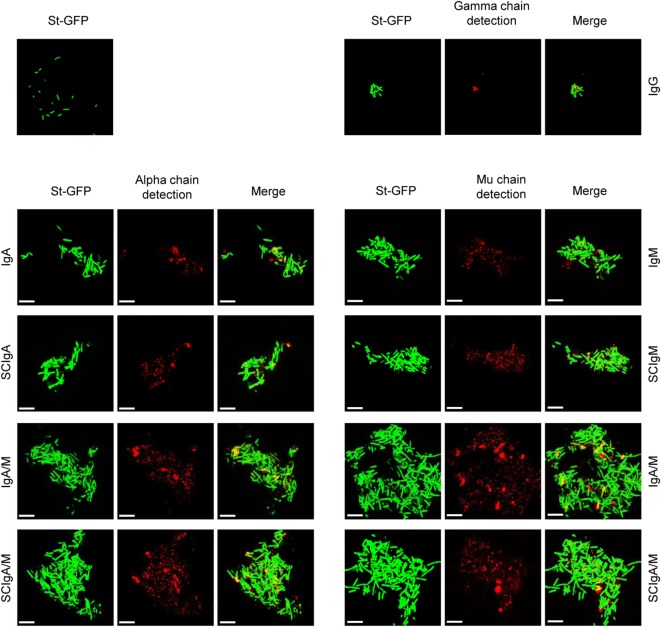
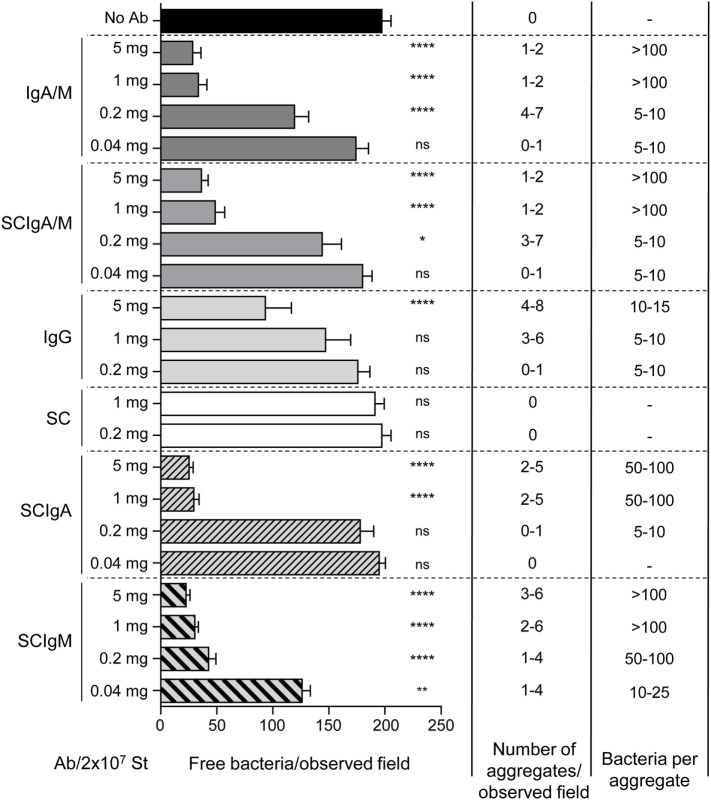
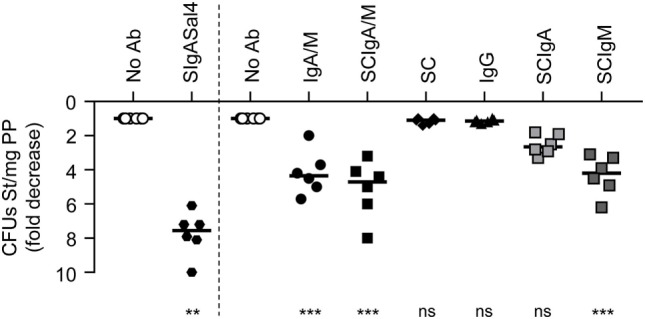
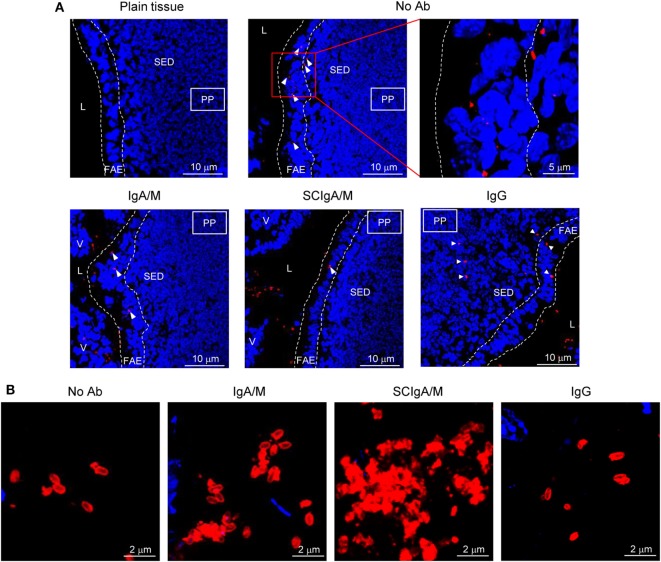
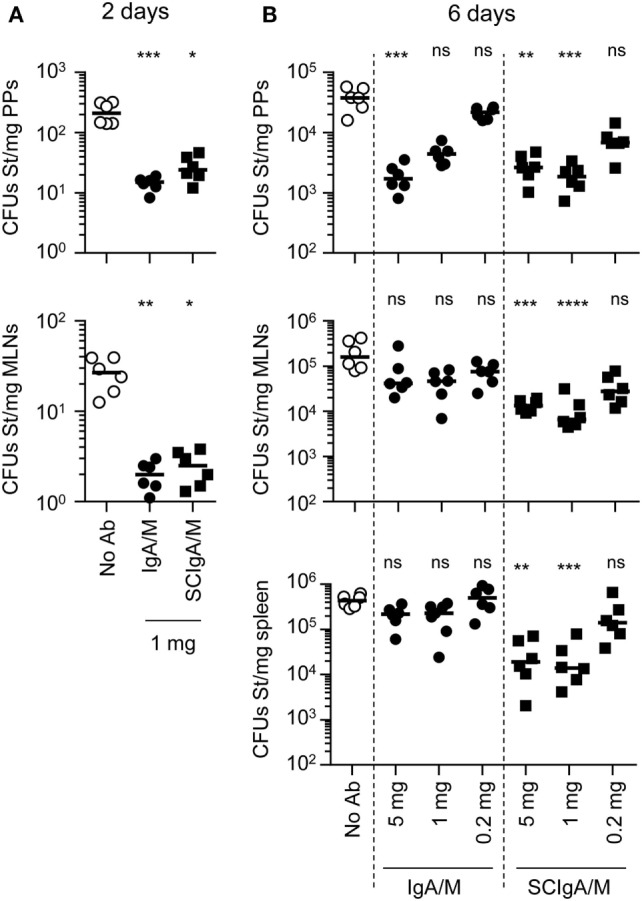
Due to the increasing emergence of antibiotic-resistant strains of enteropathogenic bacteria, development of alternative treatments to fight against gut infections is a major health issue. While vaccination requires that a proper combination of antigen, adjuvant, and delivery route is defined to elicit protective immunity at mucosae, oral delivery of directly active antibody preparations, referred to as passive immunization, sounds like a valuable alternative. Along the gut, the strategy suffers, however, from the difficulty to obtain sufficient amounts of antibodies with the appropriate specificity and molecular structure for mucosal delivery. Physiologically, at the antibody level, the protection of gastrointestinal mucosal surfaces against enteropathogens is principally mediated by secretory IgA and secretory IgM. We previously demonstrated that purified human plasma-derived IgA and IgM can be associated with secretory component to generate biologically active secretory-like IgA and IgM (SCIgA/M) that can protect epithelial cells from infection by . In this study, we aimed at evaluating the protective potential of these antibody preparations . We now establish that such polyreactive preparations bind efficiently to Typhimurium and trigger bacterial agglutination, as observed by laser scanning confocal microscopy. Upon delivery into a mouse ligated intestinal loop, SCIgA/M-mediated aggregates persist in the intestinal environment and limit the entry of bacteria into intestinal Peyer's patches immune exclusion. Moreover, oral administration to mice of immune complexes composed of . Typhimurium and SCIgA/M reduces mucosal infection, systemic dissemination, and local inflammation. Altogether, our data provide valuable clues for the future appraisal of passive oral administration of polyreactive plasma-derived SCIgA/M to combat infection by a variety of enteropathogens.
由于肠道致病细菌的抗生素耐药菌株不断出现,开发对抗肠道感染的替代治疗方法成为一个重大的健康问题。虽然疫苗接种需要确定抗原、佐剂和递送途径的适当组合,以在粘膜处引发保护性免疫,但直接活性抗体制剂的口服递送(即被动免疫)似乎是一种有价值的替代方法。然而,在肠道中,该策略面临着难以获得足够量具有适当特异性和分子结构用于粘膜递送的抗体的困难。在生理上,在抗体水平,胃肠道粘膜表面对肠道病原体的保护主要由分泌型IgA和分泌型IgM介导。我们之前证明,纯化的人血浆来源的IgA和IgM可以与分泌成分结合,生成具有生物活性的分泌样IgA和IgM(SCIgA/M),其可以保护上皮细胞免受感染。在本研究中,我们旨在评估这些抗体制剂的保护潜力。我们现在确定,如通过激光扫描共聚焦显微镜观察到的,这种多反应性制剂能有效结合鼠伤寒沙门氏菌并引发细菌凝集。将SCIgA/M递送至小鼠结扎肠袢后,介导的聚集体在肠道环境中持续存在,并限制细菌进入肠道派尔集合淋巴结——免疫排斥。此外,给小鼠口服由鼠伤寒沙门氏菌和SCIgA/M组成的免疫复合物可减少粘膜感染、全身播散和局部炎症。总之,我们的数据为未来评估多反应性血浆来源的SCIgA/M被动口服给药以对抗多种肠道病原体感染提供了有价值的线索。