Ménard Sandrine, Lacroix-Lamandé Sonia, Ehrhardt Katrin, Yan Jin, Grassl Guntram A, Wiedemann Agnès
IRSD - Institut de Recherche en Santé Digestive, Université́ de Toulouse, INSERM, INRAE, ENVT, UPS, Toulouse, France.
ISP, INRAE, Université de Tours, Nouzilly, France.
Front Microbiol. 2022 Jun 6;13:906238. doi: 10.3389/fmicb.2022.906238. eCollection 2022.
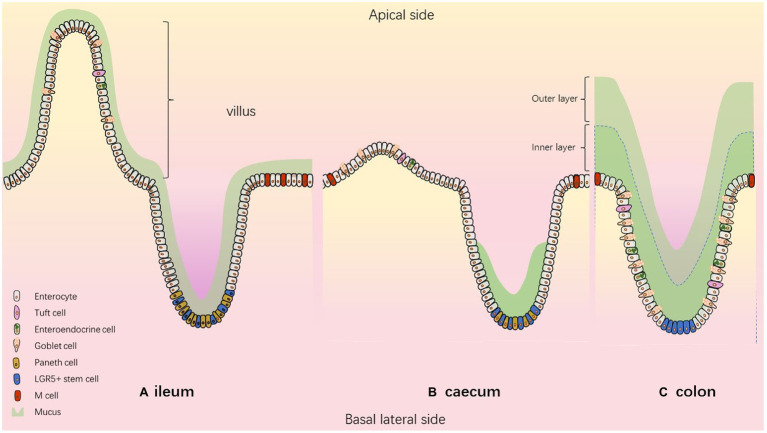
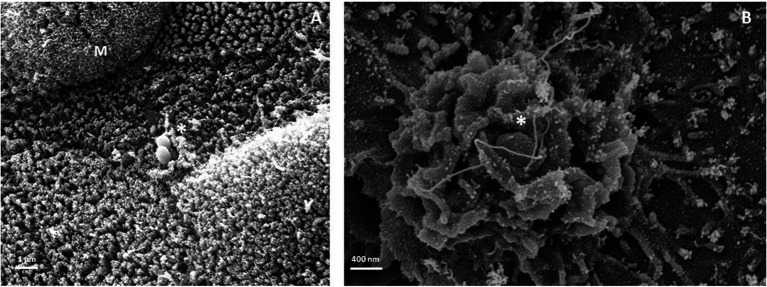
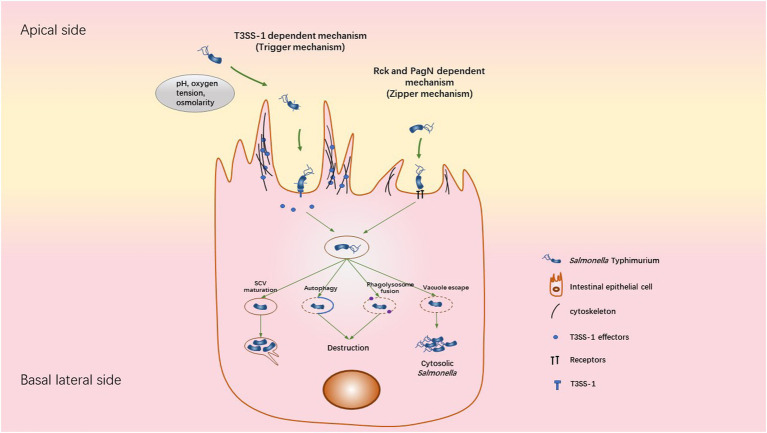
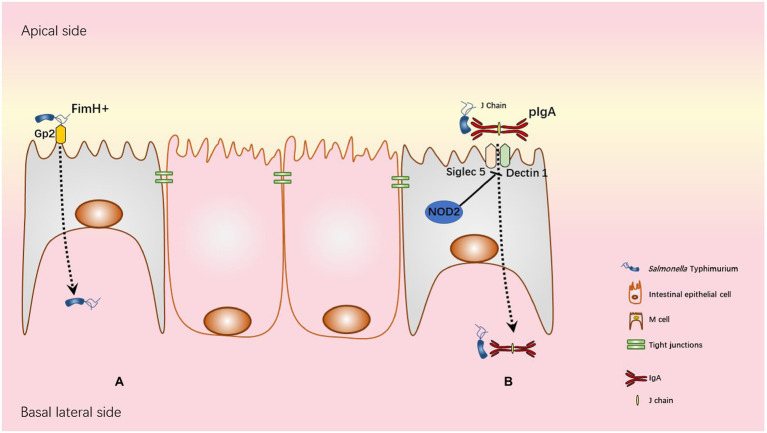
serovars are invasive gram-negative bacteria, causing a wide range of diseases from gastroenteritis to typhoid fever, representing a public health threat around the world. gains access to the intestinal lumen after oral ingestion of contaminated food or water. The crucial initial step to establish infection is the interaction with the intestinal epithelium. Human-adapted serovars such as Typhi or Paratyphi disseminate to systemic organs and induce life-threatening disease known as typhoid fever, whereas broad-host serovars such as Typhimurium usually are limited to the intestine and responsible for gastroenteritis in humans. To overcome intestinal epithelial barrier, developed mechanisms to induce cellular invasion, intracellular replication and to face host defence mechanisms. Depending on the serovar and the respective host organism, disease symptoms differ and are linked to the ability of the bacteria to manipulate the epithelial barrier for its own profit and cross the intestinal epithelium. This review will focus on Typhimurium (STm). To better understand STm pathogenesis, it is crucial to characterize the crosstalk between STm and the intestinal epithelium and decipher the mechanisms and epithelial cell types involved. Thus, the purpose of this review is to summarize our current knowledge on the molecular dialogue between STm and the various cell types constituting the intestinal epithelium with a focus on the mechanisms developed by STm to cross the intestinal epithelium and access to subepithelial or systemic sites and survive host defense mechanisms.
血清型是侵袭性革兰氏阴性菌,可引起从肠胃炎到伤寒热等多种疾病,在全球范围内构成公共卫生威胁。经口摄入受污染的食物或水后进入肠腔。建立感染的关键初始步骤是与肠上皮细胞相互作用。适应人类的血清型,如伤寒杆菌或副伤寒杆菌,会扩散到全身器官并引发危及生命的疾病,即伤寒热,而广泛宿主血清型,如鼠伤寒杆菌,通常局限于肠道并导致人类肠胃炎。为了克服肠道上皮屏障,(细菌)发展出诱导细胞侵袭、细胞内复制以及应对宿主防御机制的机制。根据血清型和相应的宿主生物体,疾病症状有所不同,并且与细菌为自身利益操纵上皮屏障并穿越肠上皮的能力有关。本综述将聚焦于鼠伤寒杆菌(STm)。为了更好地理解STm的发病机制,表征STm与肠上皮细胞之间的相互作用并破译其中涉及的机制和上皮细胞类型至关重要。因此,本综述的目的是总结我们目前关于STm与构成肠上皮的各种细胞类型之间分子对话的知识,重点关注STm为穿越肠上皮并进入上皮下或全身部位以及在宿主防御机制中存活而发展出的机制。