Pass Daniel Antony, Sornay Emily, Marchbank Angela, Crawford Margaret R, Paszkiewicz Konrad, Kent Nicholas A, Murray James A H
Cardiff School of Biosciences, Cardiff University, Cardiff, Wales, United Kingdom.
Genome Centre, University of Sussex, Sussex House, Falmer, Brighton, United Kingdom.
PLoS Genet. 2017 Sep 13;13(9):e1006988. doi: 10.1371/journal.pgen.1006988. eCollection 2017 Sep.
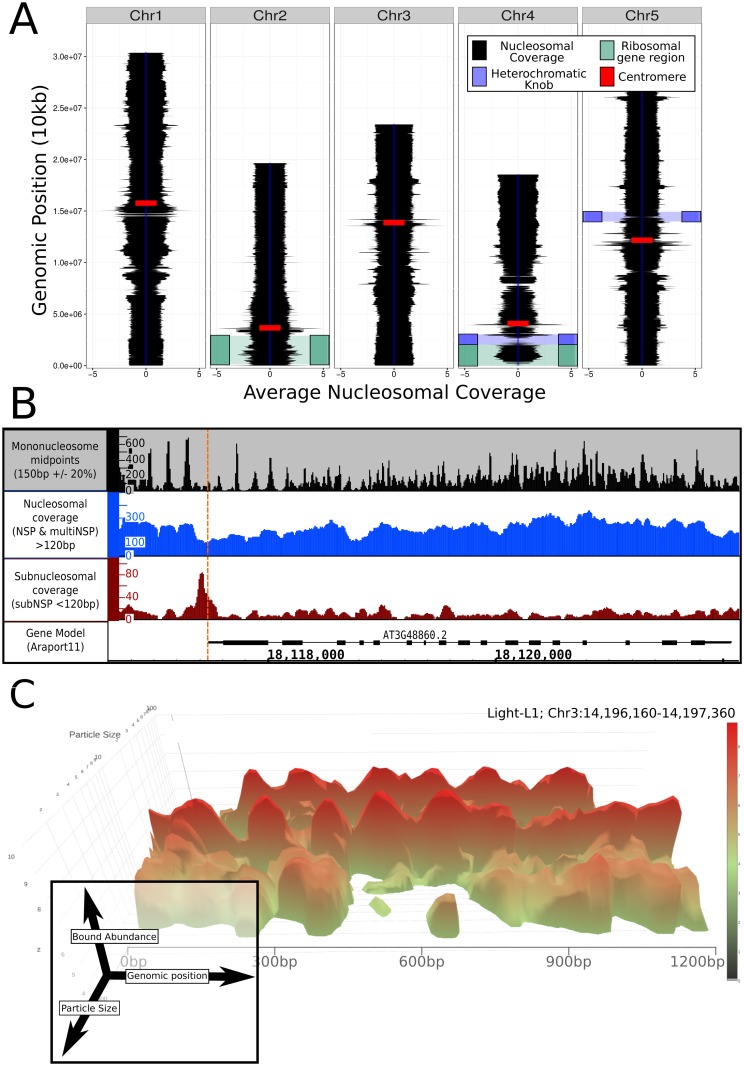
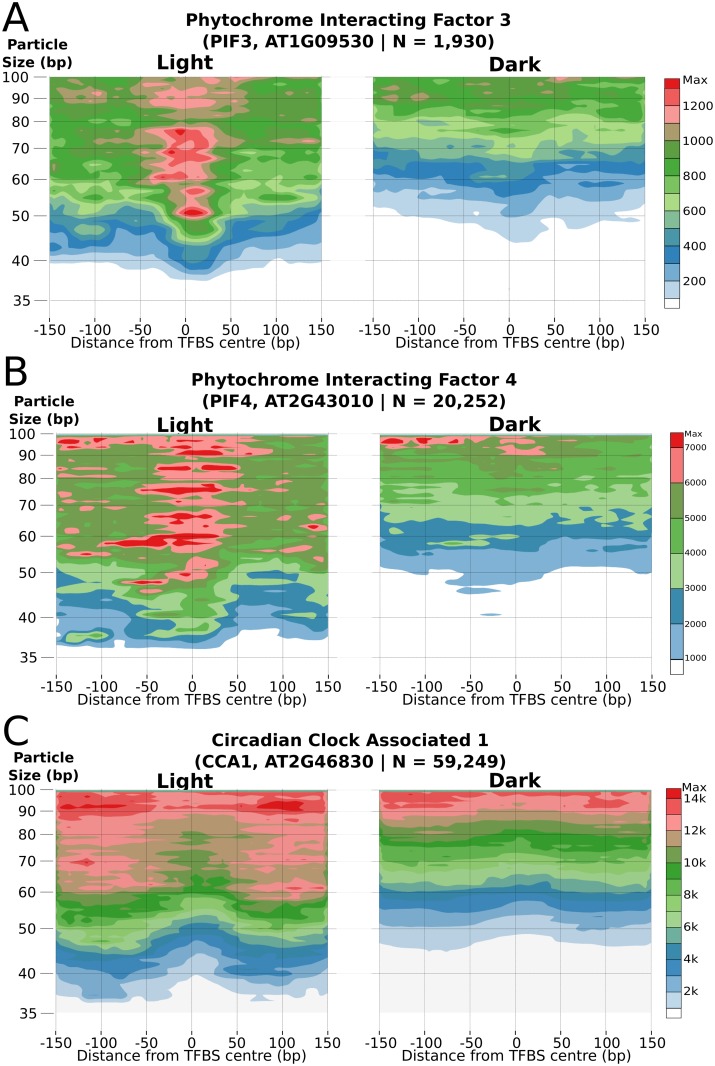
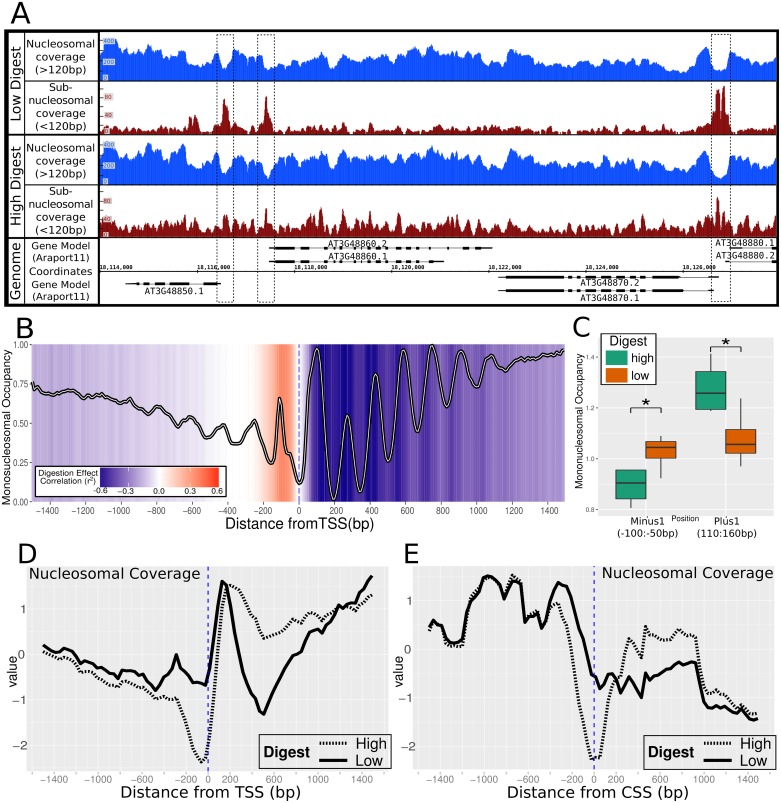
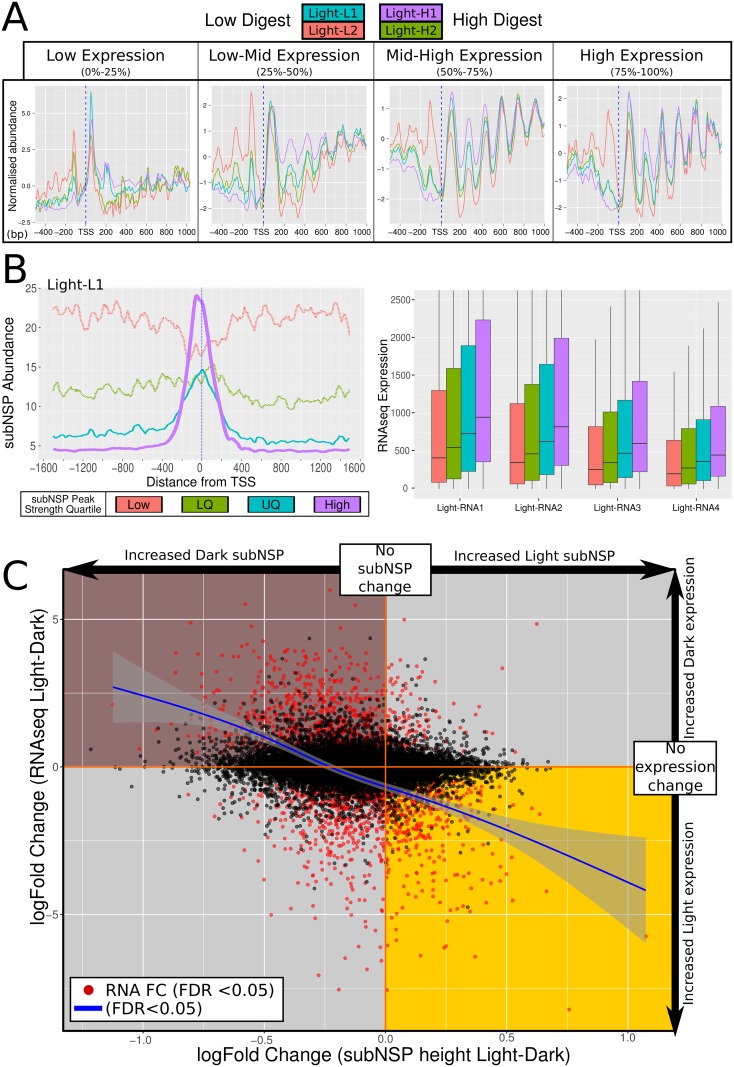
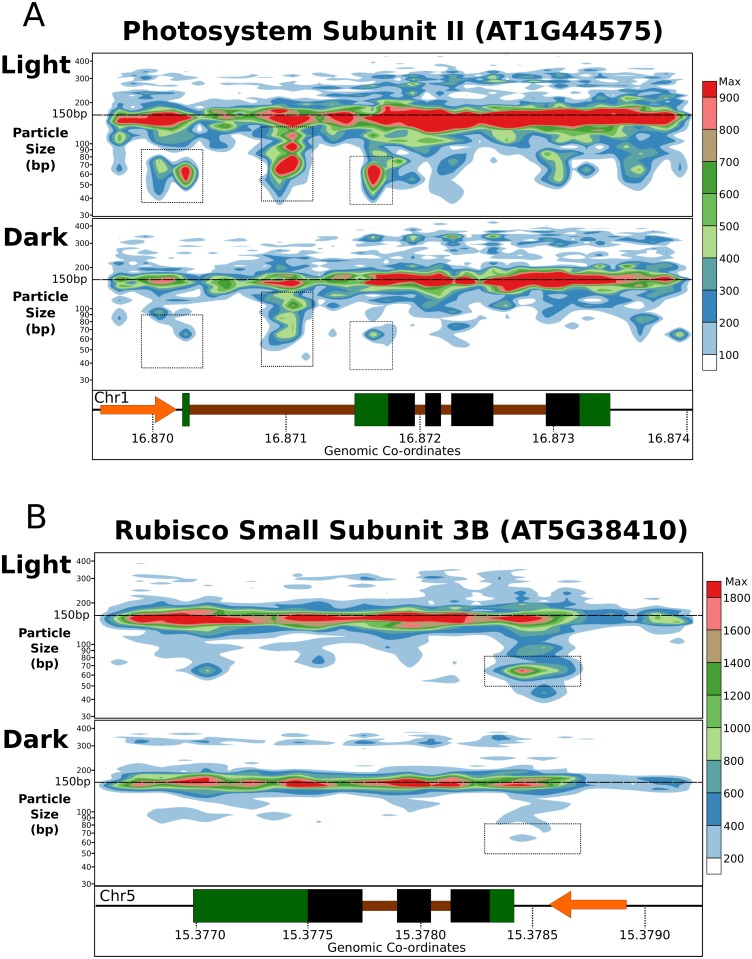
All eukaryotic genomes are packaged as chromatin, with DNA interlaced with both regularly patterned nucleosomes and sub-nucleosomal-sized protein structures such as mobile and labile transcription factors (TF) and initiation complexes, together forming a dynamic chromatin landscape. Whilst details of nucleosome position in Arabidopsis have been previously analysed, there is less understanding of their relationship to more dynamic sub-nucleosomal particles (subNSPs) defined as protected regions shorter than the ~150bp typical of nucleosomes. The genome-wide profile of these subNSPs has not been previously analysed in plants and this study investigates the relationship of dynamic bound particles with transcriptional control. Here we combine differential micrococcal nuclease (MNase) digestion and a modified paired-end sequencing protocol to reveal the chromatin structure landscape of Arabidopsis cells across a wide particle size range. Linking this data to RNAseq expression analysis provides detailed insight into the relationship of identified DNA-bound particles with transcriptional activity. The use of differential digestion reveals sensitive positions, including a labile -1 nucleosome positioned upstream of the transcription start site (TSS) of active genes. We investigated the response of the chromatin landscape to changes in environmental conditions using light and dark growth, given the large transcriptional changes resulting from this simple alteration. The resulting shifts in the suites of expressed and repressed genes show little correspondence to changes in nucleosome positioning, but led to significant alterations in the profile of subNSPs upstream of TSS both globally and locally. We examined previously mapped positions for the TFs PIF3, PIF4 and CCA1, which regulate light responses, and found that changes in subNSPs co-localized with these binding sites. This small particle structure is detected only under low levels of MNase digestion and is lost on more complete digestion of chromatin to nucleosomes. We conclude that wide-spectrum analysis of the Arabidopsis genome by differential MNase digestion allows detection of sensitive features hereto obscured, and the comparisons between genome-wide subNSP profiles reveals dynamic changes in their distribution, particularly at distinct genomic locations (i.e. 5'UTRs). The method here employed allows insight into the complex influence of genetic and extrinsic factors in modifying the sub-nucleosomal landscape in association with transcriptional changes.
所有真核生物基因组都以染色质的形式存在,DNA与规则排列的核小体以及亚核小体大小的蛋白质结构相互交织,如可移动和不稳定的转录因子(TF)以及起始复合物,共同构成了动态的染色质景观。虽然之前已经分析了拟南芥中核小体的位置细节,但对于它们与更动态的亚核小体颗粒(subNSPs)的关系了解较少,subNSPs被定义为比核小体典型的约150bp短的受保护区域。这些subNSPs的全基因组图谱此前尚未在植物中进行分析,本研究调查了动态结合颗粒与转录调控的关系。在这里,我们结合差异微球菌核酸酶(MNase)消化和改进的双末端测序方案,以揭示拟南芥细胞在广泛颗粒大小范围内的染色质结构景观。将这些数据与RNAseq表达分析相结合,能够深入了解已鉴定的DNA结合颗粒与转录活性之间的关系。差异消化的使用揭示了敏感位置,包括位于活跃基因转录起始位点(TSS)上游的不稳定-1核小体。鉴于这种简单变化会导致大量转录变化,我们利用光照和黑暗生长来研究染色质景观对环境条件变化的响应。表达和抑制基因组合的相应变化与核小体定位的变化几乎没有对应关系,但导致了TSS上游subNSPs图谱在全局和局部的显著改变。我们检查了之前绘制的调节光反应的转录因子PIF3、PIF4和CCA1的位置,发现subNSPs的变化与这些结合位点共定位。这种小颗粒结构仅在低水平MNase消化下才能检测到,在染色质更完全消化为核小体时会消失。我们得出结论,通过差异MNase消化对拟南芥基因组进行广谱分析,可以检测到此前被掩盖的敏感特征,全基因组subNSP图谱之间的比较揭示了它们分布的动态变化,特别是在不同的基因组位置(即5'UTR)。这里采用的方法能够深入了解遗传和外在因素在与转录变化相关的亚核小体景观修饰中的复杂影响。