Masui Shinta, Nabeshima Shigeki, Ajisaka Kazuhiko, Yamauchi Kei, Itoh Ryota, Ishii Kazunari, Soejima Toshinori, Hiromatsu Kenji
General Medicine, Fukuoka University Hospital, Fukuoka, Japan.
Department of Microbiology and Immunology, Fukuoka University School of Medicine, 7-45-1 Nanakuma, Jonan-ku, Fukuoka 814-0180, Japan.
Evid Based Complement Alternat Med. 2017;2017:1062065. doi: 10.1155/2017/1062065. Epub 2017 Aug 22.
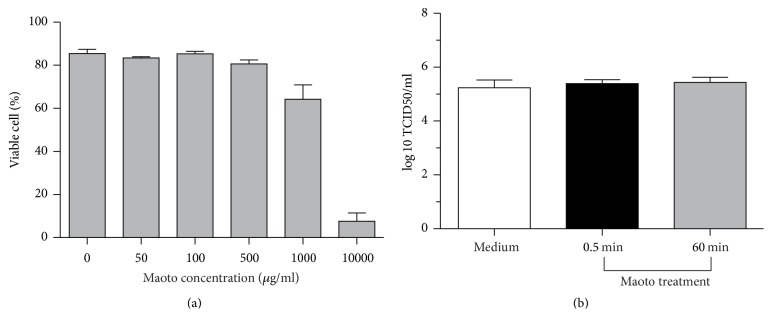
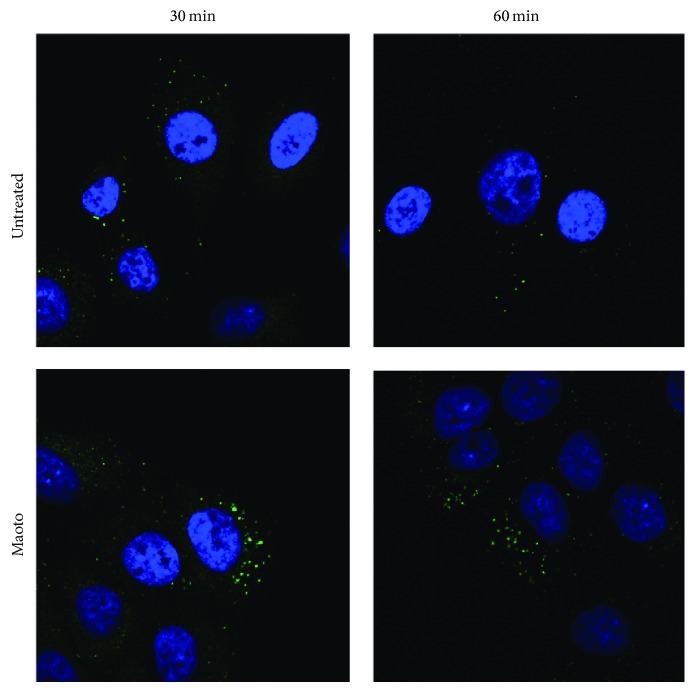
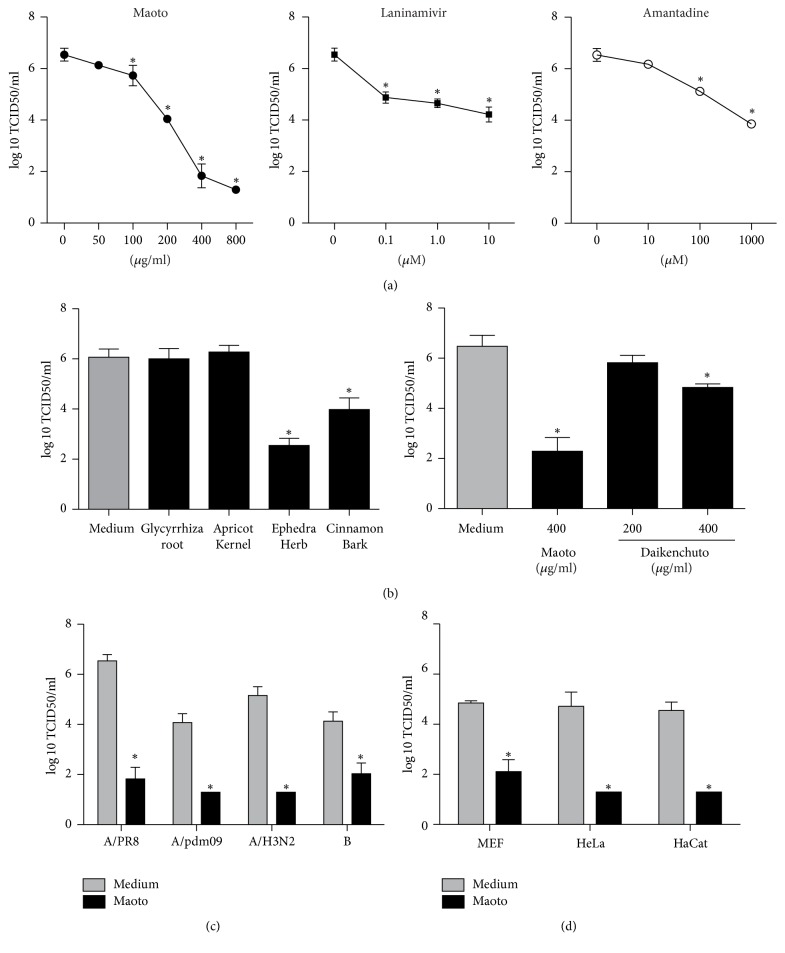
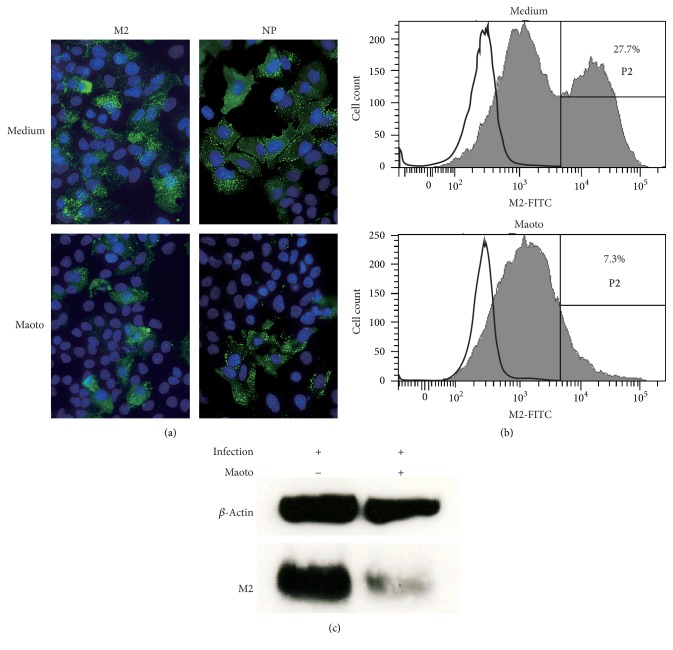
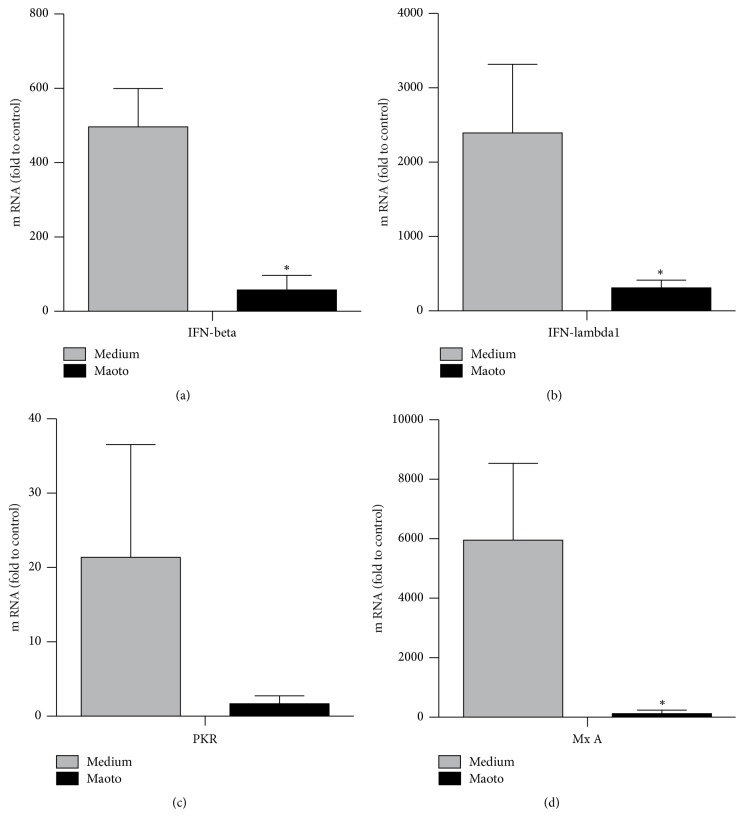
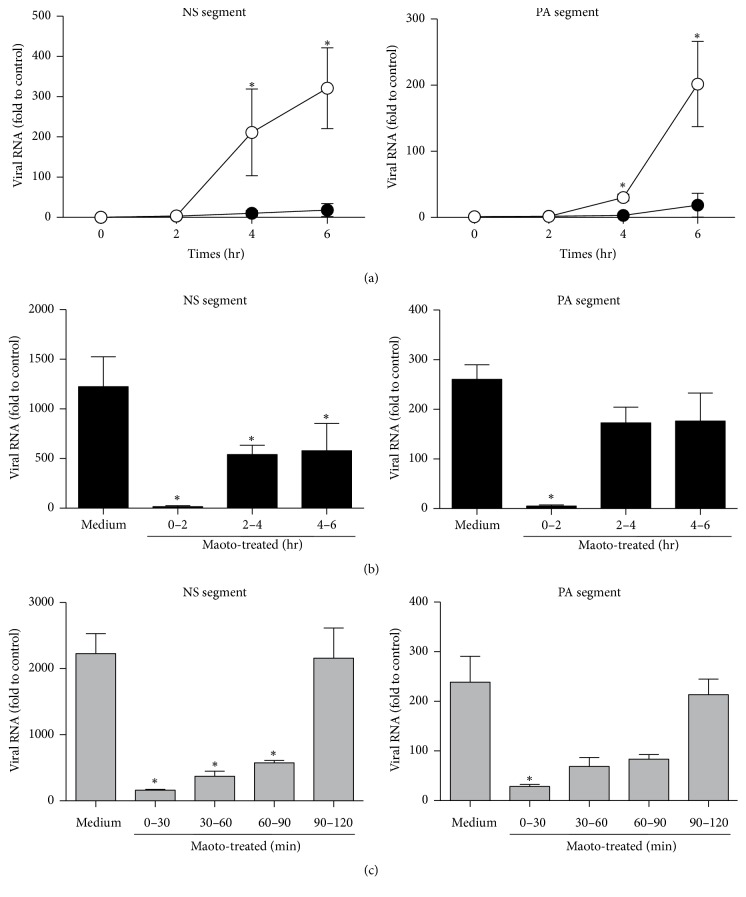
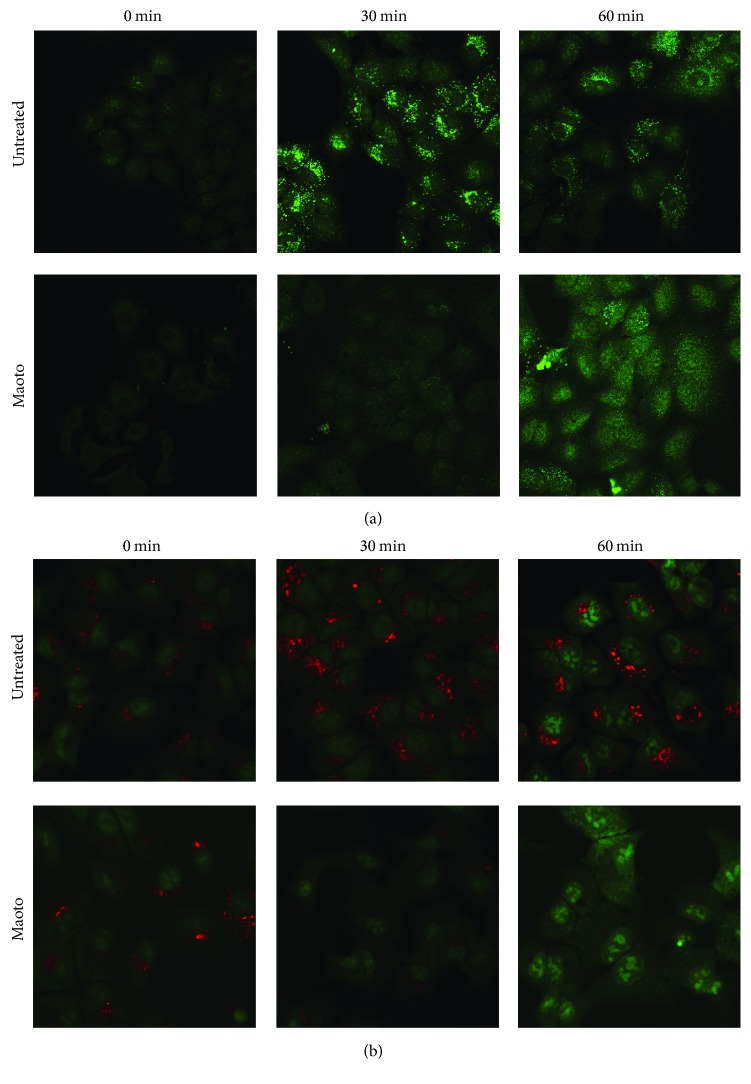
We previously reported in randomized controlled trials that maoto, a traditional herbal medicine, showed clinical and virological efficacy for seasonal influenza. In this study, a culturing system for influenza was used to test the effect of maoto. A549 cells in the culture were infected with influenza virus A (PR8) and followed after treatment with maoto; the virus titers in the culture supernatant, intracellular viral proteins, and viral RNA were determined. When infected cells were cultured with maoto for 24 hr, the virus titer and protein were significantly reduced compared with medium only. Other subtypes, A/H3N2, H1N1pdm, and B, were also inhibited by maoto. Proliferation of viral RNA in a 6 hr culture was inhibited by maoto in the early phase, especially in the first 30 min. Focusing on the entry step of the influenza virus, we found that endosomal pH, regulated by vacuolar-type H ATPase (V-ATPase) located in the membrane, was increased when treated with maoto. We also found that uncoating of influenza viruses was also inhibited by maoto, resulting in the increase of the number of virus particles in endosomes. These results strongly suggest that the inhibition of endosomal acidification by maoto results in blocking influenza virus entry to cytoplasm, probably through the inhibition of V-ATPase. The present study provides evidence that supports the clinical use of maoto for the treatment of influenza.
我们之前在随机对照试验中报告,传统草药麻杏石甘汤对季节性流感具有临床和病毒学疗效。在本研究中,使用流感病毒培养系统来测试麻杏石甘汤的效果。培养中的A549细胞感染甲型流感病毒(PR8),然后用麻杏石甘汤处理;测定培养上清液中的病毒滴度、细胞内病毒蛋白和病毒RNA。当用麻杏石甘汤培养感染细胞24小时时,与仅使用培养基相比,病毒滴度和蛋白显著降低。其他亚型,如A/H3N2、H1N1pdm和B型,也受到麻杏石甘汤的抑制。在6小时培养中,病毒RNA的增殖在早期,尤其是在前30分钟,受到麻杏石甘汤的抑制。关注流感病毒的进入步骤,我们发现,在用麻杏石甘汤处理时,由位于膜上的液泡型H⁺-ATP酶(V-ATP酶)调节的内体pH值升高。我们还发现,麻杏石甘汤也抑制流感病毒的脱壳,导致内体中病毒颗粒数量增加。这些结果有力地表明,麻杏石甘汤对内体酸化的抑制作用可能通过抑制V-ATP酶导致流感病毒进入细胞质受阻。本研究提供了支持麻杏石甘汤用于治疗流感的临床应用的证据。