Intensive Care Unit, Guizhou Province People's Hospital, Guiyang, Guizhou Province 550002, China.
Oxid Med Cell Longev. 2017;2017:1401790. doi: 10.1155/2017/1401790. Epub 2017 Aug 24.
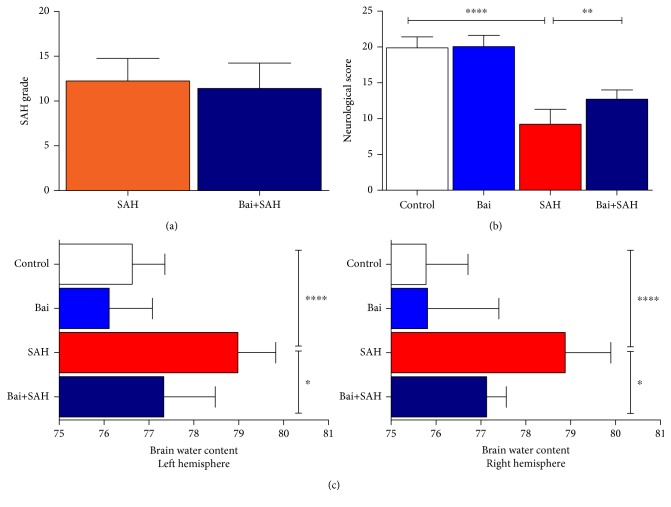
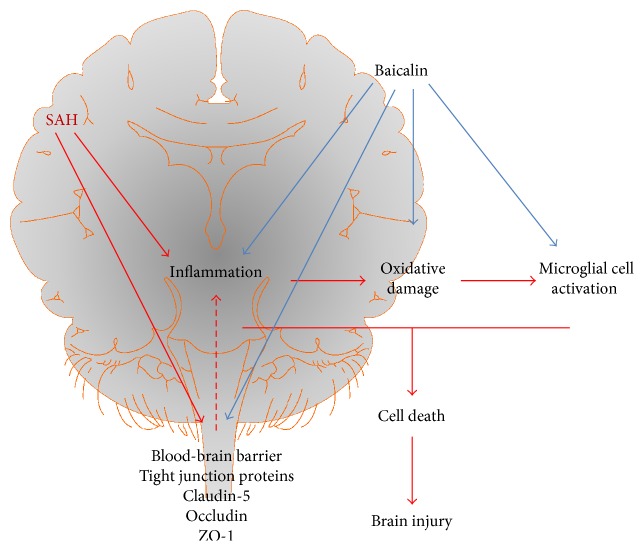
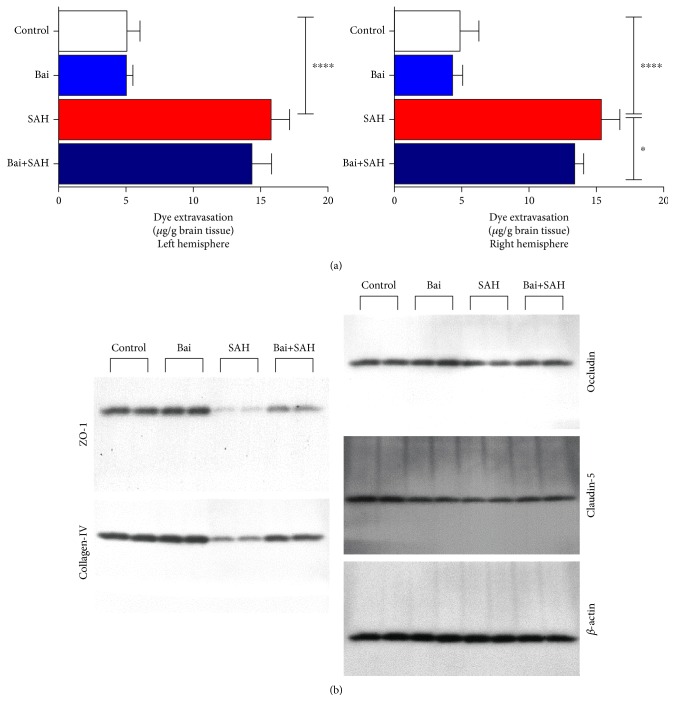
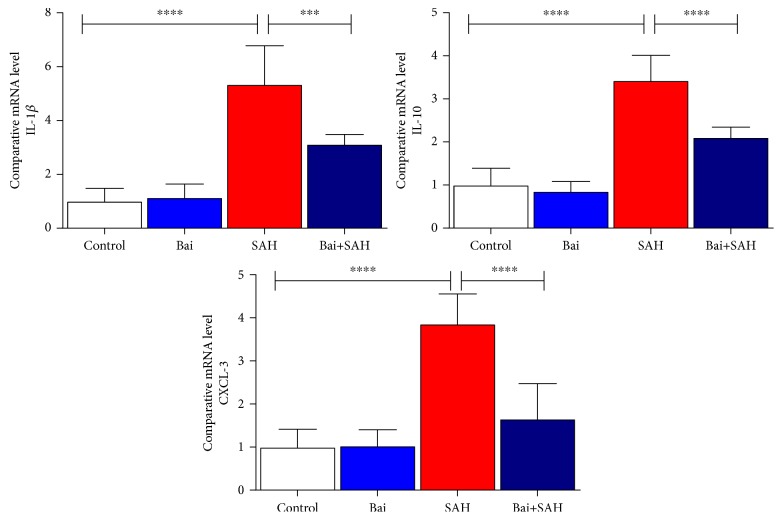
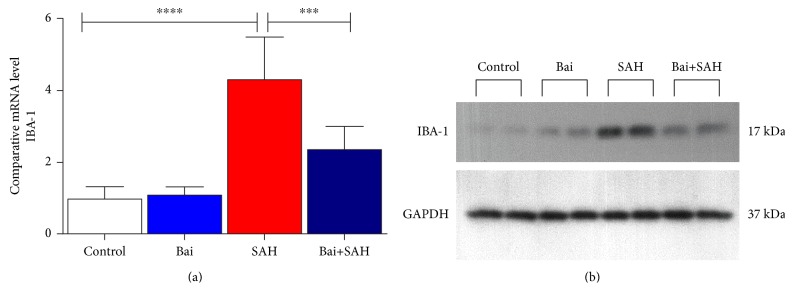
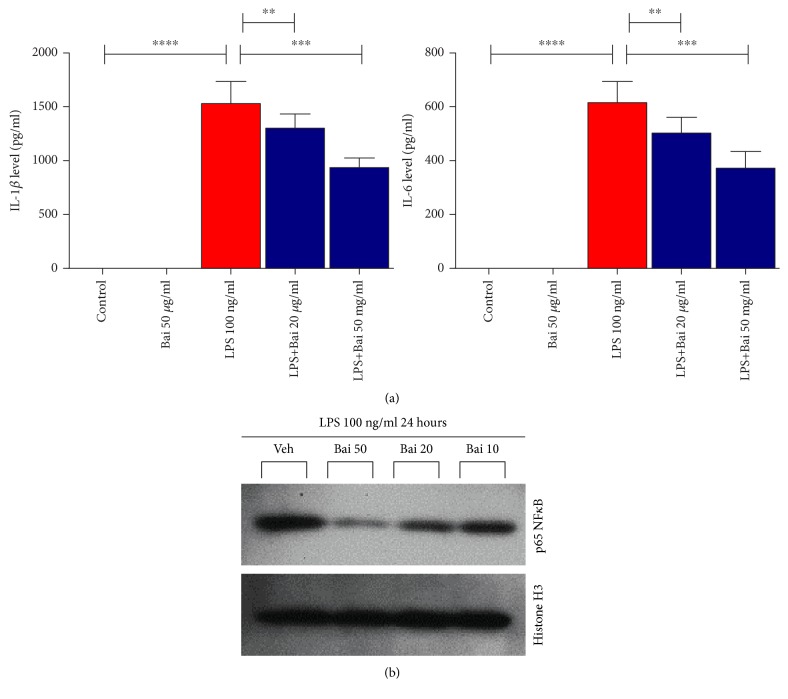
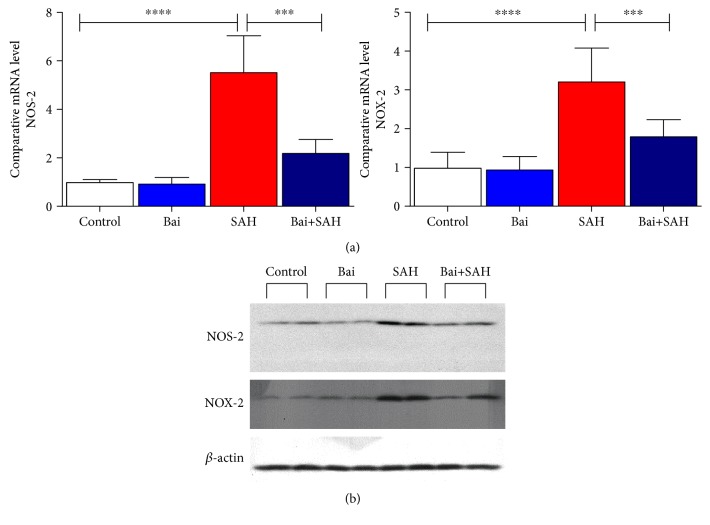
In subarachnoid hemorrhagic brain injury, the early crucial events are edema formation due to inflammatory responses and blood-brain barrier disruption. Baicalin, a flavone glycoside, has antineuroinflammatory and antioxidant properties. We examined the effect of baicalin in subarachnoid hemorrhagic brain injury. Subarachnoid hemorrhage was induced through filament perforation and either baicalin or vehicle was administered 30 min prior to surgery. Brain tissues were collected 24 hours after surgery after evaluation of neurological scores. Brain tissues were processed for water content, real-time PCR, and immunoblot analyses. Baicalin improved neurological score and brain water content. Decreased levels of tight junction proteins (occludin, claudin-5, ZO-1, and collagen IV) required for blood-brain barrier function were restored to normal level by baicalin. Real-time PCR data demonstrated that baicalin attenuated increased proinflammatory cytokine (IL-1, IL-6, and CXCL-3) production in subarachnoid hemorrhage mice. In addition to that, baicalin attenuated microglial cell secretion of IL-1 and IL-6 induced by lipopolysaccharide (100 ng/ml) dose dependently. Finally, baicalin attenuated induction of NOS-2 and NOX-2 in SAH mice at the mRNA and protein level. Thus, we demonstrated that baicalin inhibited microglial cell activation and reduced inflammation, oxidative damage, and brain edema.
在蛛网膜下腔出血性脑损伤中,早期的关键事件是由于炎症反应和血脑屏障破坏导致的水肿形成。黄芩苷是一种黄酮糖苷,具有神经抗炎和抗氧化作用。我们研究了黄芩苷对蛛网膜下腔出血性脑损伤的影响。蛛网膜下腔出血通过纤维穿孔诱导,在手术前 30 分钟给予黄芩苷或载体。手术后 24 小时评估神经评分后收集脑组织。对脑组织进行水含量、实时 PCR 和免疫印迹分析。黄芩苷可改善神经评分和脑水含量。黄芩苷可恢复血脑屏障功能所需的紧密连接蛋白(occludin、claudin-5、ZO-1 和胶原 IV)的水平,使其恢复正常。实时 PCR 数据表明,黄芩苷可减轻蛛网膜下腔出血小鼠促炎细胞因子(IL-1、IL-6 和 CXCL-3)的产生增加。此外,黄芩苷还可依剂量依赖性抑制脂多糖(100ng/ml)诱导的小胶质细胞分泌 IL-1 和 IL-6。最后,黄芩苷可在 mRNA 和蛋白水平上抑制 SAH 小鼠中 NOS-2 和 NOX-2 的诱导。因此,我们证明了黄芩苷抑制小胶质细胞激活,减少炎症、氧化损伤和脑水肿。