Lowe Robert, Almér Alexander, Billing Erik, Sandamirskaya Yulia, Balkenius Christian
Department of Applied IT, University of Gothenburg, Gothenburg, Sweden.
Institutionen för informationsteknologi, Högskolan i Skövde, Skövde, Sweden.
Biol Cybern. 2017 Dec;111(5-6):365-388. doi: 10.1007/s00422-017-0730-1. Epub 2017 Sep 14.
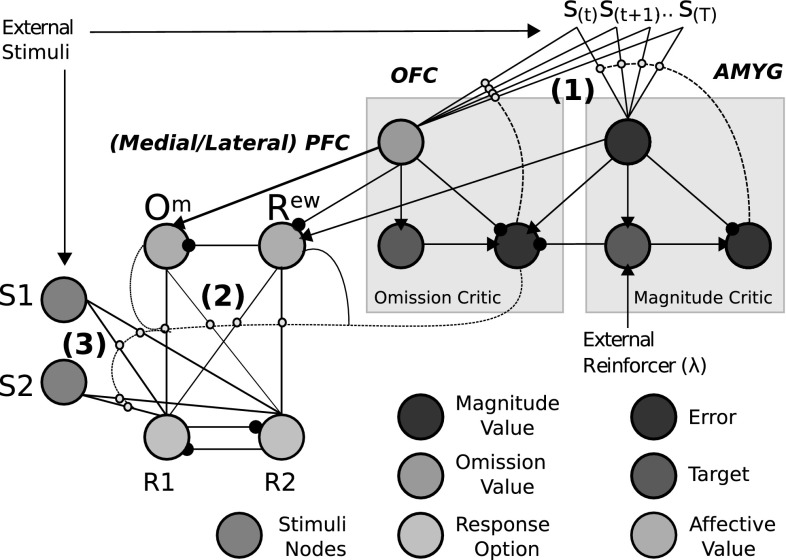
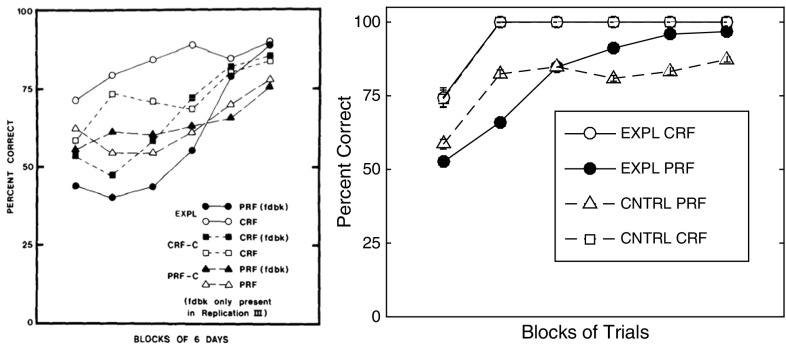
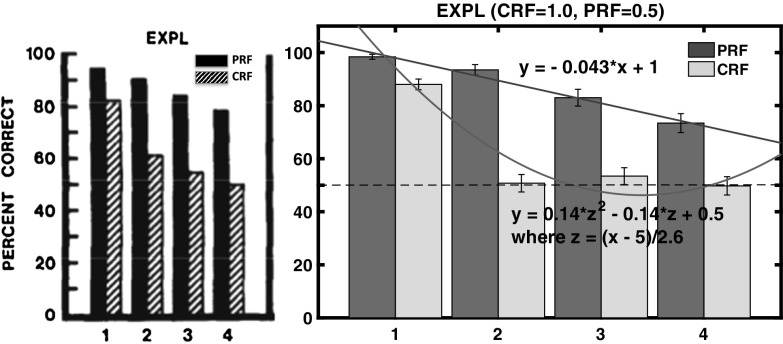
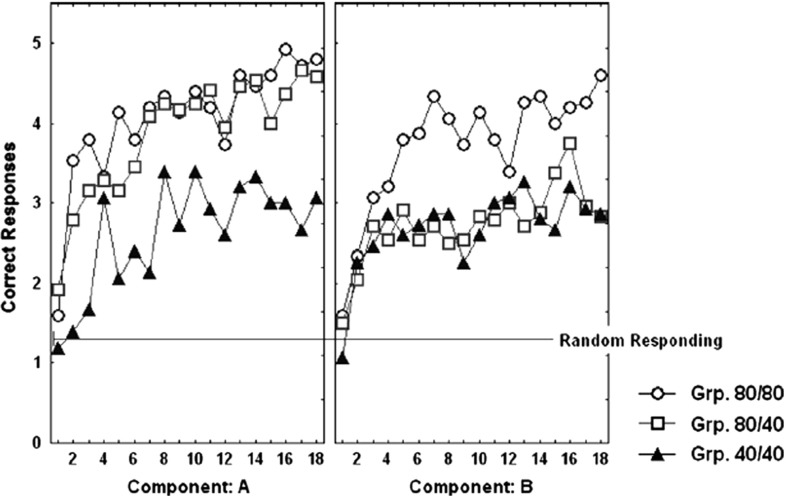
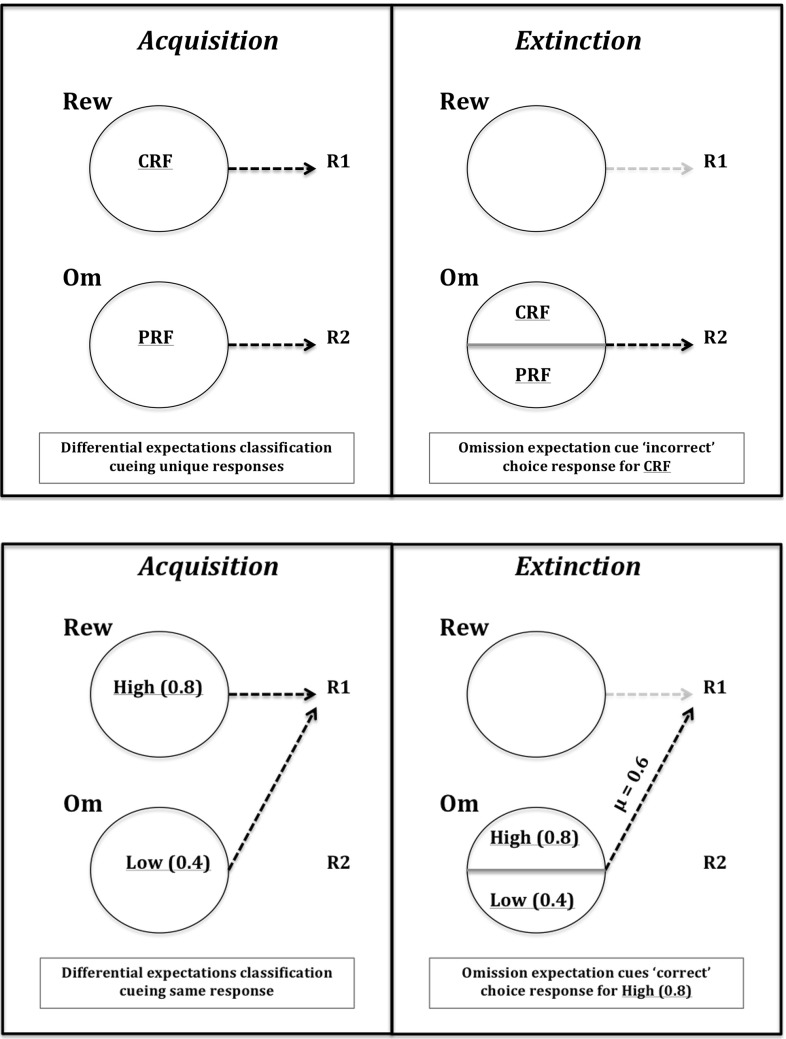
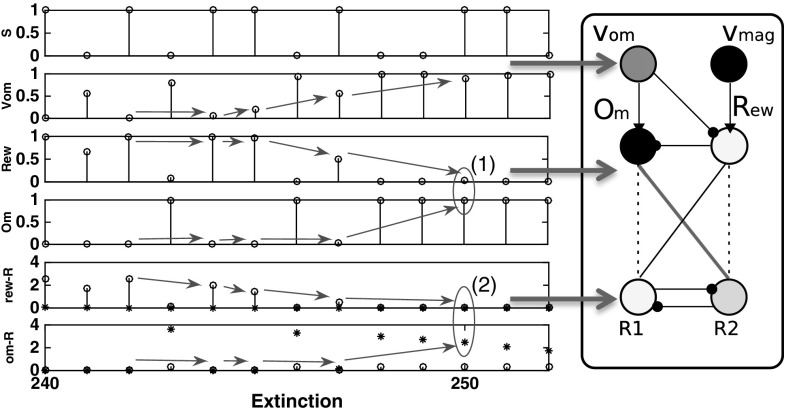
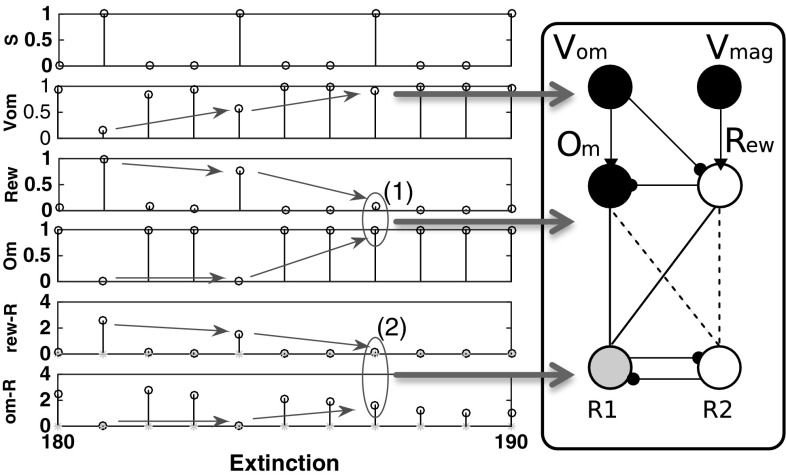
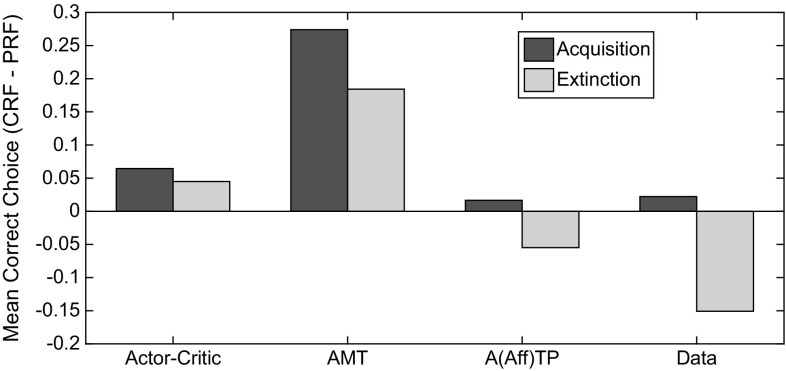
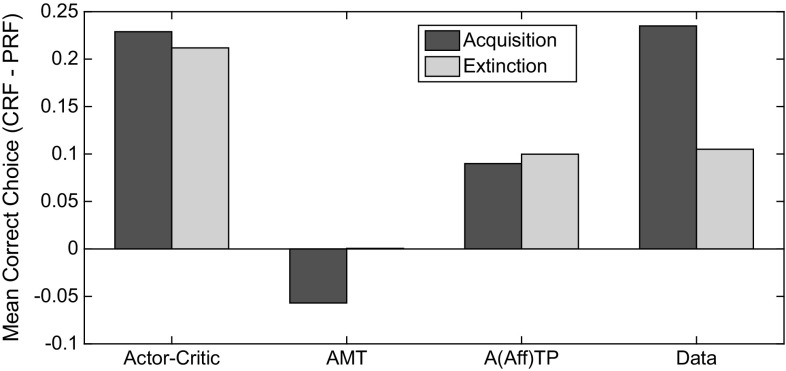
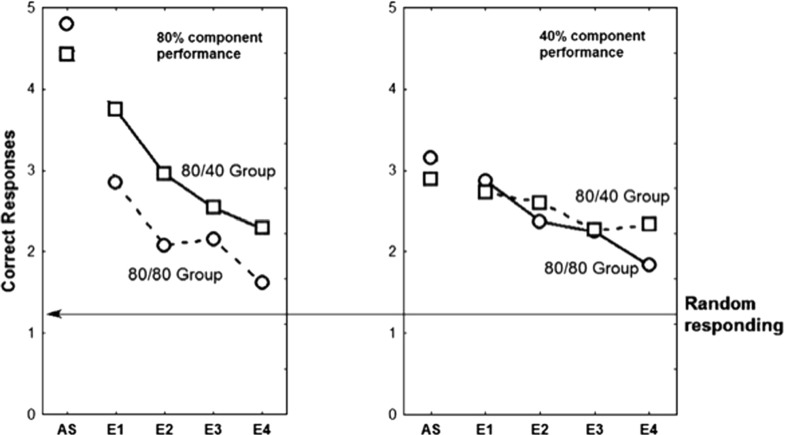
The partial reinforcement extinction effect (PREE) is an experimentally established phenomenon: behavioural response to a given stimulus is more persistent when previously inconsistently rewarded than when consistently rewarded. This phenomenon is, however, controversial in animal/human learning theory. Contradictory findings exist regarding when the PREE occurs. One body of research has found a within-subjects PREE, while another has found a within-subjects reversed PREE (RPREE). These opposing findings constitute what is considered the most important problem of PREE for theoreticians to explain. Here, we provide a neurocomputational account of the PREE, which helps to reconcile these seemingly contradictory findings of within-subjects experimental conditions. The performance of our model demonstrates how omission expectancy, learned according to low probability reward, comes to control response choice following discontinuation of reward presentation (extinction). We find that a PREE will occur when multiple responses become controlled by omission expectation in extinction, but not when only one omission-mediated response is available. Our model exploits the affective states of reward acquisition and reward omission expectancy in order to differentially classify stimuli and differentially mediate response choice. We demonstrate that stimulus-response (retrospective) and stimulus-expectation-response (prospective) routes are required to provide a necessary and sufficient explanation of the PREE versus RPREE data and that Omission representation is key for explaining the nonlinear nature of extinction data.
部分强化消退效应(PREE)是一种通过实验确立的现象:当对给定刺激的行为反应先前得到不一致的奖励时,比对其进行持续奖励时更持久。然而,这一现象在动物/人类学习理论中存在争议。关于PREE何时出现存在相互矛盾的研究结果。一项研究发现了受试者内部的PREE,而另一项研究则发现了受试者内部的反向PREE(RPREE)。这些相互对立的研究结果构成了理论学家认为PREE最重要的待解释问题。在此,我们提供了一个关于PREE的神经计算解释,这有助于调和在受试者内部实验条件下这些看似矛盾的研究结果。我们模型的表现展示了根据低概率奖励习得的遗漏预期如何在奖励呈现停止(消退)后控制反应选择。我们发现,当在消退过程中多个反应由遗漏预期控制时,PREE将会出现,但当只有一个由遗漏介导的反应可用时则不会出现。我们的模型利用奖励获取和奖励遗漏预期的情感状态来对刺激进行差异分类并差异介导反应选择。我们证明,刺激-反应(回顾性)和刺激-预期-反应(前瞻性)路径对于充分解释PREE与RPREE数据是必要的,并且遗漏表征对于解释消退数据的非线性性质至关重要。