
经典猪瘟病毒石门株感染增强p53信号传导以促进猪肺泡巨噬细胞的细胞周期停滞。
Classical swine fever virus Shimen infection increases p53 signaling to promote cell cycle arrest in porcine alveolar macrophages.
作者信息
Ning Pengbo, Hu Congxia, Li Xuepeng, Zhou Yulu, Hu Aoxue, Zhang Ya, Gao Lifang, Gong Cunmei, Guo Kangkang, Zhang Xianghan, Zhang Yanming
机构信息
School of Life Science and Technology, Xidian University, Xi'an, Shaanxi, PR China.
Engineering Research Center of Molecular and Neuro Imaging Ministry of Education, Xi'an, Shaanxi, PR China.
出版信息
Oncotarget. 2017 Jul 5;8(34):55938-55949. doi: 10.18632/oncotarget.18997. eCollection 2017 Aug 22.
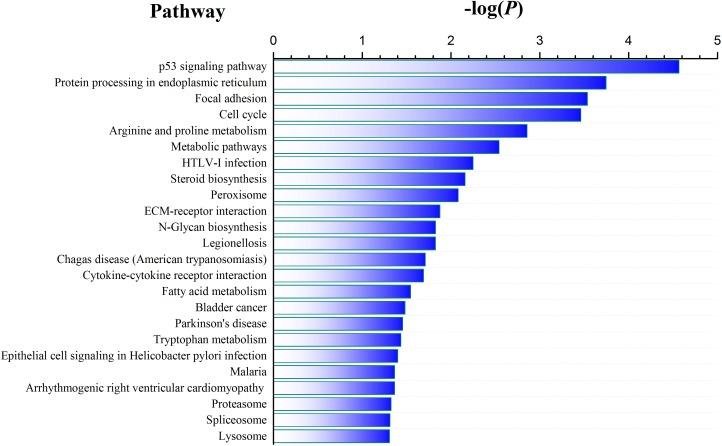
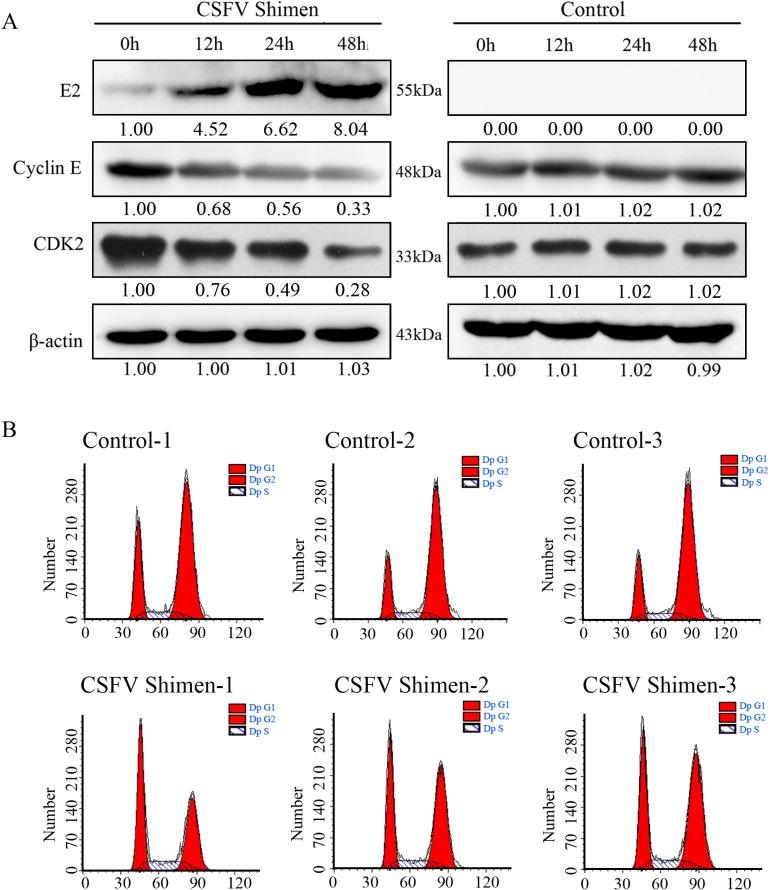
Classical swine fever virus (CSFV) replicates in macrophages and causes persistent infection. Despite its role in disastrous economic losses in swine industries, the molecular mechanisms underlying its pathogenesis are poorly understood. The virus evades the neutralizing immune response, subverting the immune system to ensure its own survival and persistence. Our genome-wide analysis of porcine alveolar macrophage transcriptional responses to CSFV Shimen infection using the Solexa/Illumina digital gene expression system revealed that p53 pathway components and cell cycle molecules were differentially regulated during infection compared to controls. Further, we investigated the molecular changes in macrophages infected with CSFV Shimen, focusing on the genes involved in the p53 pathway. CSFV Shimen infection led to phosphorylation and accumulation of p53 in a time-dependent manner. Furthermore, CSFV Shimen infection upregulated cyclin-dependent kinase inhibitor 1A (p21) mRNA and protein. In addition, CSFV Shimen infection induced cell cycle arrest at the G1 phase, as well as downregulation of cyclin E1 and cyclin-dependent kinase 2 (CDK2). The expression of genes in the p53 pathway did not change significantly after p53 knockdown by pifithrin-α during CSFV Shimen infection. Our data suggest that CSFV Shimen infection increases expression of host p53 and p21, and inhibits expression of cyclin E1 and CDK2, leading to cell cycle arrest at the G1 phase. CSFV may utilize this strategy to subvert the innate immune response and proliferate in host cells.
经典猪瘟病毒(CSFV)在巨噬细胞中复制并导致持续性感染。尽管它给养猪业带来了灾难性的经济损失,但其发病机制的分子基础却知之甚少。该病毒逃避中和免疫反应,颠覆免疫系统以确保自身的存活和持续存在。我们使用Solexa/Illumina数字基因表达系统对猪肺泡巨噬细胞对CSFV石门株感染的转录反应进行全基因组分析,结果显示与对照组相比,感染期间p53信号通路成分和细胞周期分子受到差异调节。此外,我们研究了感染CSFV石门株的巨噬细胞中的分子变化,重点关注参与p53信号通路的基因。CSFV石门株感染导致p53以时间依赖性方式磷酸化和积累。此外,CSFV石门株感染上调了细胞周期蛋白依赖性激酶抑制剂1A(p21)的mRNA和蛋白水平。另外,CSFV石门株感染诱导细胞周期在G1期停滞,同时细胞周期蛋白E1和细胞周期蛋白依赖性激酶2(CDK2)表达下调。在CSFV石门株感染期间用pifithrin-α敲低p53后,p53信号通路中的基因表达没有明显变化。我们的数据表明,CSFV石门株感染增加了宿主p53和p21的表达,并抑制了细胞周期蛋白E1和CDK2的表达,导致细胞周期在G1期停滞。CSFV可能利用这种策略来颠覆先天免疫反应并在宿主细胞中增殖。





 Zotero 插件