Institute for Medical Biometry and Statistics, Faculty of Medicine and Medical Center - University of Freiburg, Stefan-Meier-Str. 26, 79104, Freiburg i. Br., Germany.
Department of General and Visceral Surgery, Helios Klinik Müllheim, Heliosweg, 79379, Müllheim, Germany.
BMC Med Educ. 2017 Sep 15;17(1):165. doi: 10.1186/s12909-017-1004-2.
The objective of this study is to compare two different instructional methods in the curricular use of computerized virtual patients in undergraduate medical education. We aim to investigate whether using many short and focused cases - the key feature principle - is more effective for the learning of clinical reasoning skills than using few long and systematic cases.
We conducted a quasi-randomized, non-blinded, controlled parallel-group intervention trial in a large medical school in Southwestern Germany. During two seminar sessions, fourth- and fifth-year medical students (n = 56) worked on the differential diagnosis of the acute abdomen. The educational tool - virtual patients - was the same, but the instructional method differed: In one trial arm, students worked on multiple short cases, with the instruction being focused only on important elements ("key feature arm", n = 30). In the other trial arm, students worked on few long cases, with the instruction being comprehensive and systematic ("systematic arm", n = 26). The overall training time was the same in both arms. The students' clinical reasoning capacity was measured by a specifically developed instrument, a script concordance test. Their motivation and the perceived effectiveness of the instruction were assessed using a structured evaluation questionnaire.
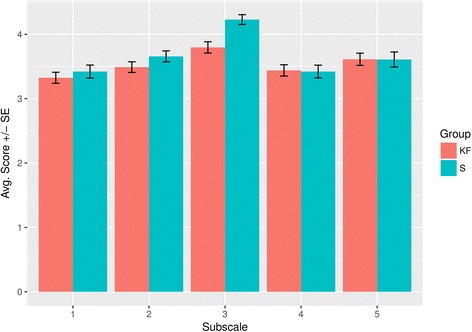
Upon completion of the script concordance test with a reference score of 80 points and a standard deviation of 5 for experts, students in the key feature arm attained a mean of 57.4 points (95% confidence interval: 50.9-63.9), and in the systematic arm, 62.7 points (57.2-68.2), with Cohen's d at 0.337. The difference is statistically non-significant (p = 0.214). In the evaluation survey, students in the key feature arm indicated that they experienced more time pressure and perceived the material as more difficult.
In this study powered for a medium effect, we could not provide empirical evidence for the hypothesis that a key feature-based instruction on multiple short cases is superior to a systematic instruction on few long cases in the curricular implementation of virtual patients. The results of the evaluation survey suggest that learners should be given enough time to work through case examples, and that caution should be taken to prevent cognitive overload.
本研究旨在比较两种不同的教学方法在本科医学教育中计算机化虚拟患者的课程应用。我们旨在调查使用许多短而集中的病例(关键特征原则)是否比使用少数长而系统的病例更有利于临床推理技能的学习。
我们在德国西南部的一所大型医学院进行了一项半随机、非盲、对照平行组干预试验。在两个研讨会期间,四年级和五年级医学生(n=56)研究了急性腹痛的鉴别诊断。教育工具-虚拟患者-是相同的,但教学方法不同:在一个试验组中,学生处理多个短病例,仅重点关注重要元素(“关键特征组”,n=30)。在另一个试验组中,学生处理少数长病例,指导全面系统(“系统组”,n=26)。两个试验组的总培训时间相同。学生的临床推理能力通过专门开发的工具,即脚本一致性测试进行测量。他们的动机和对教学的感知有效性使用结构化评估问卷进行评估。
完成脚本一致性测试后,参考分数为 80 分,专家标准差为 5 分,关键特征组的学生平均得分为 57.4 分(95%置信区间:50.9-63.9),系统组得分为 62.7 分(57.2-68.2),Cohen's d 为 0.337。差异无统计学意义(p=0.214)。在评估调查中,关键特征组的学生表示他们感到更多的时间压力,并且认为材料更难。
在这项研究中,我们没有为中等效果提供经验证据,证明基于多个短病例的关键特征指导优于虚拟患者课程实施中的少数长病例的系统指导的假设。评估调查的结果表明,学习者应该有足够的时间来处理案例示例,并且应该谨慎以防止认知过载。