Ghai Ishan, Ghai Shashank
School of Engineering and Life Sciences, Jacobs University, Bremen.
Leibniz University, Hannover, Germany.
Infect Drug Resist. 2017 Aug 30;10:261-273. doi: 10.2147/IDR.S144299. eCollection 2017.
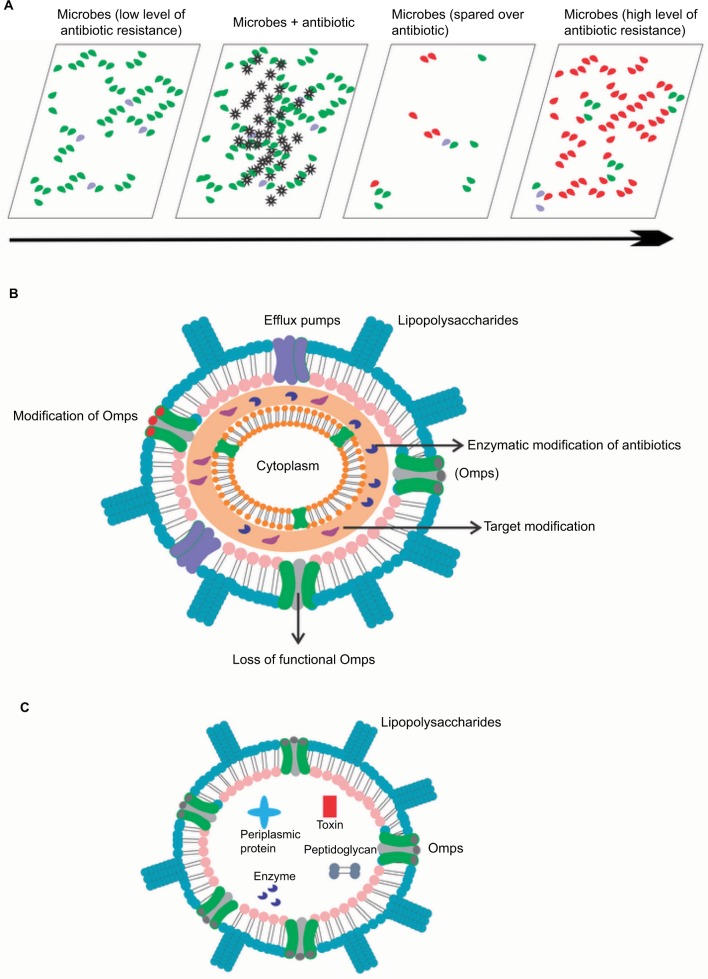
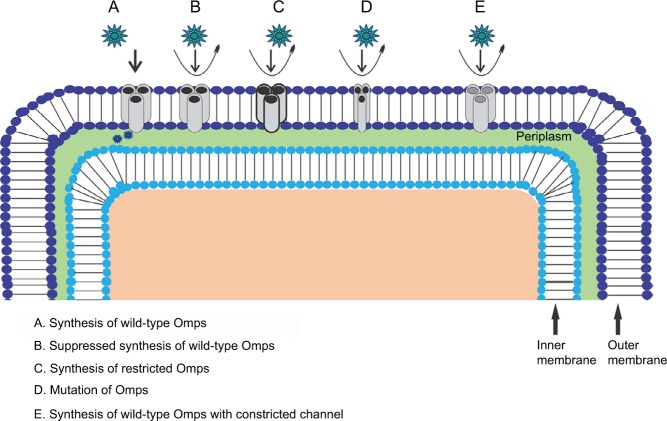
One of the main fundamental mechanisms of antibiotic resistance in Gram-negative bacteria comprises an effective change in the membrane permeability to antibiotics. The Gram-negative bacterial complex cell envelope comprises an outer membrane that delimits the periplasm from the exterior environment. The outer membrane contains numerous protein channels, termed as porins or nanopores, which are mainly involved in the influx of hydrophilic compounds, including antibiotics. Bacterial adaptation to reduce influx through these outer membrane proteins (Omps) is one of the crucial mechanisms behind antibiotic resistance. Thus to interpret the molecular basis of the outer membrane permeability is the current challenge. This review attempts to develop a state of knowledge pertinent to Omps and their effective role in antibiotic influx. Further, it aims to study the bacterial response to antibiotic membrane permeability and hopefully provoke a discussion toward understanding and further exploration of prospects to improve our knowledge on physicochemical parameters that direct the translocation of antibiotics through the bacterial membrane protein channels.
革兰氏阴性菌抗生素耐药性的主要基本机制之一是细胞膜对抗生素的通透性发生有效改变。革兰氏阴性菌复杂的细胞包膜包括一层外膜,该外膜将周质与外部环境分隔开来。外膜含有许多蛋白质通道,称为孔蛋白或纳米孔,主要参与包括抗生素在内的亲水性化合物的流入。细菌通过减少这些外膜蛋白(Omp)的流入来进行适应,这是抗生素耐药性背后的关键机制之一。因此,解释外膜通透性的分子基础是当前面临的挑战。本综述试图梳理与Omp及其在抗生素流入中的有效作用相关的知识现状。此外,其旨在研究细菌对抗生素膜通透性的反应,并有望引发一场讨论,以促进对指导抗生素通过细菌膜蛋白通道转运的物理化学参数的理解和进一步探索,从而增进我们的相关知识。