Mędrzycki Piotr, Jarzyna Ingeborga, Obidziński Artur, Tokarska-Guzik Barbara, Sotek Zofia, Pabjanek Piotr, Pytlarczyk Adam, Sachajdakiewicz Izabela
Laboratory of Applied Plant Ecology, Faculty of Ecology, University of Ecology and Management in Warsaw, Warsaw, Poland.
Department of Plant Ecology and Environmental Protection, Faculty of Biology, Biological and Chemical Research Centre, University of Warsaw, Warsaw, Poland.
PLoS One. 2017 Sep 19;12(9):e0184677. doi: 10.1371/journal.pone.0184677. eCollection 2017.
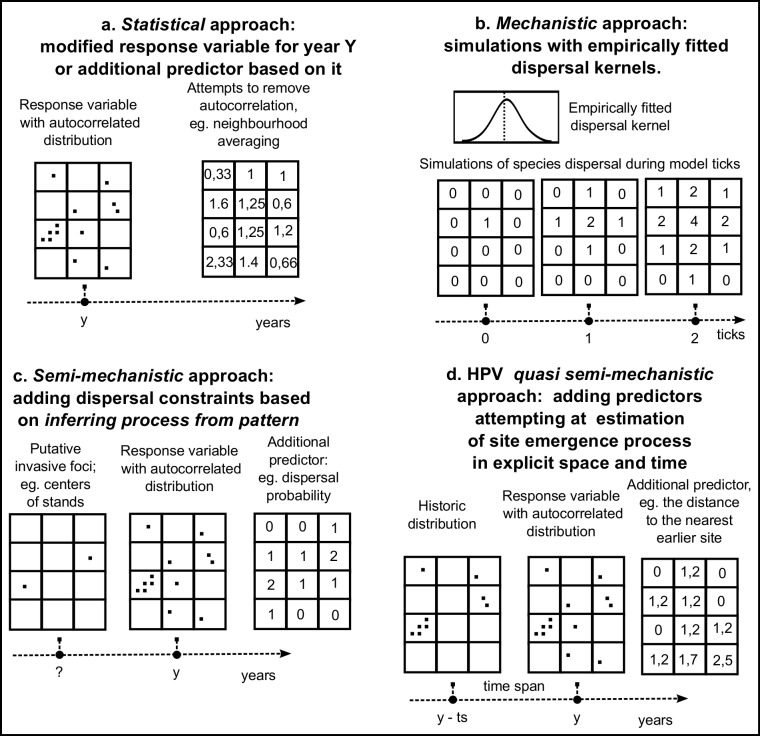
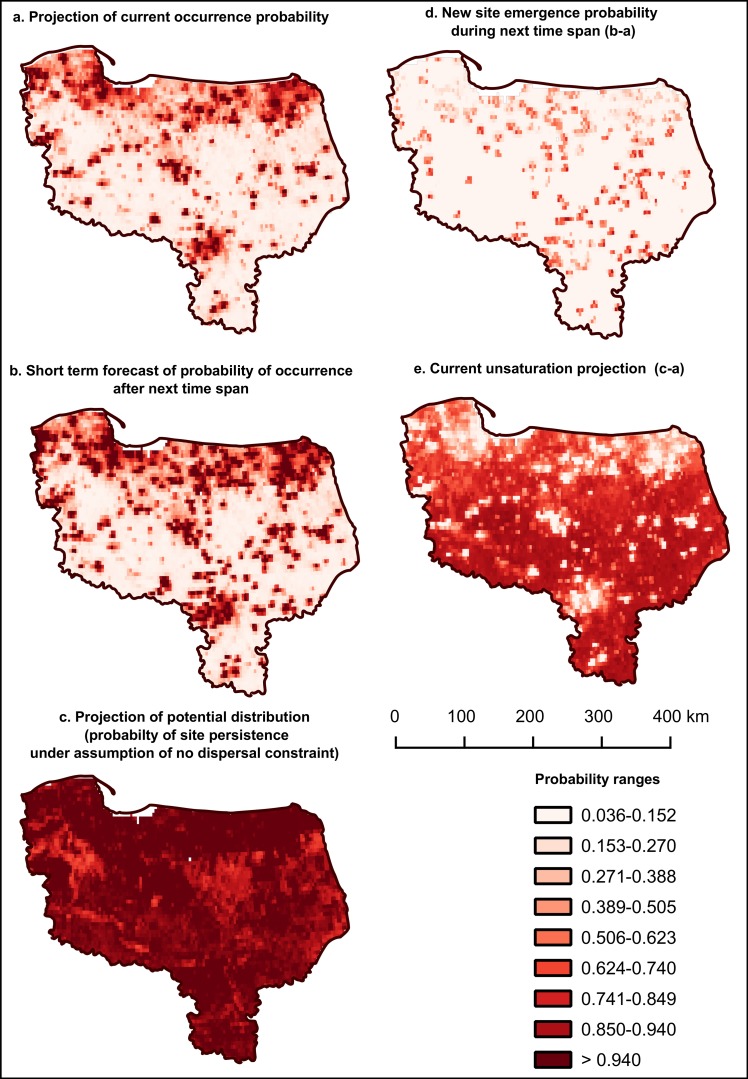
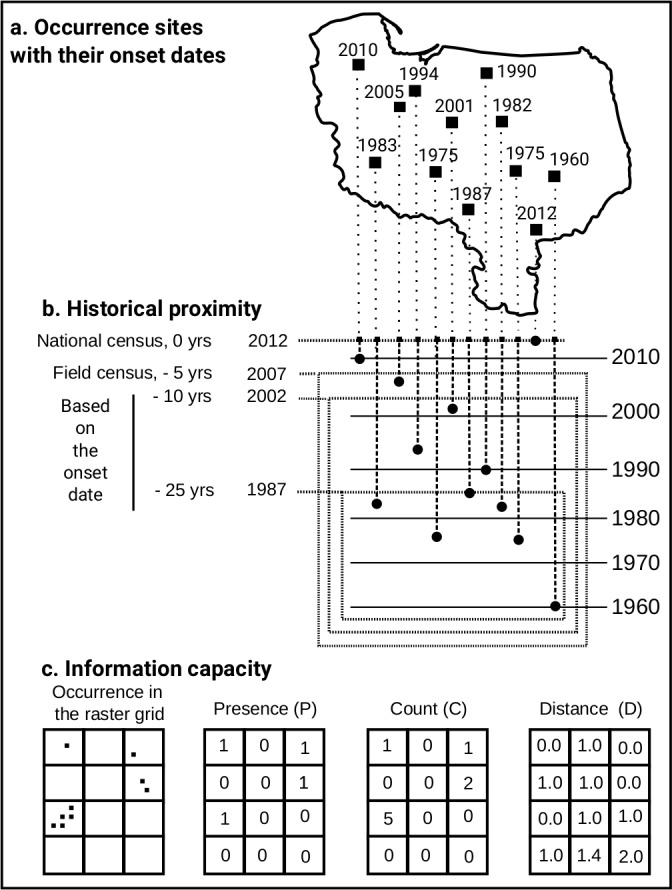
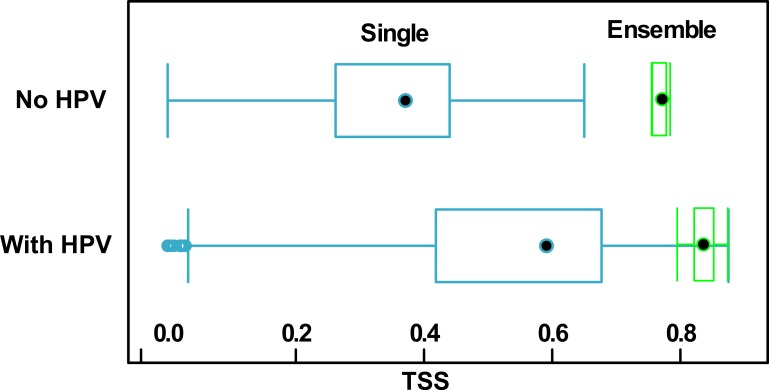
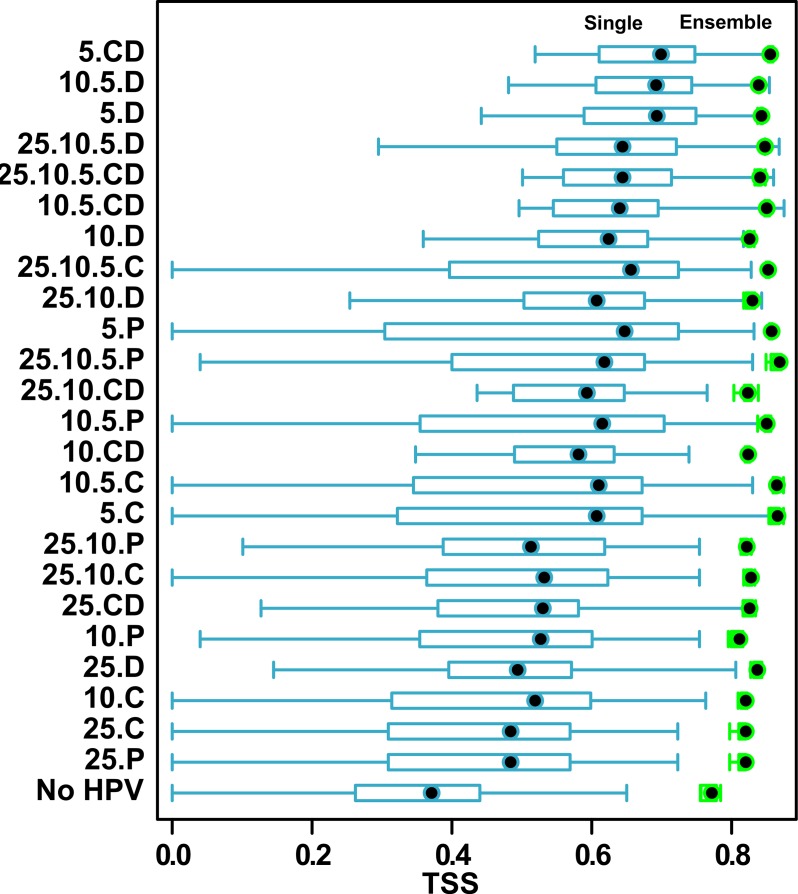
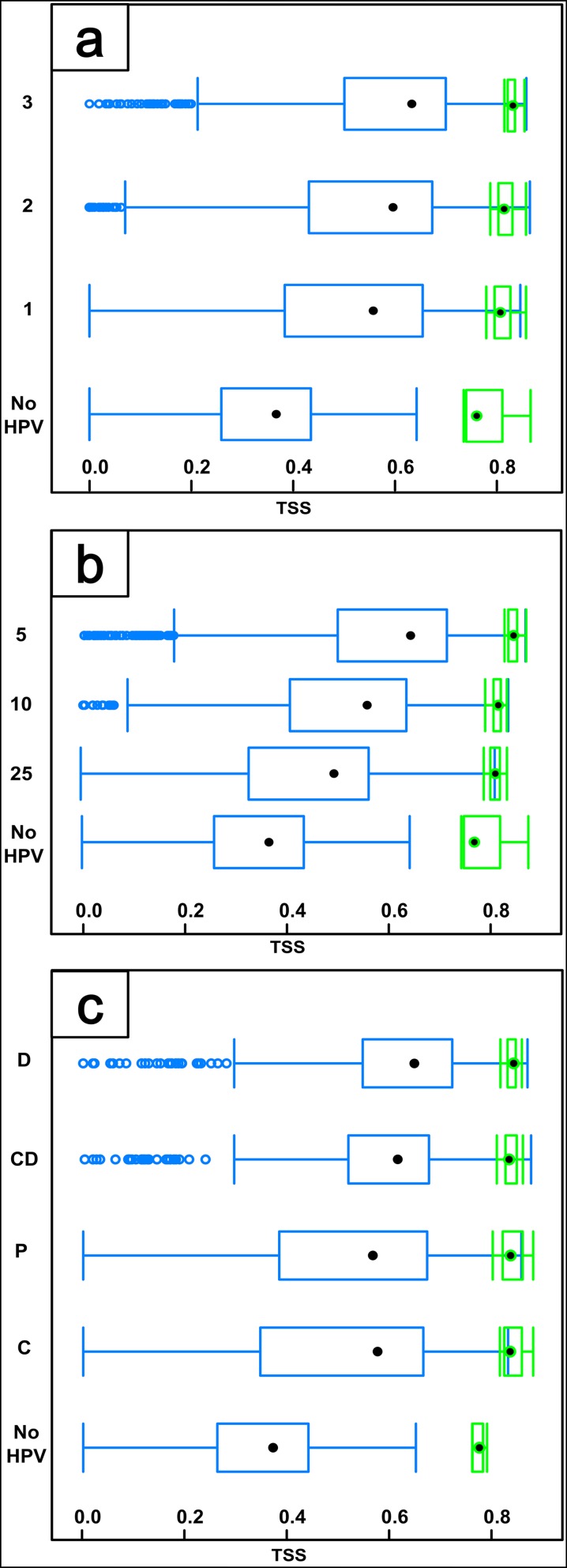
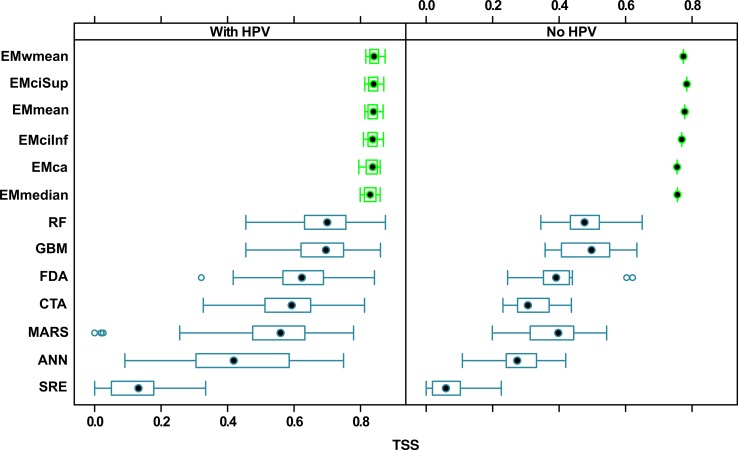
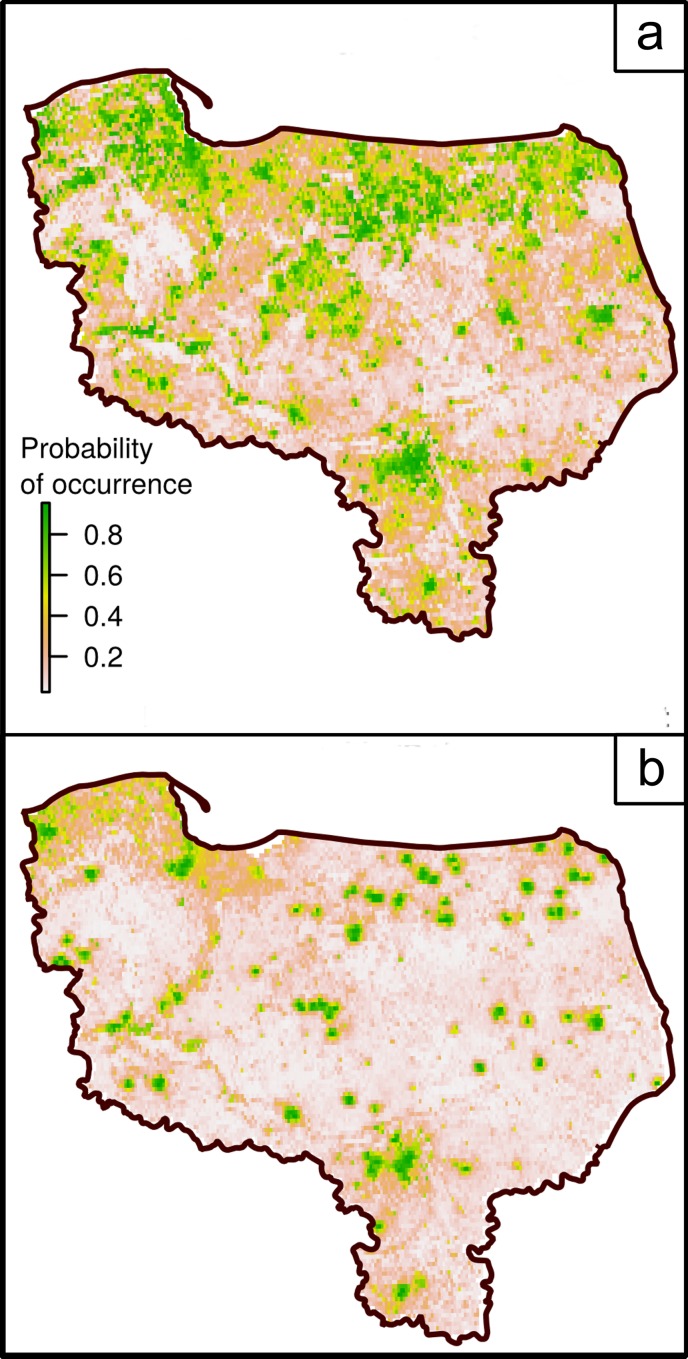
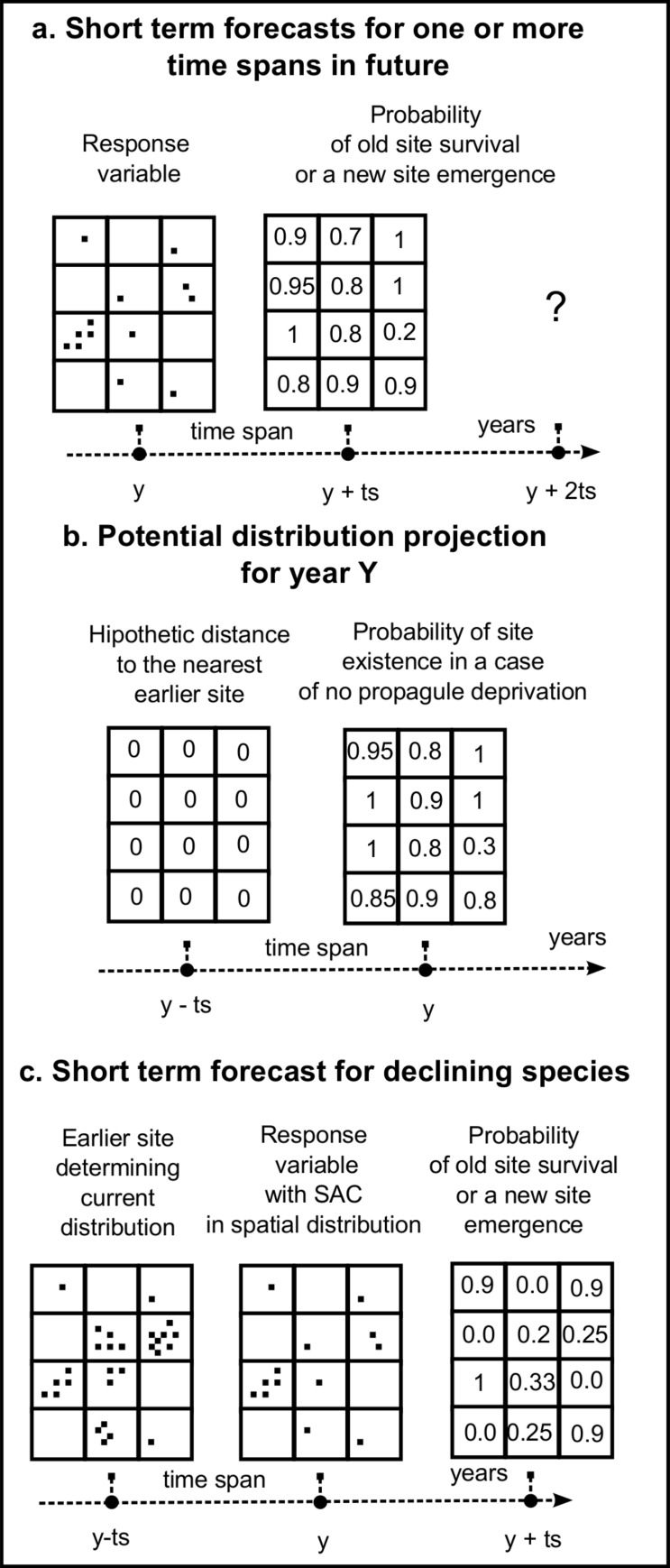
Species distribution models are scarcely applicable to invasive species because of their breaking of the models' assumptions. So far, few mechanistic, semi-mechanistic or statistical solutions like dispersal constraints or propagule limitation have been applied. We evaluated a novel quasi-semi-mechanistic approach for regional scale models, using historical proximity variables (HPV) representing a state of the population in a given moment in the past. Our aim was to test the effects of addition of HPV sets of different minimal recentness, information capacity and the total number of variables on the quality of the species distribution model for Heracleum mantegazzianum on 116000 km2 in Poland. As environmental predictors, we used fragments of 103 1×1 km, world- wide, free-access rasters from WorldGrids.org. Single and ensemble models were computed using BIOMOD2 package 3.1.47 working in R environment 3.1.0. The addition of HPV improved the quality of single and ensemble models from poor to good and excellent. The quality was the highest for the variants with HPVs based on the distance from the most recent past occurrences. It was mostly affected by the algorithm type, but all HPV traits (minimal recentness, information capacity, model type or the number of the time periods) were significantly important determinants. The addition of HPVs improved the quality of current projections, raising the occurrence probability in regions where the species had occurred before. We conclude that HPV addition enables semi-realistic estimation of the rate of spread and can be applied to the short-term forecasting of invasive or declining species, which also break equal-dispersal probability assumptions.
物种分布模型几乎不适用于入侵物种,因为它们违背了模型的假设。到目前为止,很少有像扩散限制或繁殖体限制这样的机制性、半机制性或统计性解决方案得到应用。我们评估了一种用于区域尺度模型的新型准半机制方法,使用代表过去某一时刻种群状态的历史接近度变量(HPV)。我们的目的是测试添加不同最小近期度、信息容量和变量总数的HPV集对波兰116000平方公里范围内的巨型独活物种分布模型质量的影响。作为环境预测因子,我们使用了来自WorldGrids.org的103个1×1公里的全球免费访问栅格片段。使用在R环境3.1.0中运行的BIOMOD2包3.1.47计算单模型和集成模型。添加HPV将单模型和集成模型的质量从差提升到了良好和优秀。基于距最近过去出现地点的距离的HPV变体质量最高。它主要受算法类型影响,但所有HPV特征(最小近期度、信息容量、模型类型或时间段数量)都是显著重要的决定因素。添加HPV提高了当前预测的质量,增加了该物种以前出现过的地区的出现概率。我们得出结论,添加HPV能够对半现实的扩散速率进行估计,并且可以应用于入侵或衰退物种的短期预测,这些物种也违背了等扩散概率假设。