Department of Animal Science & Technology, Chung-Ang University, Anseong, Gyeonggi-do, Republic of Korea.
Food Safety Risk Assessment Division, National Institute of Food & Drug Safety Evaluation, Ministry of Food and Drug Safety, Cheongju, Chungcheongbuk-do, Republic of Korea.
Sci Rep. 2017 Sep 19;7(1):11858. doi: 10.1038/s41598-017-12195-9.
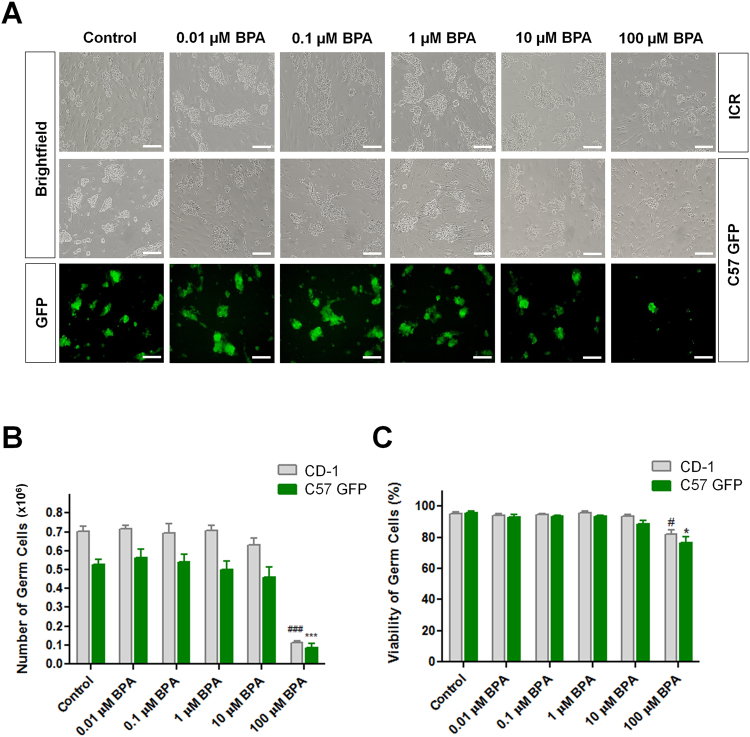
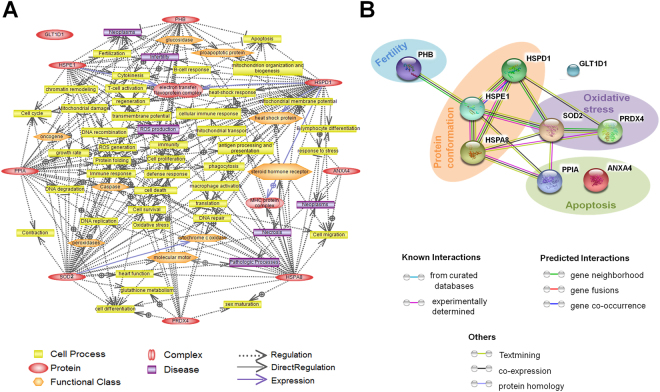
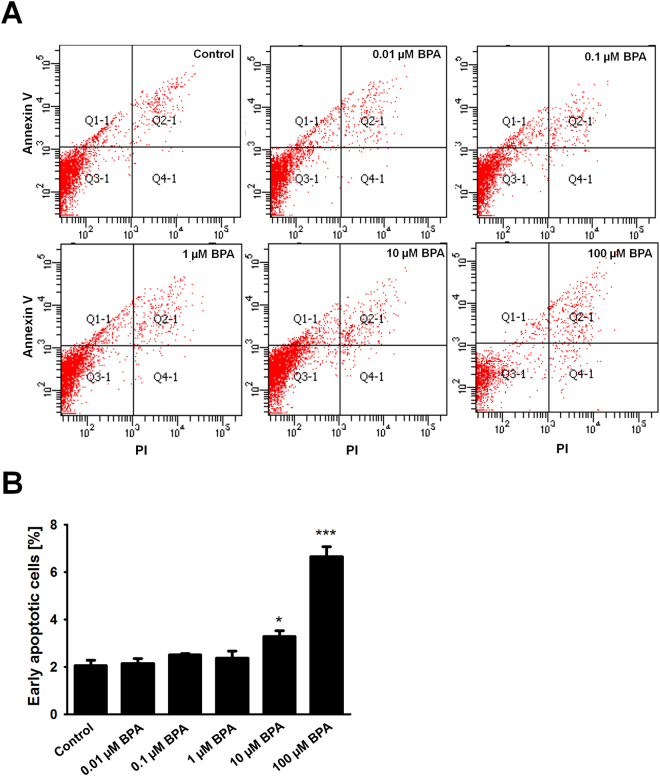
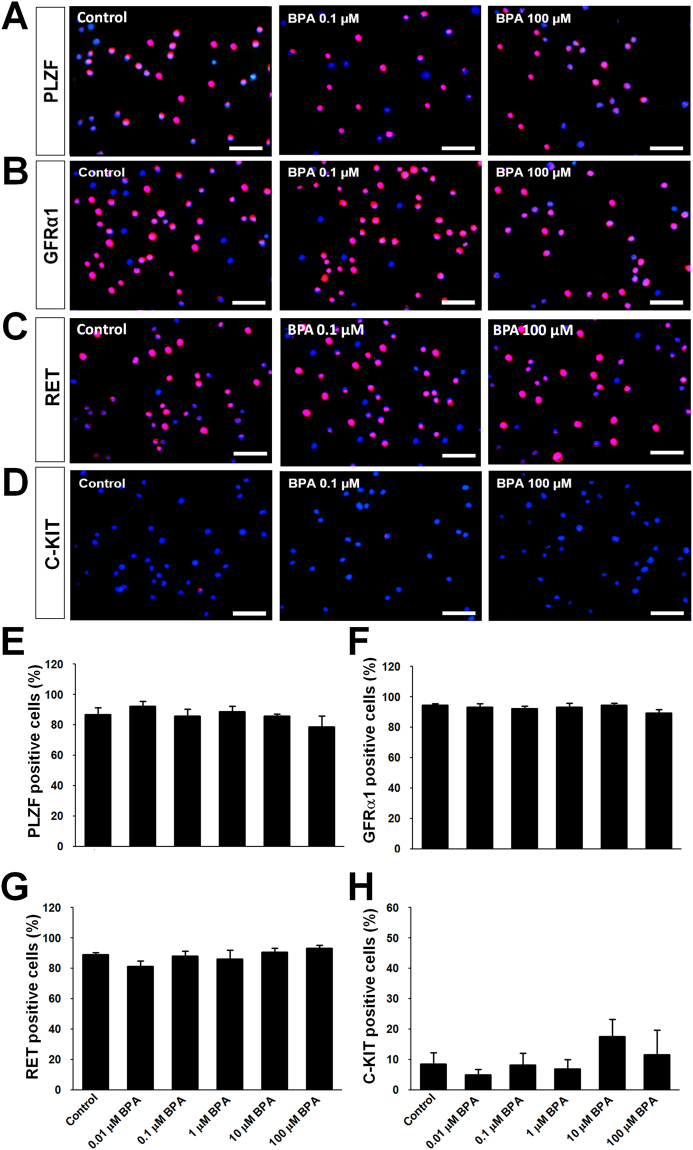
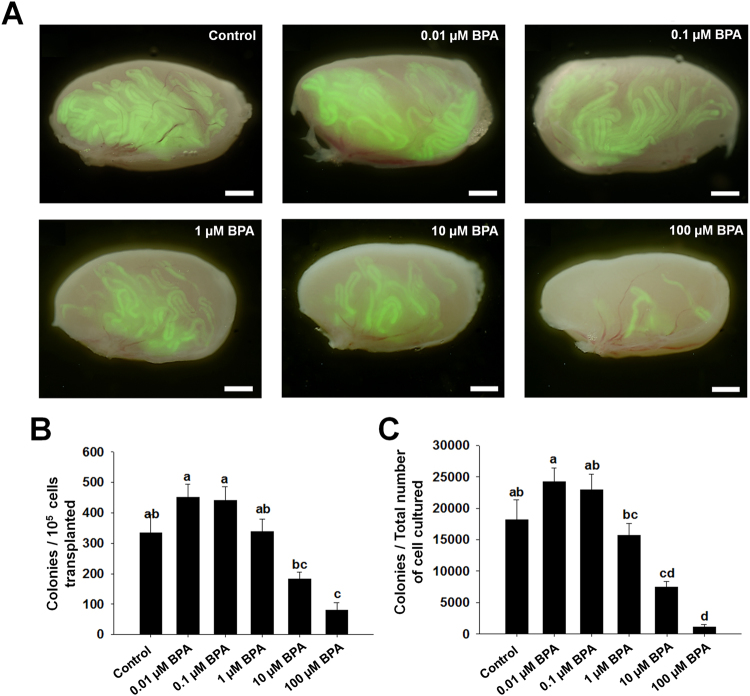
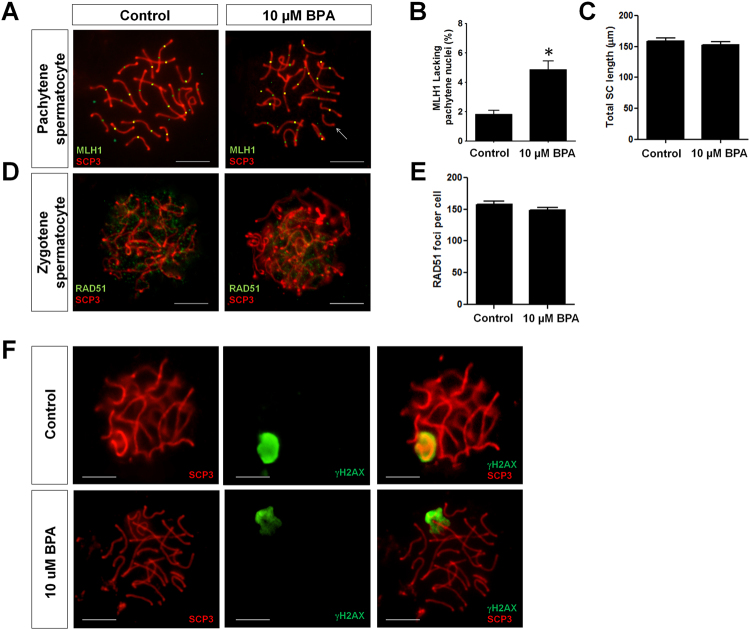
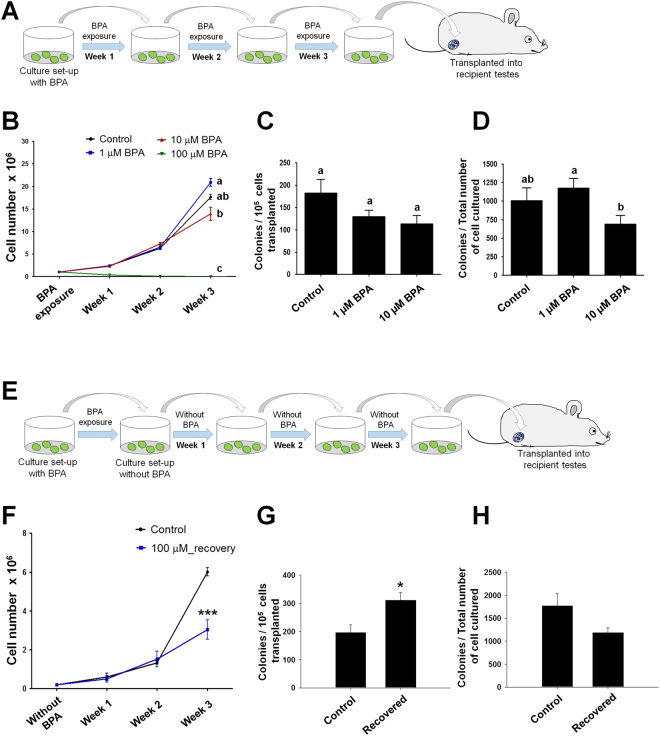
The endocrine disruptor bisphenol A (BPA) is well known for its adverse effect on male fertility. Growing evidence suggests that BPA may interact with testicular germ cells and cause infertility as a result of its estrogenic activity. Objective of current in vitro study was to investigate the proliferation, survivability and stemness properties of mouse testicular germ cells exposed to BPA, and to evaluate possible expression of cellular proteome. Our results showed that germ cell viability and proliferation were not affected by low concentrations (0.01, 0.1, 1, and 10 µM) although significant reduction observed at 100 µM BPA. Germ cell self-renewal and differentiation related marker proteins expression found unchanged at those concentrations. When BPA-exposed germ cells were transplanted into recipient testes, we observed fewer colonies at higher concentrations (10 and 100 µM). Additionally, a significant frequency of recombination failure during meiosis was observed in 10 µM BPA-exposed germ cell transplanted recipient. Moreover, experiment on continuous BPA-exposed and 100 µM BPA-recovered germ cells suggested that spermatogonial stem cells are more potential to survive in adverse environment. Finally, scrutinizing differentially expressed cellular proteins resulted from our proteomic analysis, we conclude that BPA exposure might be associated with several health risks and infertility.
环境内分泌干扰物双酚 A(BPA)对男性生育力的不良影响众所周知。越来越多的证据表明,BPA 可能与睾丸生殖细胞相互作用,并因其雌激素活性而导致不育。目前体外研究的目的是研究 BPA 暴露对小鼠睾丸生殖细胞的增殖、存活和干细胞特性的影响,并评估细胞蛋白质组的可能表达。我们的结果表明,低浓度(0.01、0.1、1 和 10 μM)的 BPA 对生殖细胞活力和增殖没有影响,尽管在 100 μM BPA 时观察到显著减少。在这些浓度下,与生殖细胞自我更新和分化相关的标记蛋白表达不变。当 BPA 暴露的生殖细胞被移植到受体睾丸中时,我们在更高浓度(10 和 100 μM)下观察到更少的集落。此外,在 10 μM BPA 暴露的生殖细胞移植的受体中观察到减数分裂过程中的重组失败频率显著增加。此外,对连续暴露于 BPA 和 100 μM BPA 恢复的生殖细胞的实验表明,精原干细胞在不利环境中更有潜力存活。最后,通过蛋白质组学分析仔细研究差异表达的细胞蛋白,我们得出结论,BPA 暴露可能与多种健康风险和不育有关。