Kanazawa Yuji, Nakamura Kimihiro, Ishii Toru, Aso Toshihiko, Yamazaki Hiroshi, Omori Koichi
Human Brain Research Center, Kyoto University Graduate School of Medicine, Kyoto, Japan.
Department of Otolaryngology-Head and Neck Surgery, Kyoto University Graduate School of Medicine, Kyoto, Japan.
PLoS One. 2017 Sep 20;12(9):e0177599. doi: 10.1371/journal.pone.0177599. eCollection 2017.
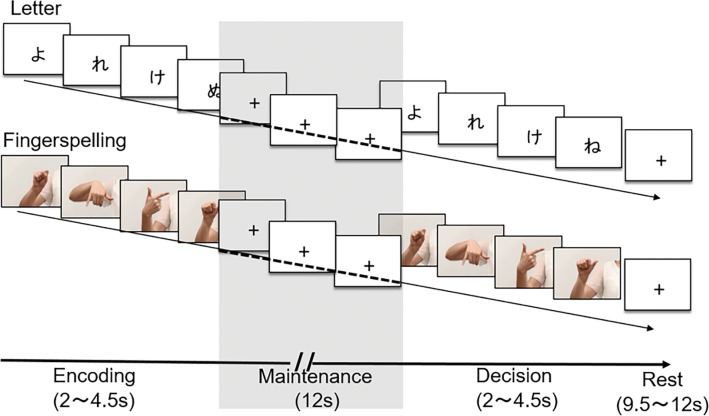
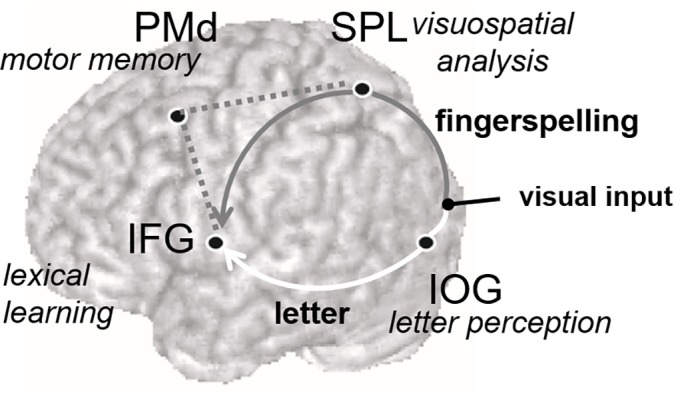
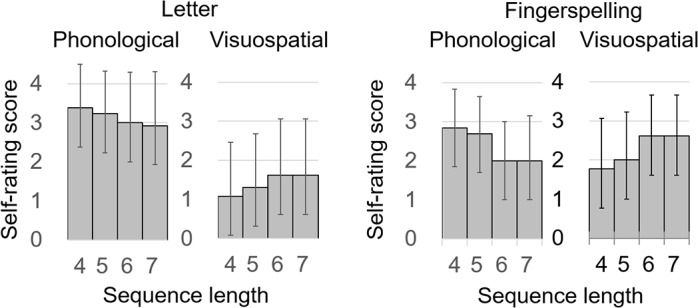
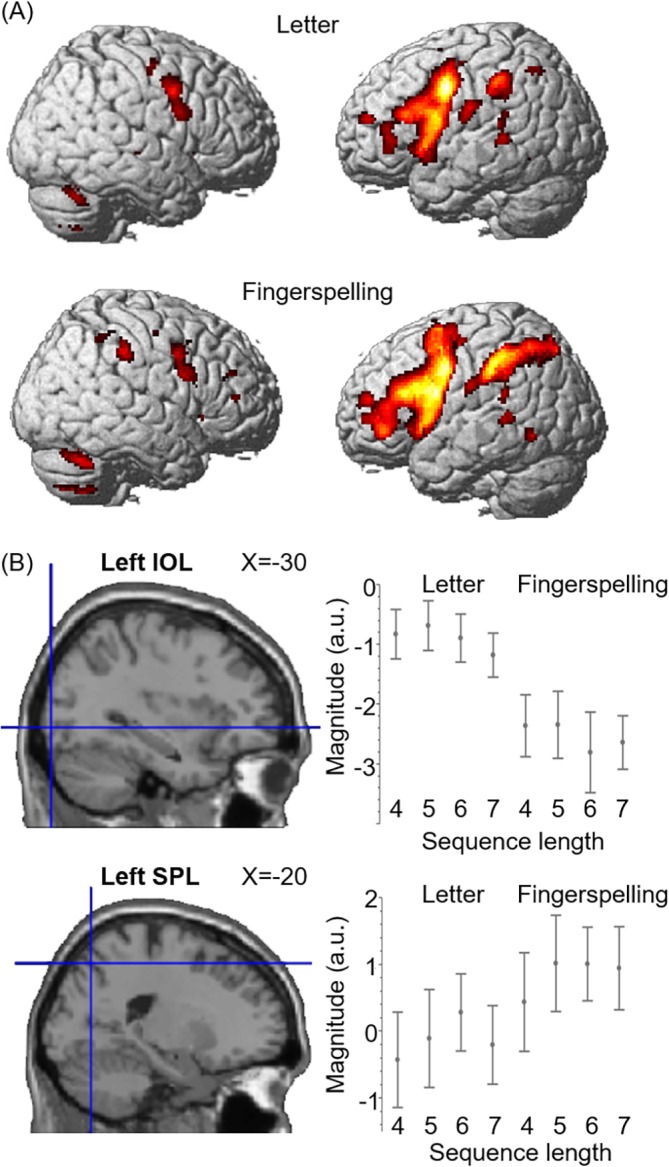
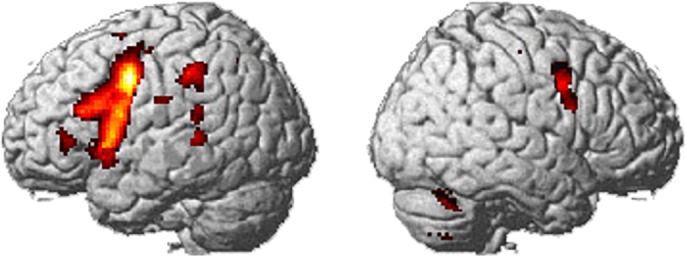
Sign language is an essential medium for everyday social interaction for deaf people and plays a critical role in verbal learning. In particular, language development in those people should heavily rely on the verbal short-term memory (STM) via sign language. Most previous studies compared neural activations during signed language processing in deaf signers and those during spoken language processing in hearing speakers. For sign language users, it thus remains unclear how visuospatial inputs are converted into the verbal STM operating in the left-hemisphere language network. Using functional magnetic resonance imaging, the present study investigated neural activation while bilinguals of spoken and signed language were engaged in a sequence memory span task. On each trial, participants viewed a nonsense syllable sequence presented either as written letters or as fingerspelling (4-7 syllables in length) and then held the syllable sequence for 12 s. Behavioral analysis revealed that participants relied on phonological memory while holding verbal information regardless of the type of input modality. At the neural level, this maintenance stage broadly activated the left-hemisphere language network, including the inferior frontal gyrus, supplementary motor area, superior temporal gyrus and inferior parietal lobule, for both letter and fingerspelling conditions. Interestingly, while most participants reported that they relied on phonological memory during maintenance, direct comparisons between letters and fingers revealed strikingly different patterns of neural activation during the same period. Namely, the effortful maintenance of fingerspelling inputs relative to letter inputs activated the left superior parietal lobule and dorsal premotor area, i.e., brain regions known to play a role in visuomotor analysis of hand/arm movements. These findings suggest that the dorsal visuomotor neural system subserves verbal learning via sign language by relaying gestural inputs to the classical left-hemisphere language network.
手语是聋人日常社交互动的重要媒介,在语言学习中起着关键作用。特别是,这些人的语言发展应通过手语在很大程度上依赖于言语短期记忆(STM)。以前的大多数研究比较了聋人手语使用者在处理手语时的神经激活情况和听力正常的人在处理口语时的神经激活情况。因此,对于手语使用者来说,尚不清楚视觉空间输入是如何转换为在左半球语言网络中运作的言语STM的。本研究使用功能磁共振成像技术,调查了口语和手语双语者在进行序列记忆广度任务时的神经激活情况。在每次试验中,参与者观看一个无意义的音节序列,该序列以书面字母或手指拼写的形式呈现(长度为4至7个音节),然后保持该音节序列12秒。行为分析表明,无论输入方式的类型如何,参与者在保持言语信息时都依赖语音记忆。在神经层面,这个维持阶段在字母和手指拼写两种情况下都广泛激活了左半球语言网络,包括额下回、辅助运动区、颞上回和顶下小叶。有趣的是,虽然大多数参与者报告说他们在维持过程中依赖语音记忆,但字母和手指拼写之间的直接比较显示,在同一时期神经激活模式存在显著差异。也就是说,相对于字母输入,对手指拼写输入的费力维持激活了左上顶叶和背侧运动前区,即已知在手部/手臂运动的视觉运动分析中起作用的脑区。这些发现表明,背侧视觉运动神经系统通过将手势输入传递到经典的左半球语言网络,为通过手语进行的语言学习提供支持。