Benabid Meriem, Ghrab Jamila, Rhim Adel, Ben-Romdhane Rania, Aoun Karim, Bouratbine Aïda
Department of Parasitology, Research Lab: LR 11-IPT-06, Pasteur Institute of Tunis, University Tunis El-Manar, Tunis, Tunisia.
Department of Biotechnology, Higher Institute of Sciences and Technology of Environment of Borj Cedria, University of Carthage, Tunis, Tunisia.
PLoS One. 2017 Sep 21;12(9):e0184700. doi: 10.1371/journal.pone.0184700. eCollection 2017.
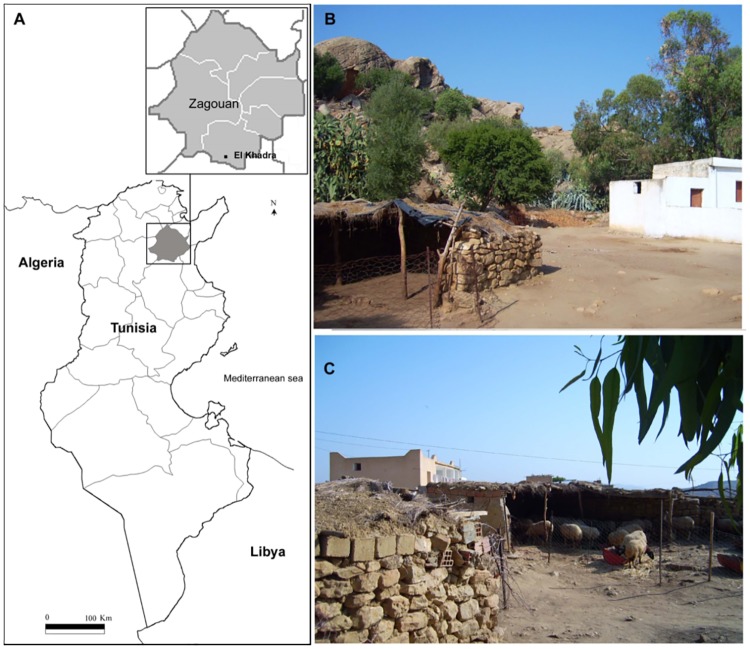
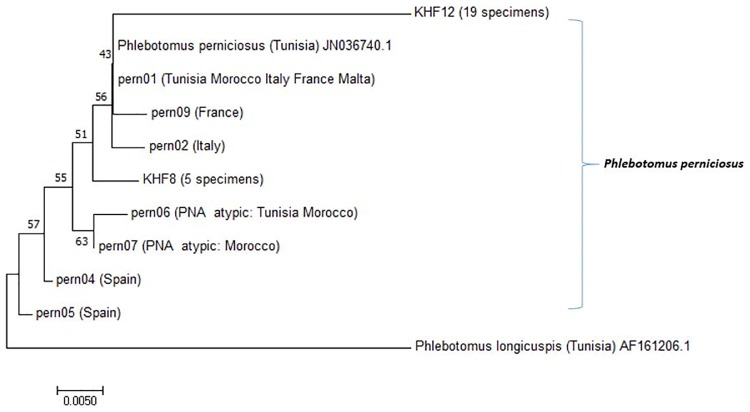
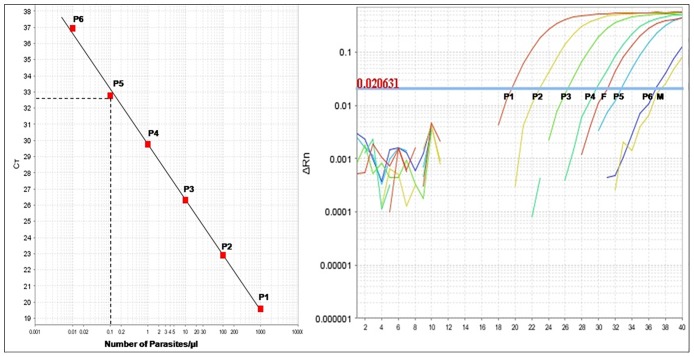
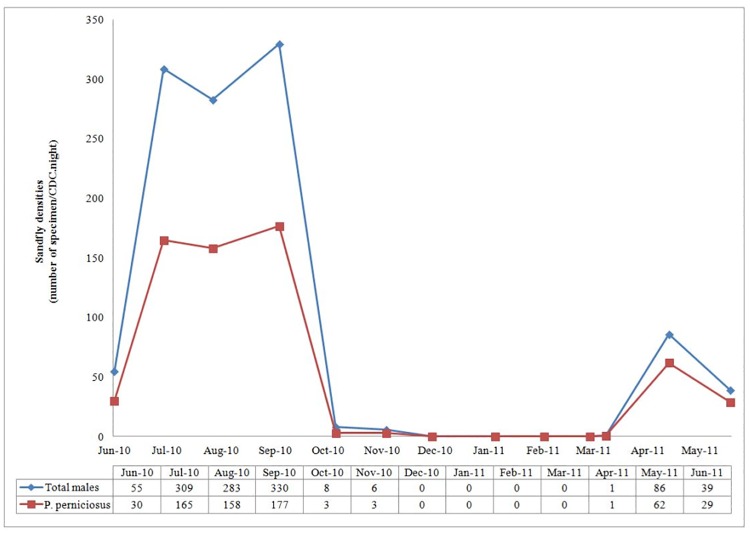
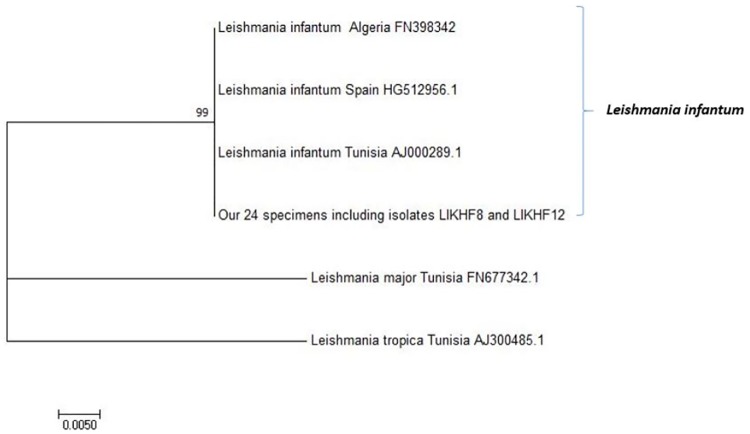
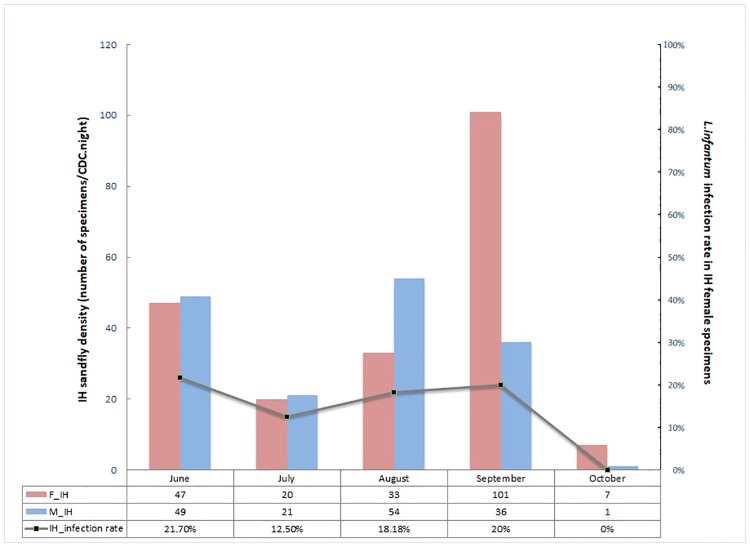
Phlebotomus perniciosus is one of the major vectors of Leishmania infantum in the Mediterranean basin. The aim of this work was (i) to provide information about abundance and temporal dynamics of this Larroussius species in a hot spot area of visceral leishmaniasis in Tunisia, (ii) to detect L. infantum DNA in wild caught female sandflies and (iii) to measure Phlebotomus perniciosus infection rate throughout the active season. Sandflies were collected monthly during one year using CDC miniature light-traps in house and in animal shelters. Male specimens were identified at species level according to morphological characters. Female specimens were conserved individually for molecular study. Leishmania infection was tested by kinetoplast DNA real-time PCR and ITS-1 PCR-sequencing. Subsequent sandfly species identification of infected specimens was done by mitochondrial cytochrome b sequencing. In one year period, overall 4,441 specimens (2230 males and 2211 females) were collected. Sandfly activity started in end-April and ended in early-November. Mean sandfly density in house was significantly lower than in animal shelters (51 ± 50 versus 504 ± 460 sandflies /CDC night, p<0.05). However, a higher proportion of females was found in house (58.4% versus 49.2%, p<0.001). Based on species identification of male specimens, Phlebotomus perniciosus was the dominant species (56% of the whole male sandfly fauna, p<0.0001). It showed two peaks of density in the active season, a sharp one in early May and a higher long lasting one from end-July to end-September. DNA was extracted from 190 female specimens randomly sampled and corresponding to 96 specimens from house and 94 from animal shelters. Twenty four female sandfly were infected by Leishmania infantum. All infected specimens were recognized as Phlebotomus perniciosus. Leishmania infantum infection rate in female sandflies was 2.3 fold higher in house than in animal shelters (17.7% versus 7.4%, p<0.05). In house, estimated number of infected specimens was the highest at the end of the active season. Abundance, dynamics of density and Leishmania infantum infection prevalence of Phlebotomus perniciosus in Tunisian hot spot of visceral leishmaniasis highlight the major role of this Phlebotominae species in L. infantum transmission.
嗜人按蚊是地中海盆地婴儿利什曼原虫的主要传播媒介之一。本研究的目的是:(i)提供关于突尼斯内脏利什曼病热点地区这种拉鲁西按蚊的丰度和时间动态的信息;(ii)检测野外捕获的雌性白蛉体内的婴儿利什曼原虫DNA;(iii)测量整个活跃季节嗜人按蚊的感染率。在一年的时间里,每月使用疾控中心微型诱虫灯在房屋和动物庇护所收集白蛉。根据形态特征在物种水平上鉴定雄性标本。雌性标本单独保存用于分子研究。通过动基体DNA实时PCR和ITS-1 PCR测序检测利什曼原虫感染。随后通过线粒体细胞色素b测序对感染标本进行白蛉物种鉴定。在一年的时间里,共收集了4441个标本(2230只雄性和2211只雌性)。白蛉活动始于4月底,结束于11月初。房屋内白蛉的平均密度显著低于动物庇护所(51±50只白蛉/疾控中心诱捕夜,而动物庇护所为504±460只白蛉/疾控中心诱捕夜,p<0.05)。然而,房屋内雌性白蛉的比例更高(58.4%对49.2%,p<0.001)。根据雄性标本的物种鉴定,嗜人按蚊是优势种(占整个雄性白蛉动物群的56%,p<0.0001)。它在活跃季节出现两个密度高峰,5月初有一个尖峰,7月底至9月底有一个更高且持续时间更长的高峰。从190个随机抽样的雌性标本中提取DNA,其中96个标本来自房屋,94个来自动物庇护所。24只雌性白蛉感染了婴儿利什曼原虫。所有感染标本均被鉴定为嗜人按蚊。房屋内雌性白蛉的婴儿利什曼原虫感染率比动物庇护所高2.3倍(17.7%对7.4%,p<0.05)。在房屋内,估计感染标本数量在活跃季节结束时最高。突尼斯内脏利什曼病热点地区嗜人按蚊的丰度、密度动态和婴儿利什曼原虫感染率突出了这种白蛉亚科物种在婴儿利什曼原虫传播中的主要作用。