Lungu Cristiana, Pinter Sabine, Broche Julian, Rathert Philipp, Jeltsch Albert
Department of Biochemistry, Institute of Biochemistry and Technical Biochemistry, Stuttgart University, Allmandring 31, 70569, Stuttgart, Germany.
Nat Commun. 2017 Sep 21;8(1):649. doi: 10.1038/s41467-017-00457-z.
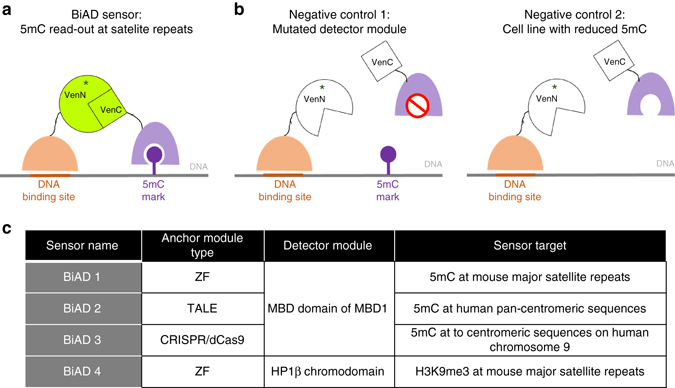
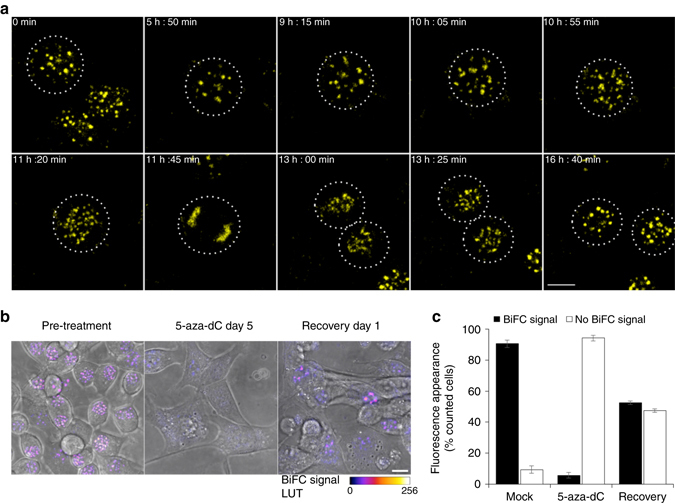
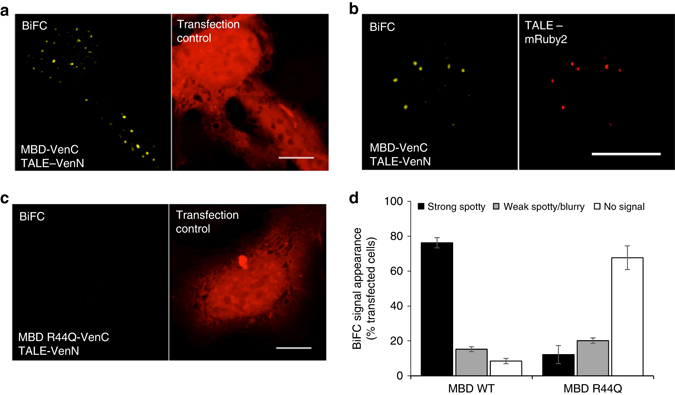
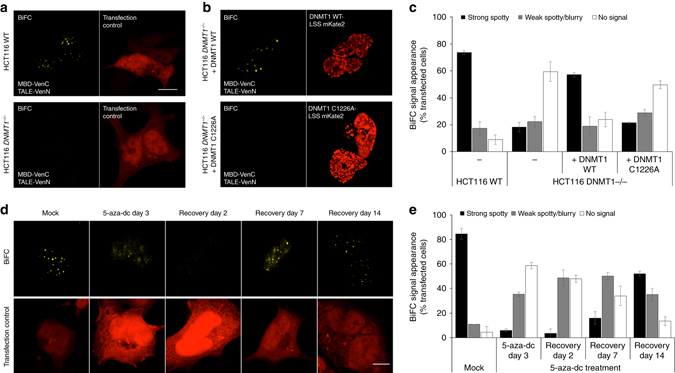
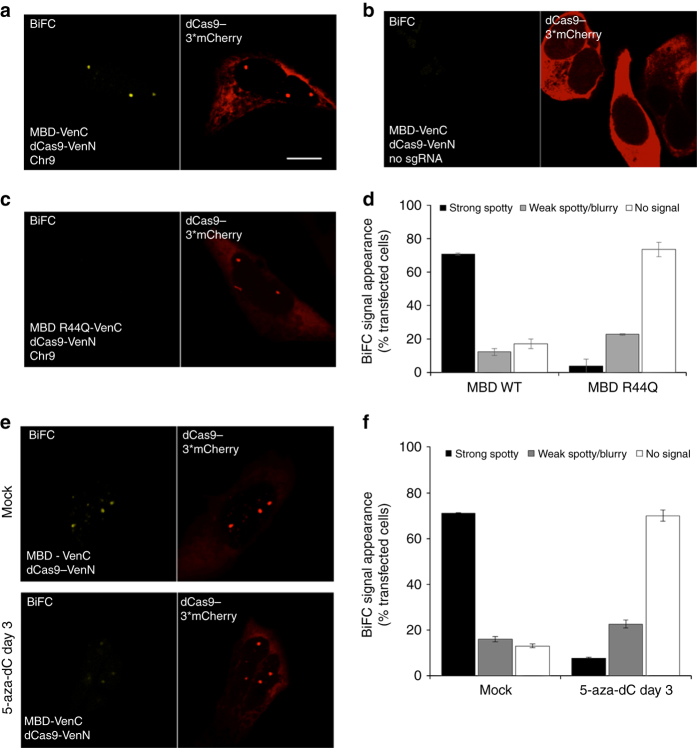
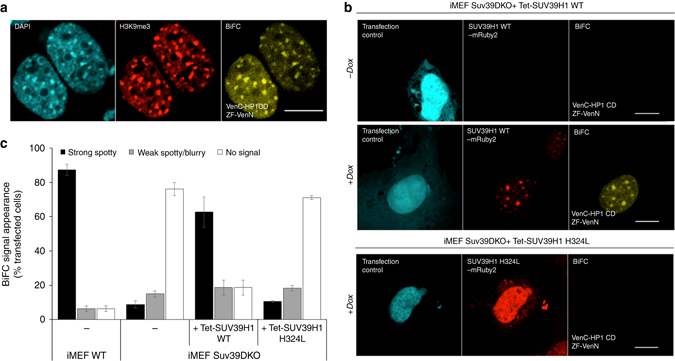
Investigation of the fundamental role of epigenetic processes requires methods for the locus-specific detection of epigenetic modifications in living cells. Here, we address this urgent demand by developing four modular fluorescence complementation-based epigenetic biosensors for live-cell microscopy applications. These tools combine engineered DNA-binding proteins with domains recognizing defined epigenetic marks, both fused to non-fluorescent fragments of a fluorescent protein. The presence of the epigenetic mark at the target DNA sequence leads to the reconstitution of a functional fluorophore. With this approach, we could for the first time directly detect DNA methylation and histone 3 lysine 9 trimethylation at endogenous genomic sites in live cells and follow dynamic changes in these marks upon drug treatment, induction of epigenetic enzymes and during the cell cycle. We anticipate that this versatile technology will improve our understanding of how specific epigenetic signatures are set, erased and maintained during embryonic development or disease onset.Tools for imaging epigenetic modifications can shed light on the regulation of epigenetic processes. Here, the authors present a fluorescence complementation approach for detection of DNA and histone methylation at endogenous genomic sites allowing following of dynamic changes of these marks by live-cell microscopy.
对表观遗传过程的基本作用进行研究需要能够在活细胞中对表观遗传修饰进行位点特异性检测的方法。在此,我们通过开发四种基于模块化荧光互补的表观遗传生物传感器用于活细胞显微镜应用,来满足这一迫切需求。这些工具将工程化的DNA结合蛋白与识别特定表观遗传标记的结构域相结合,二者均与荧光蛋白的非荧光片段融合。目标DNA序列上表观遗传标记的存在会导致功能性荧光团的重构。通过这种方法,我们首次能够直接检测活细胞内源性基因组位点处的DNA甲基化和组蛋白3赖氨酸9三甲基化,并追踪药物处理、表观遗传酶诱导以及细胞周期过程中这些标记的动态变化。我们预计,这种通用技术将增进我们对特定表观遗传特征在胚胎发育或疾病发生过程中如何设定、消除和维持的理解。用于成像表观遗传修饰的工具能够阐明表观遗传过程的调控机制。在此,作者提出了一种荧光互补方法,用于检测内源性基因组位点处的DNA和组蛋白甲基化,从而能够通过活细胞显微镜追踪这些标记的动态变化。