Shekhar Shashank, Travis Olivia K, He Xiaochen, Roman Richard J, Fan Fan
Department of Neurology, University of Mississippi Medical Center, USA.
Institute of Clinical Medicine, University of Turku, Finland.
MOJ Toxicol. 2017;3(4). doi: 10.15406/mojt.2017.03.00059. Epub 2017 Aug 10.
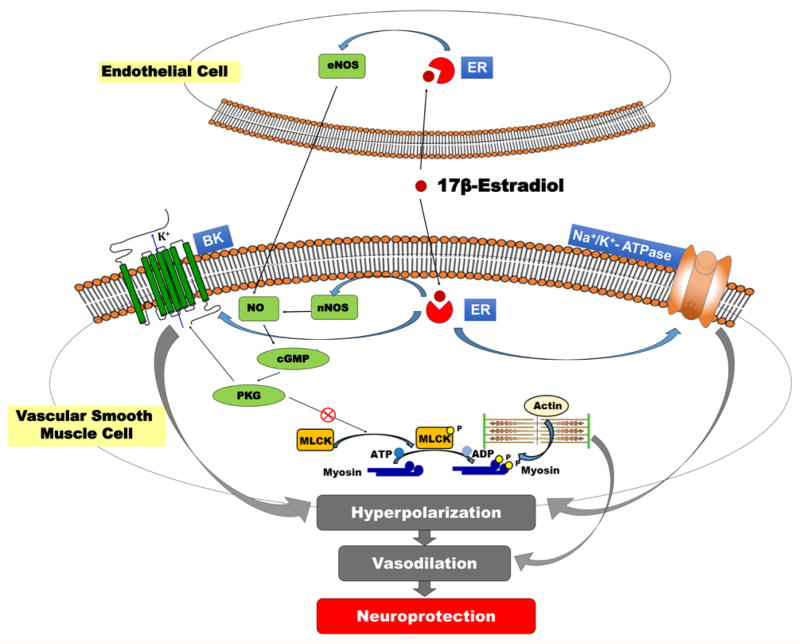
Ischemic stroke is one of the leading causes of morbidity and mortality worldwide. Females are protected against stroke before the onset of menopause. Menopause results in increased incidence of stroke when compared to men. The mechanisms of these differences remain to be elucidated. Considering that there is a postmenopausal phenomenon and females in general, are living longer sex hormone-dependent mechanisms have been postulated to be the primary factors responsible for the premenopausal protection from stroke and later to be responsible for the higher incidence and increased the severity of stroke after menopause. Animal studies suggest that administration of estrogen and progesterone is neuroprotective and decreases the incidence of stroke. However, the real-world outcomes of hormone replacement therapy have failed to decrease the stroke risk. Despite the multifactorial nature of sex differences in stroke, here, we briefly discuss the pathophysiology of sex steroid hormones, the molecular mechanisms of estrogen receptor-dependent signaling pathways in stroke, and the potential factors that determine the discrepant effects of hormone replacement therapy in stroke.
缺血性中风是全球发病和死亡的主要原因之一。女性在绝经前对中风具有保护作用。与男性相比,绝经会导致中风发病率增加。这些差异的机制仍有待阐明。考虑到存在绝经后现象,而且一般来说女性寿命更长,因此推测性激素依赖性机制是绝经前预防中风的主要因素,而在绝经后则是中风发病率更高和严重程度增加的原因。动物研究表明,给予雌激素和孕酮具有神经保护作用,并可降低中风发病率。然而,激素替代疗法的实际效果未能降低中风风险。尽管中风中性别差异具有多因素性质,但在此我们简要讨论性类固醇激素的病理生理学、中风中雌激素受体依赖性信号通路的分子机制,以及决定激素替代疗法在中风中产生不同效果的潜在因素。