Kwiatkowski Sam C, Guerrero Paola A, Hirota Shinya, Chen Zhihua, Morales John E, Aghi Manish, McCarty Joseph H
Department of Neurosurgery, University of Texas M.D. Anderson Cancer Center, Houston, Texas, United States of America.
Department of Neurosurgery, University of California at San Francisco, San Francisco, California, United States of America.
PLoS One. 2017 Sep 22;12(9):e0185065. doi: 10.1371/journal.pone.0185065. eCollection 2017.
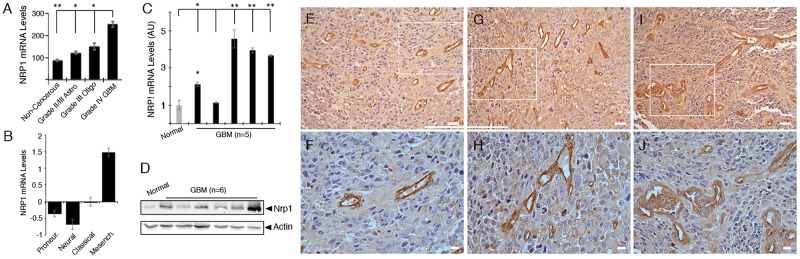
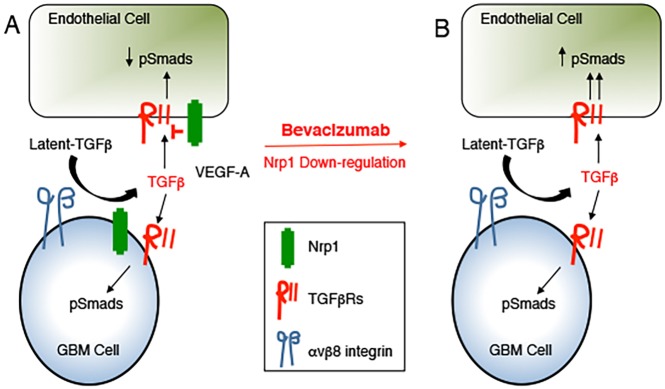
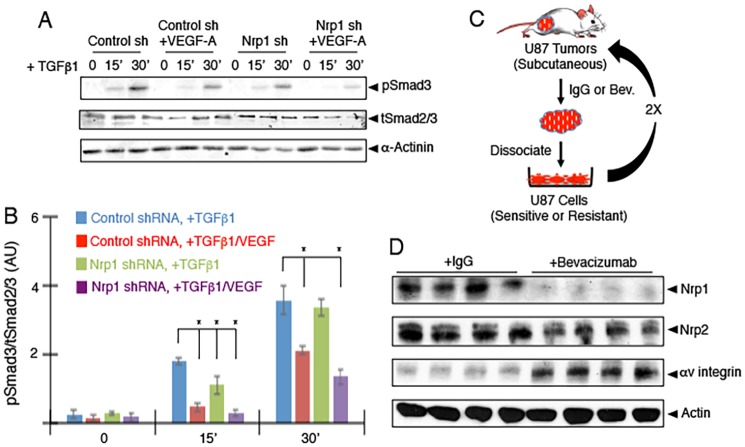
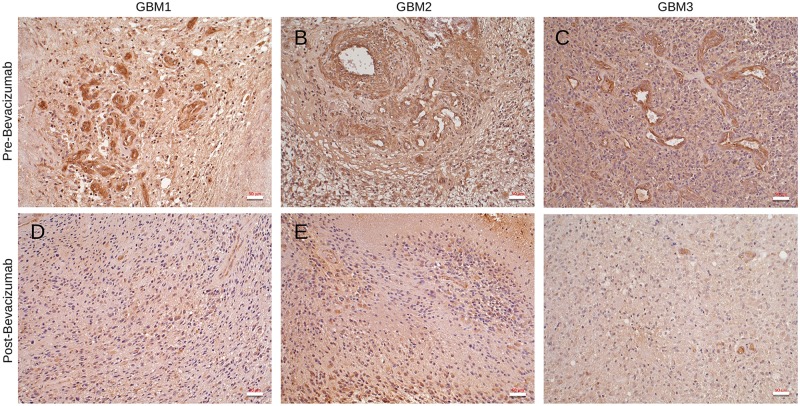
Glioblastoma (GBM) is a rapidly progressive brain cancer that exploits the neural microenvironment, and particularly blood vessels, for selective growth and survival. Anti-angiogenic agents such as the vascular endothelial growth factor-A (VEGF-A) blocking antibody bevacizumab yield short-term benefits to patients due to blood vessel regression and stabilization of vascular permeability. However, tumor recurrence is common, and this is associated with acquired resistance to bevacizumab. The mechanisms that drive acquired resistance and tumor recurrence in response to anti-angiogenic therapy remain largely unknown. Here, we report that Neuropilin-1 (Nrp1) regulates GBM growth and invasion by balancing tumor cell responses to VEGF-A and transforming growth factor βs (TGFβs). Nrp1 is expressed in GBM cells where it promotes TGFβ receptor internalization and signaling via Smad transcription factors. GBM that recur after bevacizumab treatment show down-regulation of Nrp1 expression, indicating that altering the balance between VEGF-A and TGFβ signaling is one mechanism that promotes resistance to anti-angiogenic agents. Collectively, these data reveal that Nrp1 plays a critical role in balancing responsiveness to VEGF-A versus TGFβ to regulate GBM growth, progression, and recurrence after anti-vascular therapy.
胶质母细胞瘤(GBM)是一种快速进展的脑癌,它利用神经微环境,尤其是血管,来实现选择性生长和存活。抗血管生成药物,如血管内皮生长因子-A(VEGF-A)阻断抗体贝伐单抗,由于血管消退和血管通透性稳定,能给患者带来短期益处。然而,肿瘤复发很常见,这与对贝伐单抗产生获得性耐药有关。抗血管生成治疗后导致获得性耐药和肿瘤复发的机制在很大程度上仍不清楚。在此,我们报告神经纤毛蛋白-1(Nrp1)通过平衡肿瘤细胞对VEGF-A和转化生长因子β(TGFβ)的反应来调节GBM的生长和侵袭。Nrp1在GBM细胞中表达,它通过Smad转录因子促进TGFβ受体内化和信号传导。贝伐单抗治疗后复发的GBM显示Nrp1表达下调,这表明改变VEGF-A和TGFβ信号之间的平衡是促进对抗血管生成药物耐药的一种机制。总体而言,这些数据表明Nrp1在平衡对VEGF-A与TGFβ的反应以调节抗血管治疗后GBM的生长、进展和复发中起关键作用。