Yang Hong-Kuan, Chen Hao, Mao Feng, Xiao Qun-Gen, Xie Rui-Fan, Lei Ting
Department of Neurosurgery, Tongji Hospital, Tongji Medical College, Huazhong University of Science and Technology, Wuhan, Hubei 430030, P.R. China.
Oncol Lett. 2017 Oct;14(4):4021-4028. doi: 10.3892/ol.2017.6671. Epub 2017 Jul 26.
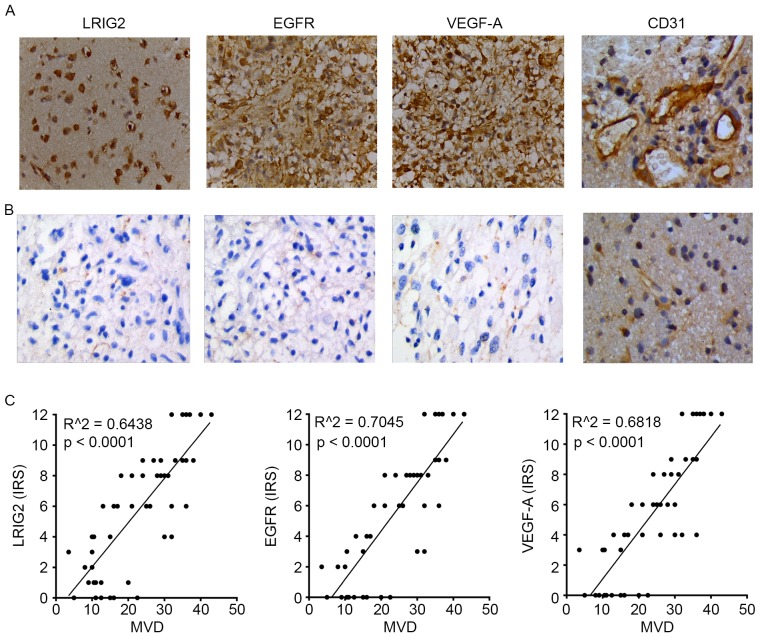
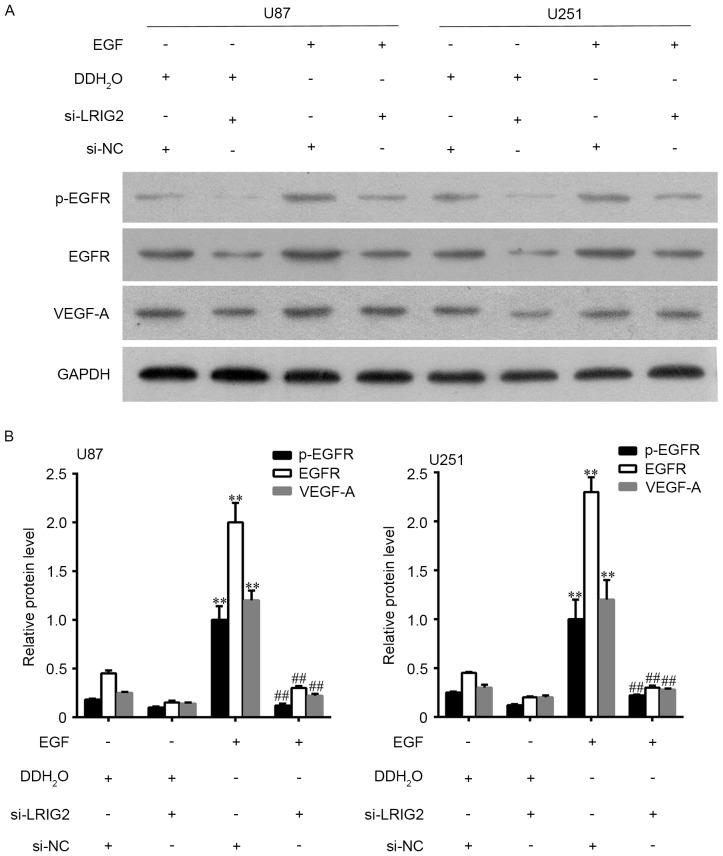
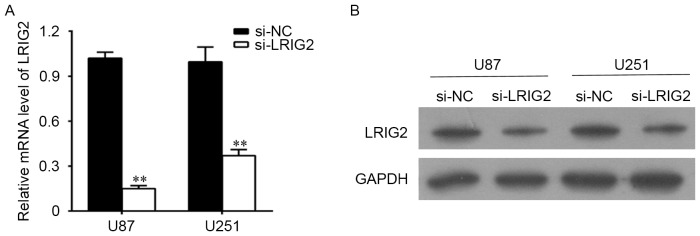
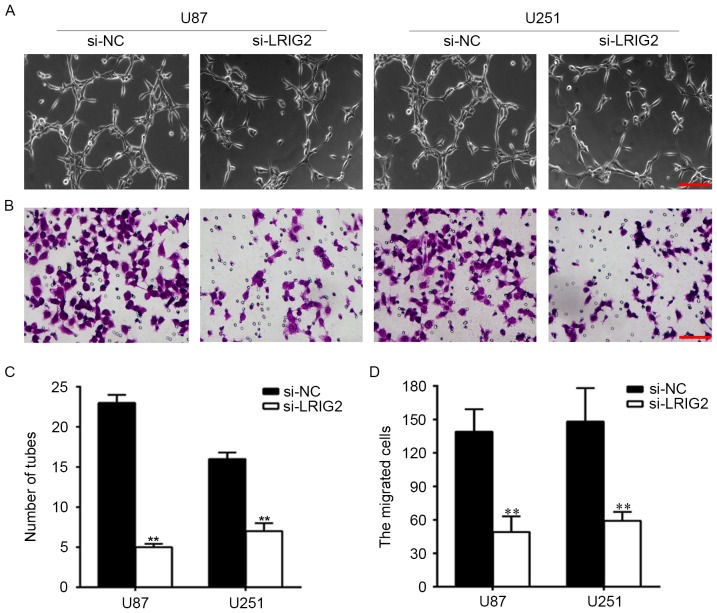
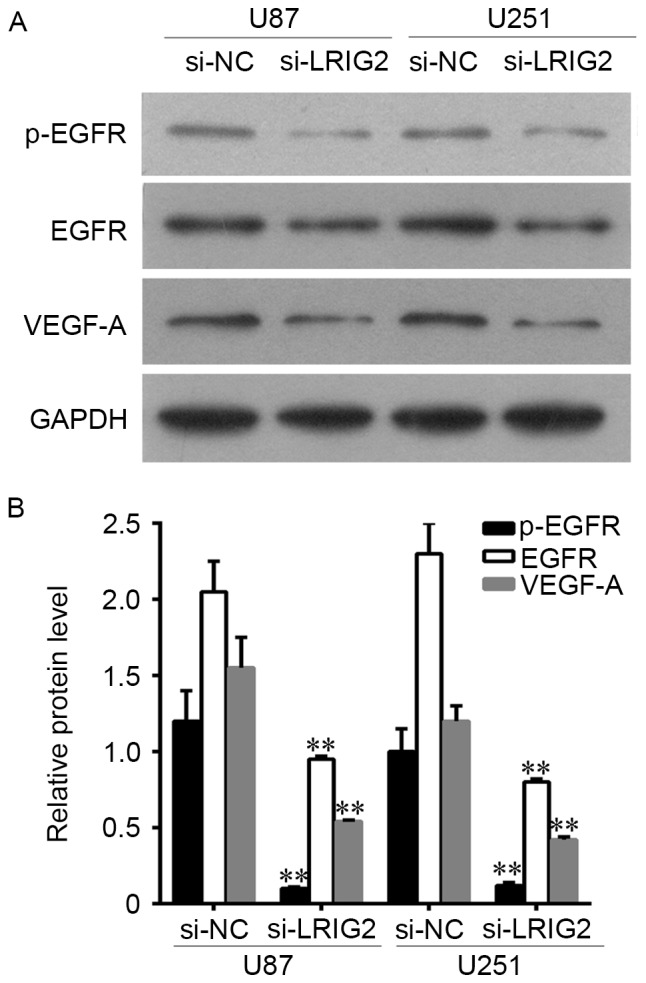
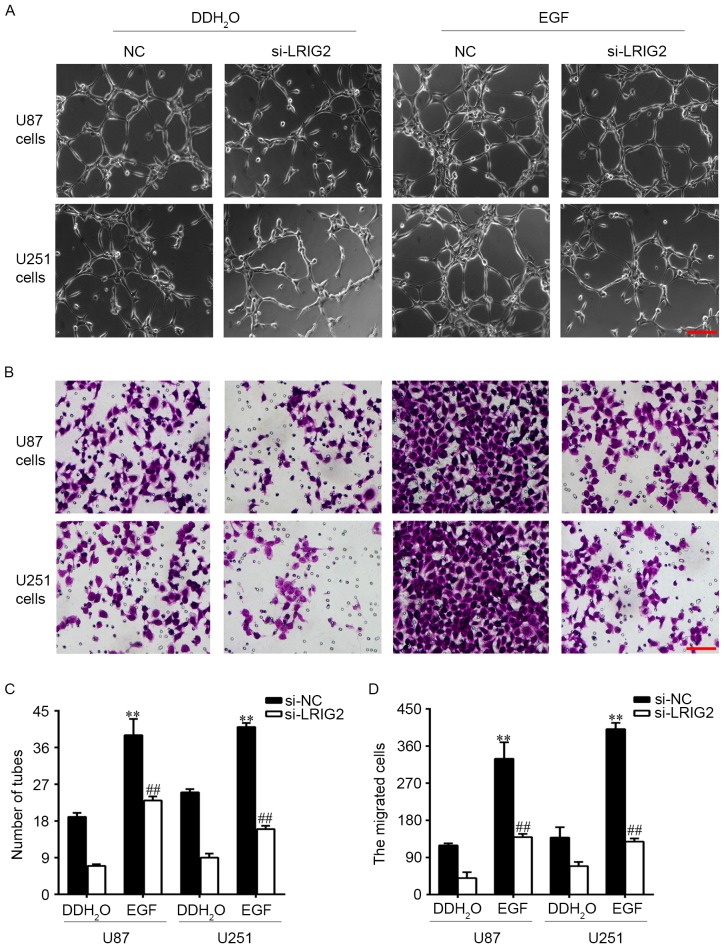
Active angiogenesis is the basic pathological feature of glioma. Tumor angiogenesis is involved in vascular endothelial cell migration to the tumor tissue and in the formation of tube-like structures. The present study aimed to investigate the role of leucine-rich repeats and immunoglobulin-like domains 2 (LRIG2) in glioma angiogenesis. Glioma (n=50) and normal brain (n=20) tissue samples were collected from patients to detect the expression of LRIG2, epidermal growth factor receptor (EGFR), vascular endothelial growth factor A (VEGF-A), and cluster of differentiation 31 (CD31) using immunohistochemistry. In addition, the association between the expression of LRIG2 in glioma tissue and the microvessel density (MVD) was analyzed. , the expression of LRIG2 in human glioma U87 and U251 cell lines was knocked down. Subsequently, cell migration and tube formation assays of human umbilical vein endothelial cells (HUVECs) were performed using a coculture system. The protein expression levels of LRIG2, EGFR, phosphorylated-EGFR and VEGF-A were determined using western blotting. The results demonstrated that the expression levels of LRIG2, EGFR, VEGF-A and CD31 were highly upregulated in glioma tissue samples. Furthermore, LRIG2 expression in glioma tissue samples was significantly correlated with the MVD. , the downregulation of LRIG2 inhibited HUVEC migration and tube formation induced by coculture with glioma cells. The downregulation of LRIG2 resulted in decreased expression of EGFR and VEGF-A. The effects of the LRIG2 knockdown were reversed following EGF treatment. These findings suggest that LRIG2 is a potential target for the inhibition of glioma angiogenesis, which is possibly mediated via the EGFR/VEGF-A signaling pathway.
活跃的血管生成是胶质瘤的基本病理特征。肿瘤血管生成涉及血管内皮细胞向肿瘤组织的迁移以及管状结构的形成。本研究旨在探讨富含亮氨酸重复序列和免疫球蛋白样结构域2(LRIG2)在胶质瘤血管生成中的作用。从患者中收集胶质瘤(n = 50)和正常脑(n = 20)组织样本,采用免疫组织化学法检测LRIG2、表皮生长因子受体(EGFR)、血管内皮生长因子A(VEGF-A)和分化簇31(CD31)的表达。此外,分析了胶质瘤组织中LRIG2表达与微血管密度(MVD)之间的关联。 ,敲低人胶质瘤U87和U251细胞系中LRIG2的表达。随后,使用共培养系统对人脐静脉内皮细胞(HUVEC)进行细胞迁移和管形成试验。采用蛋白质印迹法测定LRIG2、EGFR、磷酸化EGFR和VEGF-A的蛋白表达水平。结果表明,LRIG2、EGFR、VEGF-A和CD31在胶质瘤组织样本中的表达水平高度上调。此外,胶质瘤组织样本中LRIG2的表达与MVD显著相关。 ,LRIG2的下调抑制了与胶质瘤细胞共培养诱导的HUVEC迁移和管形成。LRIG2的下调导致EGFR和VEGF-A的表达降低。EGF处理后,LRIG2敲低的作用被逆转。这些发现表明,LRIG2是抑制胶质瘤血管生成的潜在靶点,其可能通过EGFR/VEGF-A信号通路介导。