Lungs for Living Research Centre, UCL Respiratory, University College London, 5 University Street, London, WC1E 6JF, UK.
J Pathol. 2013 Mar;229(4):608-20. doi: 10.1002/path.4148.
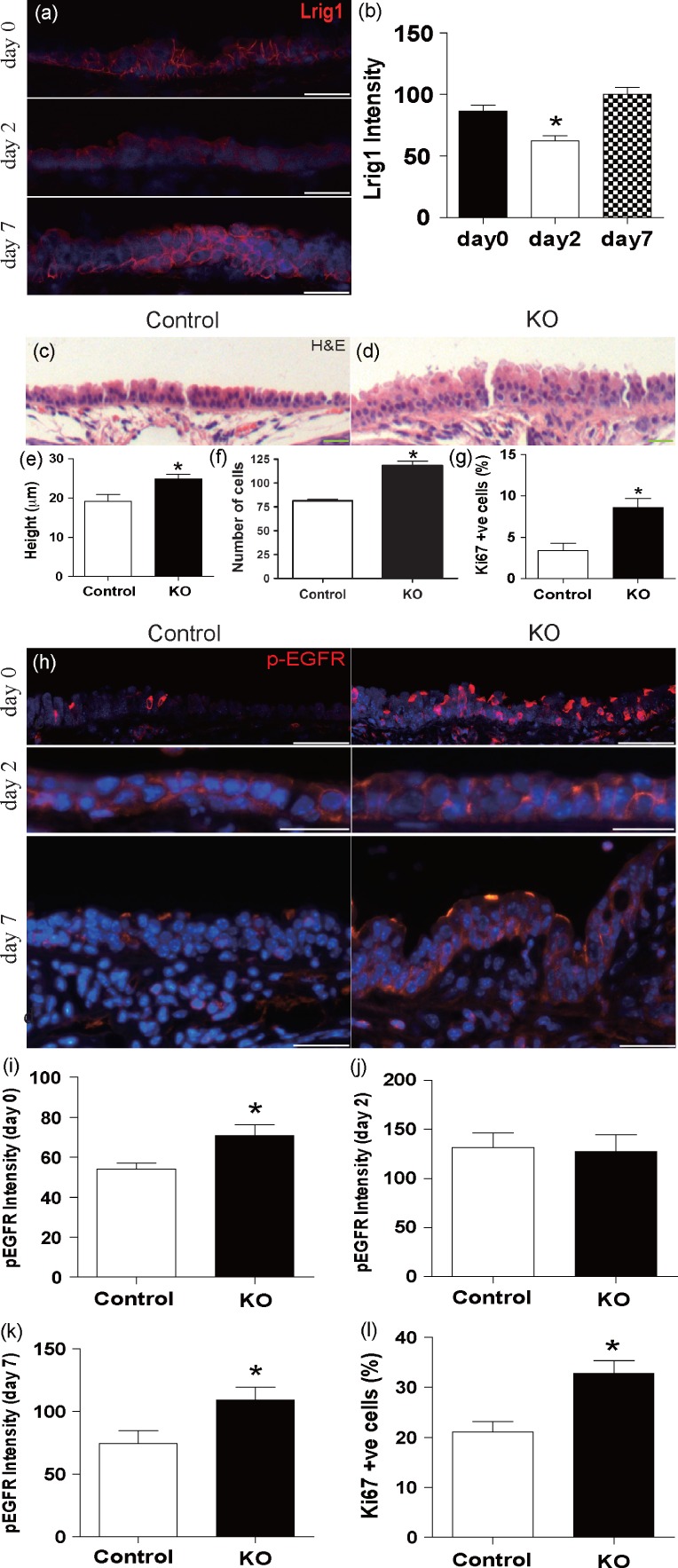
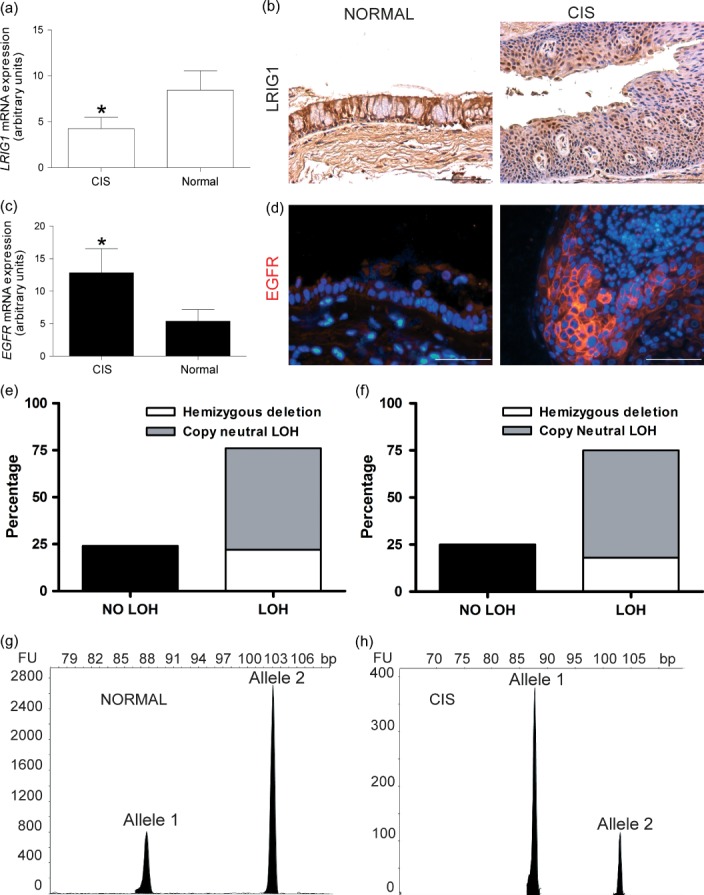
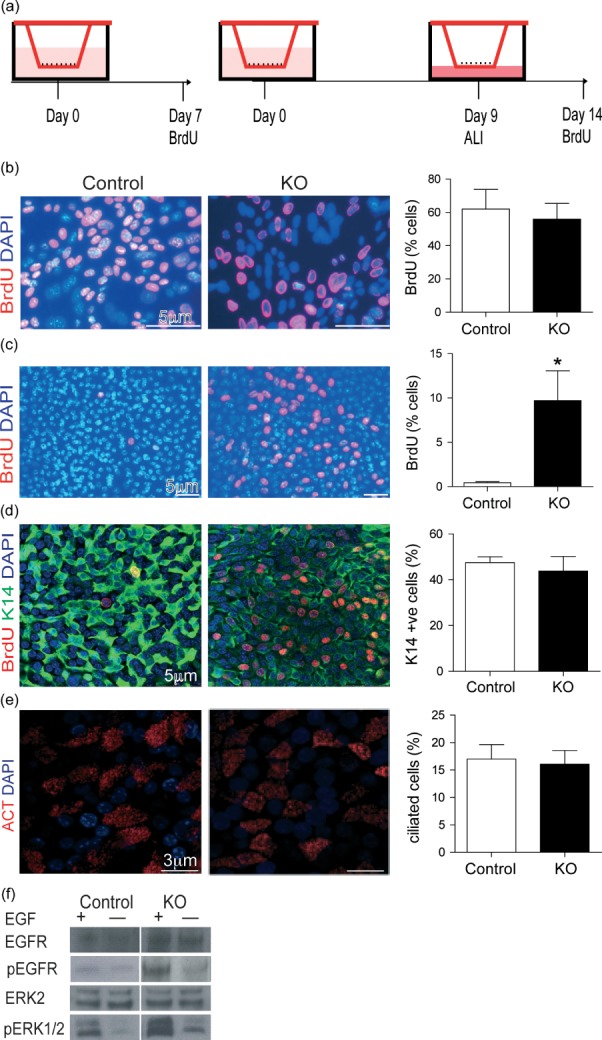
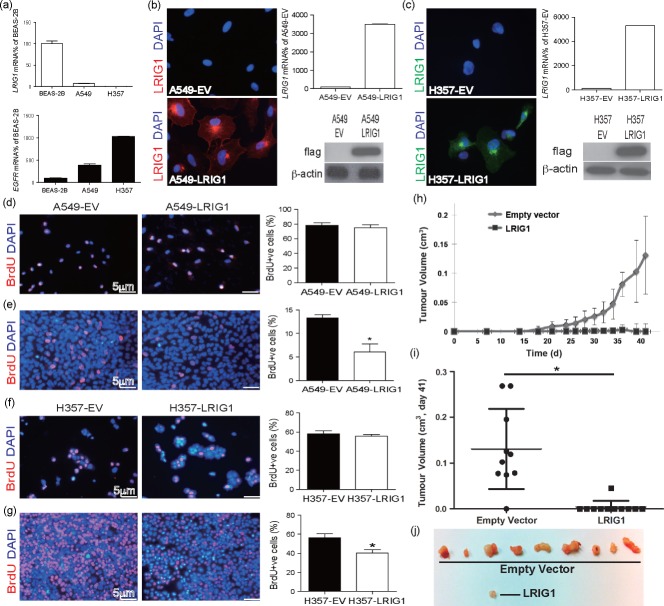
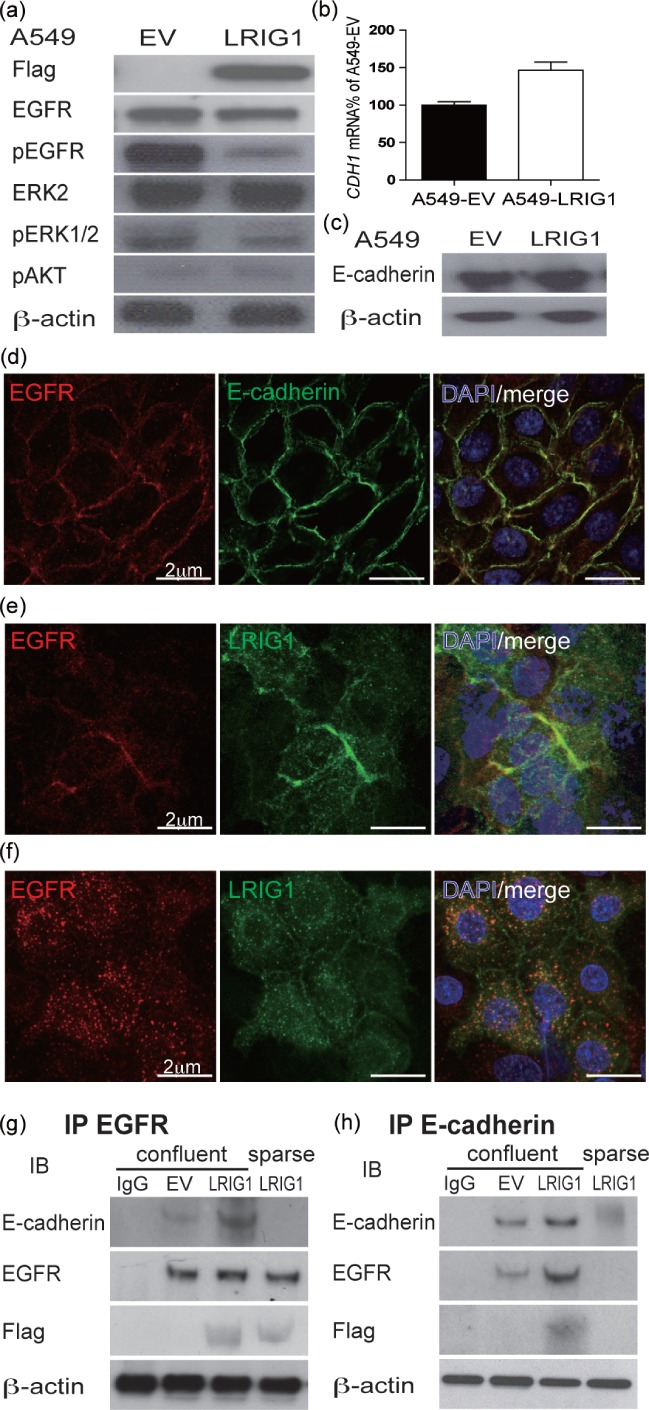
Epidermal growth factor receptor (EGFR) pathway activation is a frequent event in human carcinomas. Mutations in EGFR itself are, however, rare, and the mechanisms regulating EGFR activation remain elusive. Leucine-rich immunoglobulin repeats-1 (LRIG1), an inhibitor of EGFR activity, is one of four genes identified that predict patient survival across solid tumour types including breast, lung, melanoma, glioma, and bladder. We show that deletion of Lrig1 is sufficient to promote murine airway hyperplasia through loss of contact inhibition and that re-expression of LRIG1 in human lung cancer cells inhibits tumourigenesis. LRIG1 regulation of contact inhibition occurs via ternary complex formation with EGFR and E-cadherin with downstream modulation of EGFR activity. We find that LRIG1 LOH is frequent across cancers and its loss is an early event in the development of human squamous carcinomas. Our findings imply that the early stages of squamous carcinoma development are driven by a change in amplitude of EGFR signalling governed by the loss of contact inhibition.
表皮生长因子受体(EGFR)信号通路的激活是人类癌症中常见的事件。然而,EGFR 自身的突变很少见,调节 EGFR 激活的机制仍不清楚。富含亮氨酸的免疫球蛋白样结构域 1(LRIG1)是一种 EGFR 活性抑制剂,它是在包括乳腺癌、肺癌、黑色素瘤、神经胶质瘤和膀胱癌在内的多种实体肿瘤类型中预测患者生存的四个基因之一。我们发现,Lrig1 的缺失足以通过失去接触抑制来促进小鼠气道增生,并且 LRIG1 在人肺癌细胞中的重新表达抑制了肿瘤发生。LRIG1 通过与 EGFR 和 E-钙粘蛋白形成三元复合物来调节接触抑制,从而对 EGFR 活性进行下游调节。我们发现,LRIG1 的杂合性缺失在多种癌症中很常见,其丢失是人类鳞状细胞癌发生的早期事件。我们的研究结果表明,鳞状细胞癌发展的早期阶段是由 EGFR 信号振幅的变化驱动的,这种变化受接触抑制丧失的控制。