Peng Chenghao, Chen Hanmin, Li Youwei, Yang Hang, Qin Peizhong, Ma Baojun, Duan Qiuhong, Wang Baofeng, Mao Feng, Guo Dongsheng
Department of Neurosurgery, Tongji Hospital, Tongji Medical College, Huazhong University of Science and Technology, Wuhan, China.
Department of Biochemistry and Molecular Biology, School of Basic Medicine, Huazhong University of Science and Technology, Wuhan, China.
Front Oncol. 2021 Feb 25;11:621154. doi: 10.3389/fonc.2021.621154. eCollection 2021.
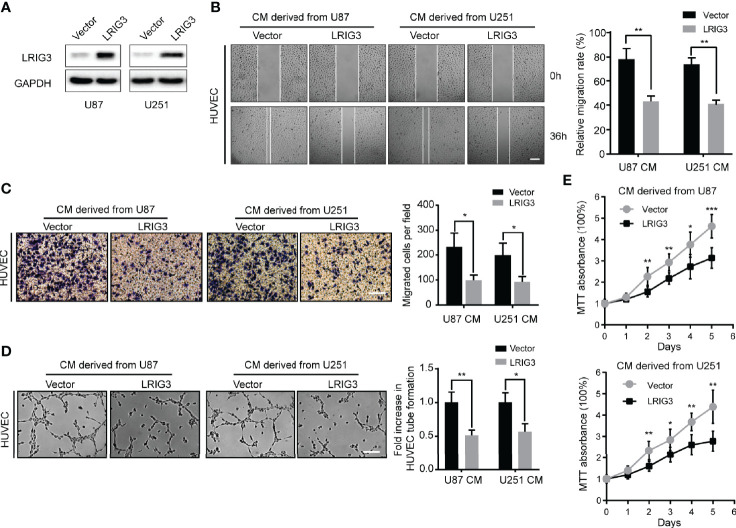
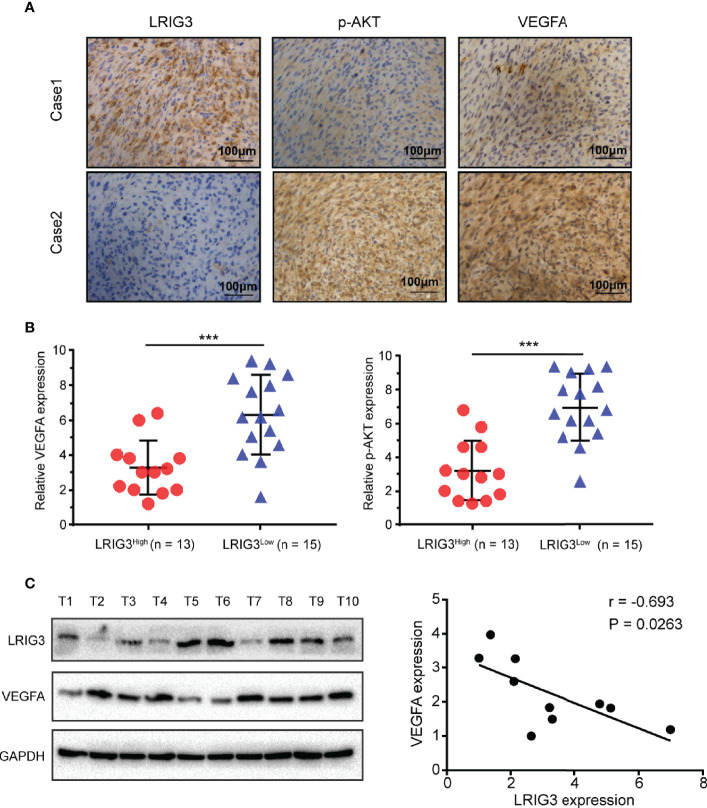
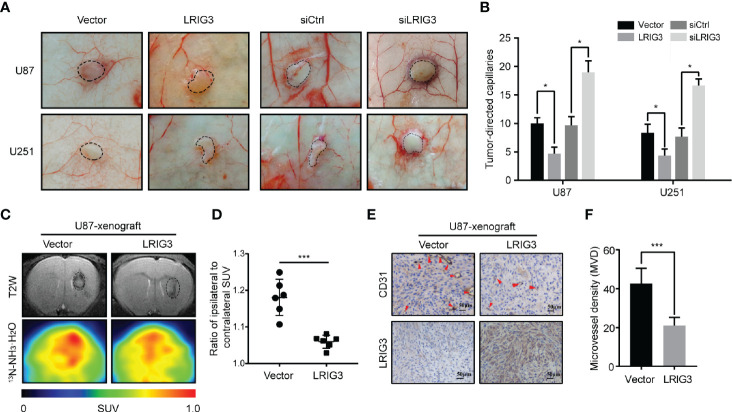
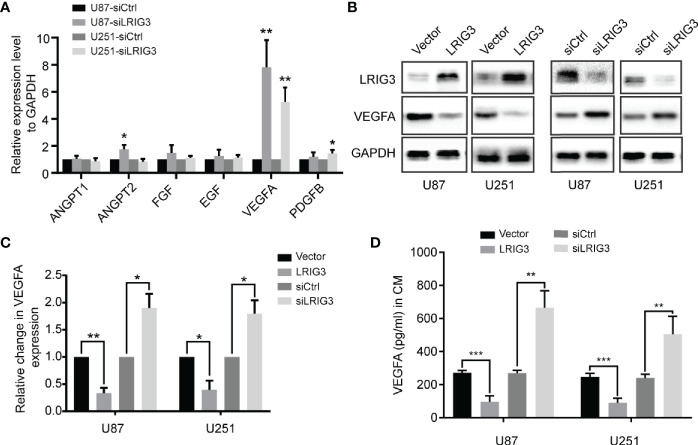
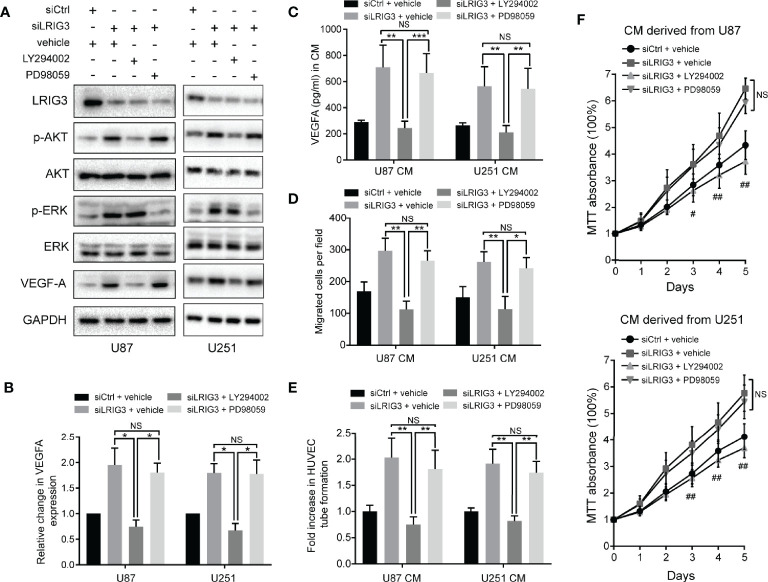
High levels of microvessel density (MVD) indicate poor prognosis in patients with malignant glioma. Leucine-rich repeats and immunoglobulin-like domains (LRIG) 3, a potential tumor suppressor, plays an important role in tumor progression and may serve as a biomarker in many human cancers. However, its role and underlying mechanism of action in glioma angiogenesis remain unclear. In the present study, we used loss- and gain-of-function assays to show that LRIG3 significantly suppressed glioma-induced angiogenesis, both and . Mechanistically, LRIG3 inhibited activation of the PI3K/AKT signaling pathway, downregulating vascular endothelial growth factor A (VEGFA) in glioma cells, thereby inhibiting angiogenesis. Notably, LRIG3 had a significant negative correlation with VEGFA expression in glioma tissues. Taken together, our results suggest that LRIG3 is a novel regulator of glioma angiogenesis and may be a promising option for developing anti-angiogenic therapy.
微血管密度(MVD)水平高表明恶性胶质瘤患者预后不良。富含亮氨酸重复序列和免疫球蛋白样结构域(LRIG)3作为一种潜在的肿瘤抑制因子,在肿瘤进展中起重要作用,并且可能在多种人类癌症中作为生物标志物。然而,其在胶质瘤血管生成中的作用及潜在作用机制仍不清楚。在本研究中,我们使用功能丧失和功能获得实验表明,LRIG3显著抑制胶质瘤诱导的血管生成,体内和体外实验均是如此。机制上,LRIG3抑制PI3K/AKT信号通路的激活,下调胶质瘤细胞中的血管内皮生长因子A(VEGFA),从而抑制血管生成。值得注意的是,LRIG3与胶质瘤组织中VEGFA的表达呈显著负相关。综上所述,我们的结果表明LRIG3是胶质瘤血管生成的一种新型调节因子,可能是开发抗血管生成治疗的一个有前景的选择。