• 文献检索
  • 文档翻译
  • 深度研究
  • 学术资讯
  • Suppr Zotero 插件Zotero 插件
  • 邀请有礼
  • 套餐&价格
  • 历史记录
应用&插件
Suppr Zotero 插件Zotero 插件浏览器插件Mac 客户端Windows 客户端微信小程序
定价
高级版会员购买积分包购买API积分包
服务
文献检索文档翻译深度研究API 文档MCP 服务
关于我们
关于 Suppr公司介绍联系我们用户协议隐私条款
关注我们

Suppr 超能文献

核心技术专利:CN118964589B侵权必究
粤ICP备2023148730 号-1Suppr @ 2026

文献检索

告别复杂PubMed语法,用中文像聊天一样搜索,搜遍4000万医学文献。AI智能推荐,让科研检索更轻松。

立即免费搜索

文件翻译

保留排版,准确专业,支持PDF/Word/PPT等文件格式,支持 12+语言互译。

免费翻译文档

深度研究

AI帮你快速写综述,25分钟生成高质量综述,智能提取关键信息,辅助科研写作。

立即免费体验

狗的方向偏好:偏侧性与“向北拉力”

Directional preference in dogs: Laterality and "pull of the north".

作者信息

Adámková Jana, Svoboda Jan, Benediktová Kateřina, Martini Sabine, Nováková Petra, Tůma David, Kučerová Michaela, Divišová Michaela, Begall Sabine, Hart Vlastimil, Burda Hynek

机构信息

Department of Game Management and Wildlife Biology, Faculty of Forestry and Wood Sciences, Czech University of Life Sciences, Kamýcká 129, Praha 6, Czech Republic.

Department of General Zoology, Faculty of Biology, University of Duisburg-Essen, Essen, Germany.

出版信息

PLoS One. 2017 Sep 25;12(9):e0185243. doi: 10.1371/journal.pone.0185243. eCollection 2017.

DOI:10.1371/journal.pone.0185243
PMID:28945773
原文链接:https://pmc.ncbi.nlm.nih.gov/articles/PMC5612717/
Abstract

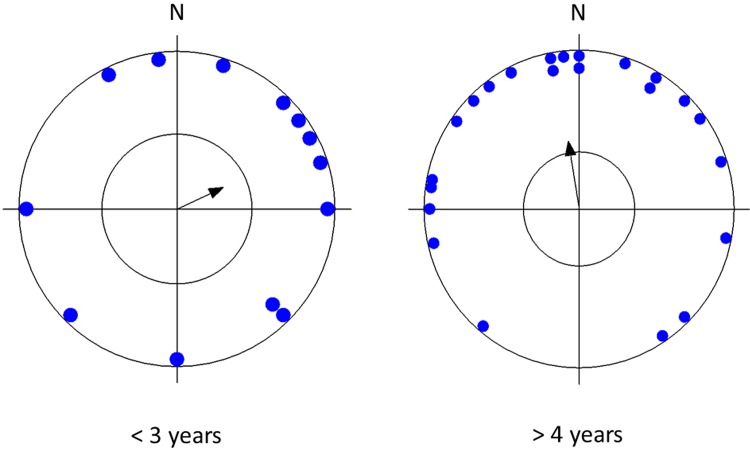
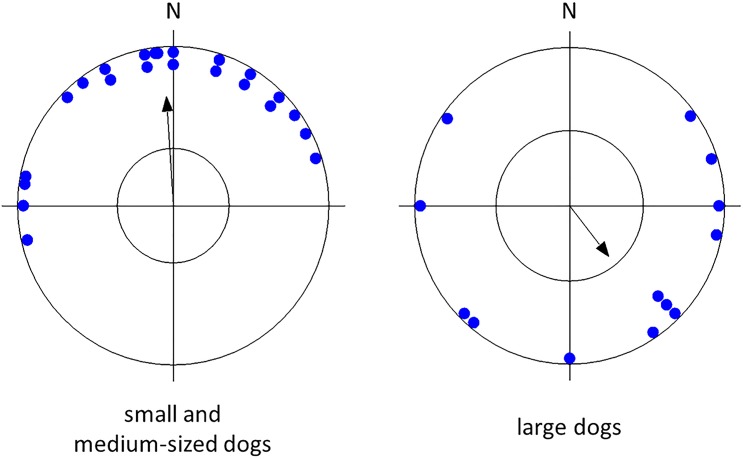
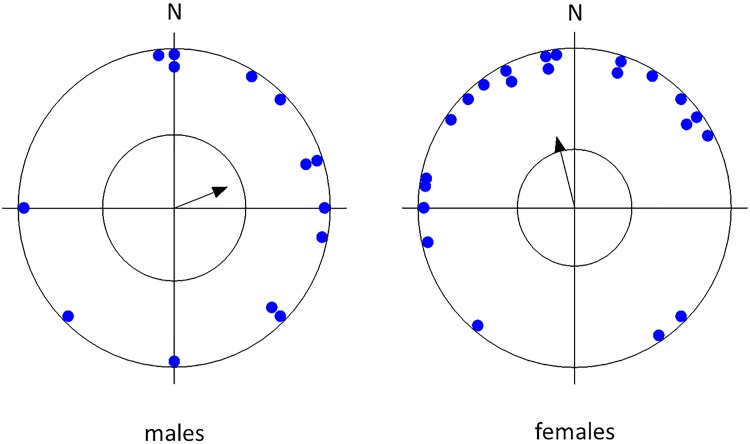
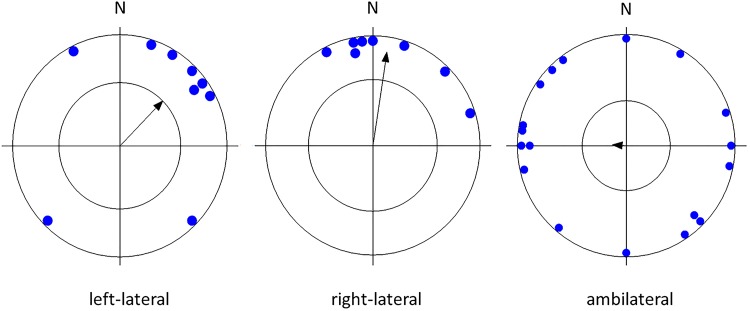
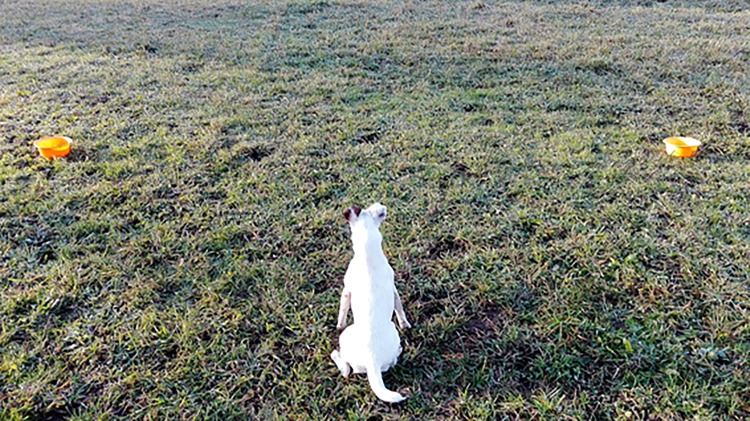
Laterality is a well described phenomenon in domestic dogs. It was shown that dogs, under calm Earth's magnetic field conditions, when marking their home ranges, tend to head about north- or southwards and display thus magnetic alignment. The question arises whether magnetic alignment might be affected or even compromised by laterality and vice versa. We tested the preference of dogs to choose between two dishes with snacks that were placed left and right, in different compass directions (north and east, east and south, south and west or west and north) in front of them. Some dogs were right-lateral, some left-lateral but most of them were ambilateral. There was a preference for the dish placed north compared to the one placed east of the dog ("pull of the north"). This effect was highly significant in small and medium-sized breeds but not in larger breeds, highly significant in females, in older dogs, in lateralized dogs but less significant or not significant in males, younger dogs, or ambilateral dogs. Laterality and "pull of the north" are phenomena which should be considered in diverse tasks and behavioral tests with which dogs or other animals might be confronted. The interaction and possible conflict between lateralization and "pull of the north" might be also considered as a reason for shifted magnetic alignment observed in different animal species in different contexts.

摘要

偏侧性是家犬中一种已被充分描述的现象。研究表明,在平静的地磁场条件下,狗在标记其活动范围时,往往会朝着大致北方或南方行进,从而表现出磁定向。问题在于,磁定向是否可能受到偏侧性的影响甚至损害,反之亦然。我们测试了狗在面前不同罗盘方向(北和东、东和南、南和西或西和北)左右两侧放置的装有零食的两个盘子之间进行选择的偏好。有些狗是右侧偏侧,有些是左侧偏侧,但大多数是双侧的。与放置在狗东侧的盘子相比,狗对放置在北侧的盘子有偏好(“北方拉力”)。这种效应在中小型犬种中非常显著,但在大型犬种中不显著,在雌性犬、老年犬、偏侧性犬中非常显著,但在雄性犬、年轻犬或双侧犬中不太显著或不显著。在涉及狗或其他动物的各种任务和行为测试中,应考虑偏侧性和“北方拉力”现象。偏侧化和“北方拉力”之间的相互作用以及可能的冲突,也可能被视为在不同背景下不同动物物种中观察到的磁定向变化的一个原因。
https://cdn.ncbi.nlm.nih.gov/pmc/blobs/8500/5612717/f882c7a91b39/pone.0185243.g005.jpg
https://cdn.ncbi.nlm.nih.gov/pmc/blobs/8500/5612717/0222a28caff7/pone.0185243.g001.jpg
https://cdn.ncbi.nlm.nih.gov/pmc/blobs/8500/5612717/188dc17cb23e/pone.0185243.g002.jpg
https://cdn.ncbi.nlm.nih.gov/pmc/blobs/8500/5612717/b1f48a7a389a/pone.0185243.g003.jpg
https://cdn.ncbi.nlm.nih.gov/pmc/blobs/8500/5612717/6ba7b2a1e971/pone.0185243.g004.jpg
https://cdn.ncbi.nlm.nih.gov/pmc/blobs/8500/5612717/f882c7a91b39/pone.0185243.g005.jpg
https://cdn.ncbi.nlm.nih.gov/pmc/blobs/8500/5612717/0222a28caff7/pone.0185243.g001.jpg
https://cdn.ncbi.nlm.nih.gov/pmc/blobs/8500/5612717/188dc17cb23e/pone.0185243.g002.jpg
https://cdn.ncbi.nlm.nih.gov/pmc/blobs/8500/5612717/b1f48a7a389a/pone.0185243.g003.jpg
https://cdn.ncbi.nlm.nih.gov/pmc/blobs/8500/5612717/6ba7b2a1e971/pone.0185243.g004.jpg
https://cdn.ncbi.nlm.nih.gov/pmc/blobs/8500/5612717/f882c7a91b39/pone.0185243.g005.jpg

相似文献

1
Directional preference in dogs: Laterality and "pull of the north".狗的方向偏好:偏侧性与“向北拉力”
PLoS One. 2017 Sep 25;12(9):e0185243. doi: 10.1371/journal.pone.0185243. eCollection 2017.
2
Turning preference in dogs: North attracts while south repels.狗的转向偏好:向北吸引而向南排斥。
PLoS One. 2021 Jan 28;16(1):e0245940. doi: 10.1371/journal.pone.0245940. eCollection 2021.
3
Cognitive bias and paw preference in the domestic dog (Canis familiaris).家犬(犬属)的认知偏差与爪偏好
J Comp Psychol. 2017 Nov;131(4):317-325. doi: 10.1037/com0000080. Epub 2017 May 18.
4
Association between lateral bias and personality traits in the domestic dog (Canis familiaris).家犬(犬属)的侧向偏好与性格特征之间的关联。
J Comp Psychol. 2017 Aug;131(3):246-256. doi: 10.1037/com0000074. Epub 2017 Apr 17.
5
The effect of preferential paw usage on dogs' (Canis familiaris) performance in a manipulative problem-solving task.偏爱用爪对犬(家犬)在操作性问题解决任务中的表现的影响。
Behav Processes. 2013 Nov;100:40-3. doi: 10.1016/j.beproc.2013.07.017. Epub 2013 Aug 7.
6
Lateralized response of chicks to magnetic cues.小鸡对磁信号的侧向反应。
Behav Brain Res. 2008 Jan 10;186(1):66-71. doi: 10.1016/j.bbr.2007.07.029. Epub 2007 Jul 28.
7
Shifted magnetic alignment in vertebrates: Evidence for neural lateralization?脊椎动物中磁性排列的偏移:神经侧化的证据?
J Theor Biol. 2016 Jun 21;399:141-7. doi: 10.1016/j.jtbi.2016.03.040. Epub 2016 Apr 6.
8
Dog paw preference shows lability and sex differences.狗的爪子偏好表现出不稳定性和性别差异。
Behav Processes. 2006 Sep;73(2):216-21. doi: 10.1016/j.beproc.2006.05.011. Epub 2006 Jun 2.
9
Dogs show left facial lateralization upon reunion with their owners.狗在与主人重逢时会表现出左脸偏向。
Behav Processes. 2013 Sep;98:112-6. doi: 10.1016/j.beproc.2013.05.012. Epub 2013 May 30.
10
Stability of motor bias in the domestic dog, Canis familiaris.家犬(犬属)运动偏倚的稳定性
Behav Processes. 2018 Apr;149:1-7. doi: 10.1016/j.beproc.2018.01.012. Epub 2018 Jan 31.

引用本文的文献

1
Methodological comparison of cancellation versus two-way choice spatial attention tests in humans and dogs.人类和犬类中取消测试与双向选择空间注意力测试的方法学比较。
Front Vet Sci. 2023 Oct 13;10:1264151. doi: 10.3389/fvets.2023.1264151. eCollection 2023.
2
Visual perception of emotion cues in dogs: a critical review of methodologies.犬类对情绪线索的视觉感知:方法学的批判性回顾。
Anim Cogn. 2023 Jun;26(3):727-754. doi: 10.1007/s10071-023-01762-5. Epub 2023 Mar 4.
3
Magnetic alignment in free-ranging Indian Leopard (Panthera pardus fusca).

本文引用的文献

1
Relationship between visuospatial attention and paw preference in dogs.狗的视空间注意力与爪偏好的关系。
Sci Rep. 2016 Aug 22;6:31682. doi: 10.1038/srep31682.
2
Shifted magnetic alignment in vertebrates: Evidence for neural lateralization?脊椎动物中磁性排列的偏移:神经侧化的证据?
J Theor Biol. 2016 Jun 21;399:141-7. doi: 10.1016/j.jtbi.2016.03.040. Epub 2016 Apr 6.
3
The dog nose "KNOWS" fear: Asymmetric nostril use during sniffing at canine and human emotional stimuli.狗鼻子能“感知”恐惧:犬类在嗅探犬类和人类情绪刺激源时鼻孔使用不对称。
自由放养印度豹(豹亚种)的磁性对齐。
PLoS One. 2022 Jul 8;17(7):e0266129. doi: 10.1371/journal.pone.0266129. eCollection 2022.
4
Effects of Social Housing on Dairy Calf Social Bonding.社会住房对奶牛犊社交联结的影响。
Animals (Basel). 2022 Mar 24;12(7):821. doi: 10.3390/ani12070821.
5
Lateralization of bladder function in normal female canines.正常雌性犬的膀胱功能偏侧化。
PLoS One. 2022 Mar 1;17(3):e0264382. doi: 10.1371/journal.pone.0264382. eCollection 2022.
6
Turning preference in dogs: North attracts while south repels.狗的转向偏好:向北吸引而向南排斥。
PLoS One. 2021 Jan 28;16(1):e0245940. doi: 10.1371/journal.pone.0245940. eCollection 2021.
7
Magnetic alignment enhances homing efficiency of hunting dogs.磁场定向增强了猎犬的归巢效率。
Elife. 2020 Jun 16;9:e55080. doi: 10.7554/eLife.55080.
8
Guide dogs' navigation after a single journey: A descriptive study of path reproduction, homing, shortcut and detour.导盲犬单次行进后的导航:路径再现、归巢、抄近路和走弯路的描述性研究。
PLoS One. 2019 Jul 16;14(7):e0219816. doi: 10.1371/journal.pone.0219816. eCollection 2019.
9
Dogs can be trained to find a bar magnet.狗可以被训练来找到一块条形磁铁。
PeerJ. 2018 Dec 17;6:e6117. doi: 10.7717/peerj.6117. eCollection 2018.
Behav Brain Res. 2016 May 1;304:34-41. doi: 10.1016/j.bbr.2016.02.011. Epub 2016 Feb 10.
4
Dogs are sensitive to small variations of the Earth's magnetic field.狗对地球磁场的微小变化很敏感。
Front Zool. 2013 Dec 27;10(1):80. doi: 10.1186/1742-9994-10-80.
5
Dogs show left facial lateralization upon reunion with their owners.狗在与主人重逢时会表现出左脸偏向。
Behav Processes. 2013 Sep;98:112-6. doi: 10.1016/j.beproc.2013.05.012. Epub 2013 May 30.
6
Detour behaviour in attack-trained dogs: left-turners perform better than right-turners.训练有素的攻击犬的迂回行为:左转犬比右转犬表现更好。
Laterality. 2013;18(3):282-93. doi: 10.1080/1357650X.2012.662234. Epub 2012 Jun 19.
7
Dogs turn left to emotional stimuli.狗向左转向情绪刺激。
Behav Brain Res. 2010 Apr 2;208(2):516-21. doi: 10.1016/j.bbr.2009.12.042. Epub 2010 Jan 7.
8
Epigenesis of behavioural lateralization in humans and other animals.人类和其他动物行为偏侧化的表观遗传学
Philos Trans R Soc Lond B Biol Sci. 2009 Apr 12;364(1519):915-27. doi: 10.1098/rstb.2008.0244.
9
Hemispheric specialization in dogs for processing different acoustic stimuli.狗在处理不同听觉刺激时的大脑半球特化。
PLoS One. 2008;3(10):e3349. doi: 10.1371/journal.pone.0003349. Epub 2008 Oct 9.
10
Relationship between paw preference strength and noise phobia in Canis familiaris.家犬爪偏好强度与噪音恐惧症之间的关系。
J Comp Psychol. 2006 Aug;120(3):176-183. doi: 10.1037/0735-7036.120.3.176.