Khan Sarah, Ali Syed Adnan
College of Natural and Health Sciences, Zayed University, Dubai, United Arab Emirates.
Government Degree Science and Commerce College, Landhi Korangi 6, Karachi, Pakistan.
BMC Womens Health. 2017 Sep 26;17(1):88. doi: 10.1186/s12905-017-0445-4.
Cardiovascular disease was the leading cause of death among women in the United Arab Emirates (UAE) in 2010. Heart attacks usually happen in older women thus symptoms of heart disease may be masked by symptoms of chronic diseases, which could explain the delay in seeking health care and higher mortality following an ischaemic episode among women. This study seeks to a) highlight the awareness of heart diseases among Emirati women and b) to understand Emirati women's health care seeking behaviour in UAE.
A cross sectional, descriptive study was conducted using a survey instrument adapted from the American Heart Association National survey. A convenience sample of 676 Emirati women between the ages of 18-55 years completed the questionnaire.
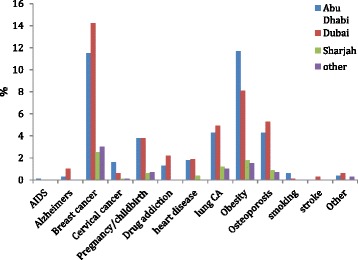
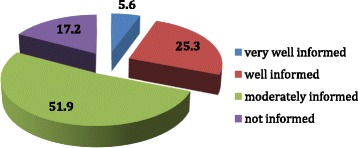
The study showed low levels of awareness of heart disease and associated risk factors in Emirati women; only 19.4% participants were found to be aware of heart diseases. Awareness levels were highest in Dubai (OR 2.18, p < 0.05) among all the other emirates and in the 18-45 years age group (OR 2.74, p < 0.05). Despite low awareness levels, women paradoxically perceived themselves to be self-efficacious in seeking health care. Interestingly, just 49.1% Emirati women believed that good quality and affordable health care was available in the UAE. Only 28.8% of the participants believed there were sufficient female doctors to respond to health needs of women in UAE. Furthermore, only 36.7% Emirati women chose to be treated in the UAE over treatment in other countries.
Emirati women clearly lack the knowledge on severity and vulnerability to heart disease in the region that is essential to improve cardiovascular related health outcomes. This study has identified the need for wider outreach that focuses on gender and age specific awareness on heart disease risks and symptoms. The study has also highlighted potential modifiable barriers in seeking health care that should be overcome to reduce morbidity and mortality due to heart disease among national women of UAE.
2010年,心血管疾病是阿拉伯联合酋长国(阿联酋)女性的主要死因。心脏病通常发生在老年女性中,因此心脏病症状可能被慢性病症状所掩盖,这可以解释女性在缺血性发作后寻求医疗保健的延迟和较高的死亡率。本研究旨在:a)提高阿联酋女性对心脏病的认识;b)了解阿联酋女性在阿联酋的就医行为。
采用一项改编自美国心脏协会全国调查的调查工具进行横断面描述性研究。对676名年龄在18至55岁之间的阿联酋女性进行便利抽样,她们完成了问卷调查。
研究表明,阿联酋女性对心脏病及相关危险因素的认识水平较低;只有19.4%的参与者知晓心脏病。在所有其他酋长国中,迪拜的知晓率最高(比值比2.18,p<0.05),在18至45岁年龄组中知晓率也最高(比值比2.74,p<0.05)。尽管知晓率较低,但女性却反常地认为自己在寻求医疗保健方面有自我效能感。有趣的是,只有49.1%的阿联酋女性认为阿联酋有高质量且负担得起的医疗保健服务。只有28.8%的参与者认为阿联酋有足够的女医生来满足女性的健康需求。此外,只有36.7%的阿联酋女性选择在阿联酋接受治疗,而不是在其他国家。
阿联酋女性显然缺乏对该地区心脏病严重程度和易感性的了解,而这对于改善心血管相关健康结果至关重要。本研究确定需要进行更广泛的宣传,重点是针对性别和年龄的心脏病风险及症状的认识。该研究还强调了在寻求医疗保健方面可能存在的可改变的障碍,应克服这些障碍以降低阿联酋本国女性因心脏病导致的发病率和死亡率。